味
See also: 昧
| ||||||||
Translingual
Han character
味 (radical 30, 口+5, 8 strokes, cangjie input 口十木 (RJD), four-corner 65090, composition ⿰口未)
References
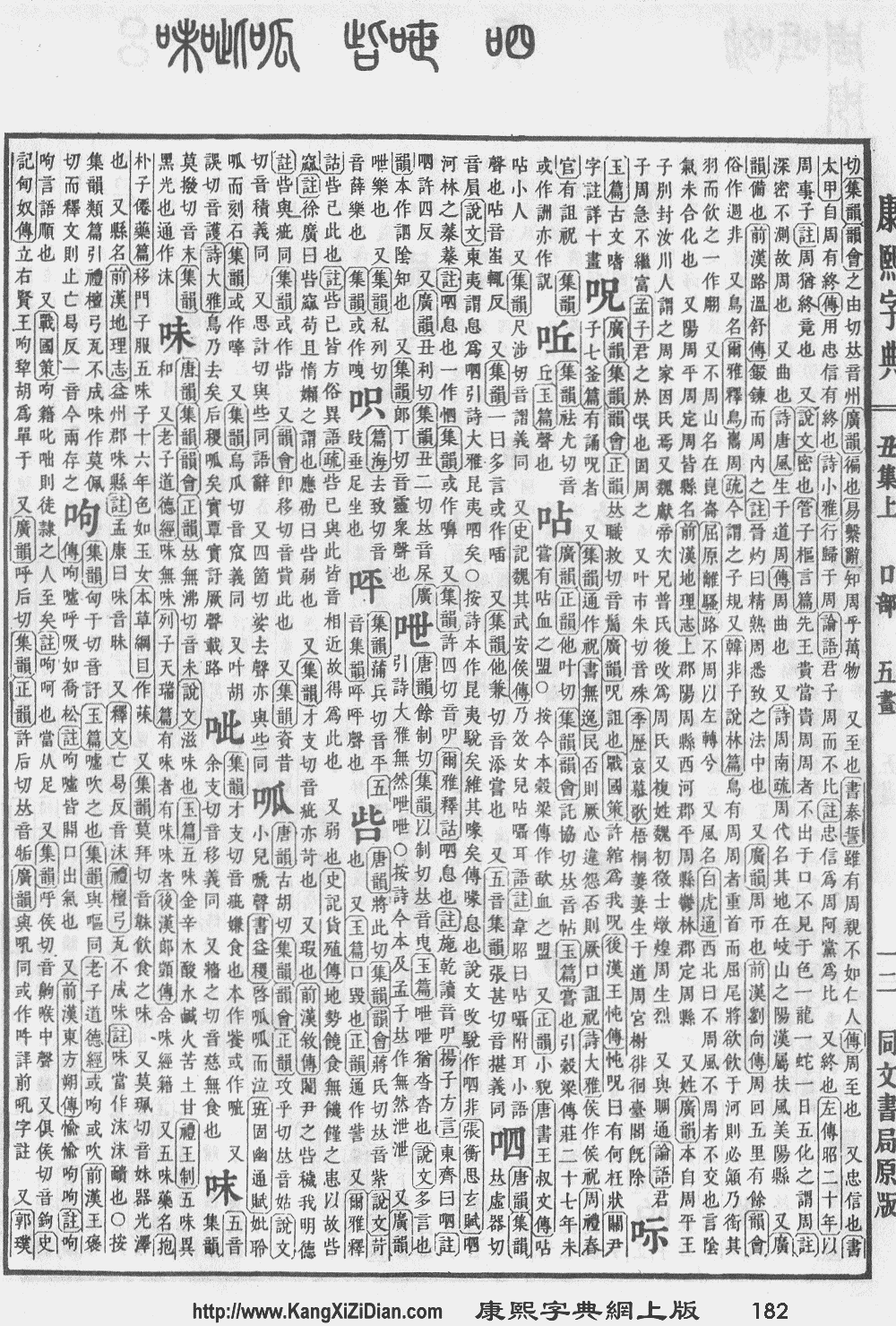
- KangXi: page 182, character 13
- Dai Kanwa Jiten: character 3456
- Dae Jaweon: page 401, character 14
- Hanyu Da Zidian: volume 1, page 597, character 6
- Unihan data for U+5473
Chinese
| simp. and trad. |
味 | |
|---|---|---|
Glyph origin
| Characters in the same phonetic series (未) (Zhengzhang, 2003) | |
|---|---|
| Old Chinese | |
| 寐 | *mids |
| 魅 | *mrɯds |
| 鬽 | *mrɯds |
| 昧 | *mɯːds |
| 妹 | *mɯːds |
| 眛 | *maːds, *mɯːds |
| 沬 | *maːds, *hmɯːds, *mɯds |
| 未 | *mɯds |
| 味 | *mɯds |
| 鮇 | *mɯds |
| 菋 | *mɯds |
Phono-semantic compound (形聲, OC *mɯds) : semantic 口 (“mouth”) + phonetic 未 (OC *mɯds).
Etymology
Schuessler (2007) compared this word with Proto-Monic *[ʔ]məp ("good tasting, have a pleasant flavour, be pleasant") > Mon မိပ် (mìp, “to be happy, to enjoy”). Unger (1992) connects this with Tibetan བྲོད (brod) (< བྲོ (bro, “to taste”)). Also compare Korean 맛 (mas, “taste”) / 멋 (mes, “taste; charm”).
Pronunciation
Definitions
味
- taste; flavor
- smell; odor (Classifier: 股 m; 𠹻 c)
- food
- to taste; to reflect on; to experience
- interest; fun; taste
- Classifier for ingredients of a Chinese medicine prescription.
- Classifier for dishes.
- (Cantonese) Classifier for things: kind; sort
Synonyms
| Dialectal synonyms of 味道 (“taste; flavour”) [map] | ||
|---|---|---|
| Variety | Location | Words |
| Formal (Written Standard Chinese) | 味道 | |
| Mandarin | Beijing | 味兒 |
| Taiwan | 味道、味 | |
| Jinan | 味兒 | |
| Xi'an | 味道 | |
| Wuhan | 味口、味 | |
| Chengdu | 味道 | |
| Yangzhou | 味道 | |
| Hefei | 味道 | |
| Cantonese | Guangzhou | 味道、味 |
| Hong Kong | 味道、味 | |
| Hong Kong (Weitou) | 味道 | |
| Yangjiang | 味 | |
| Gan | Nanchang | 味道 |
| Hakka | Meixian | 味道 |
| Miaoli (N. Sixian) | 味緒、味道 | |
| Liudui (S. Sixian) | 味緒、味道 | |
| Hsinchu (Hailu) | 味緒、味道 | |
| Dongshi (Dabu) | 味緒、味道 | |
| Zhuolan (Raoping) | 味緒、味道 | |
| Yunlin (Zhao'an) | 味素、味緒、味道 | |
| Hong Kong | 味 | |
| Singkawang | 味 | |
| Jin | Taiyuan | 味兒、味道 |
| Min Bei | Jian'ou | 味道 |
| Min Dong | Fuzhou | 味 |
| Min Nan | Xiamen | 味、味素 |
| Quanzhou | 味、味素 | |
| Zhangzhou | 味、味素 | |
| Penang | 味素 | |
| Chaozhou | 味素、味道 | |
| Wu | Suzhou | 味道 |
| Wenzhou | 味道 | |
| Xiang | Changsha | 味道 |
| Shuangfeng | 味道 | |
| Dialectal synonyms of 氣味 (“smell; odour”) [map] | ||
|---|---|---|
| Variety | Location | Words |
| Formal (Written Standard Chinese) | 氣味 | |
| Mandarin | Beijing | 味兒 |
| Taiwan | 味 | |
| Jinan | 味兒 | |
| Xi'an | 味兒、味氣 | |
| Wuhan | 氣味、氣色 | |
| Chengdu | 氣氣、味道 | |
| Yangzhou | 味道 | |
| Hefei | 味道、氣味 | |
| Cantonese | Guangzhou | 味、𡃴 |
| Hong Kong | 味、𡃴 | |
| Hong Kong (Weitou) | 𡃴 | |
| Yangjiang | 味、𡃴 | |
| Gan | Nanchang | 氣味 |
| Hakka | Meixian | 味道、氣味 |
| Miaoli (N. Sixian) | 味道、氣味 | |
| Liudui (S. Sixian) | 味道、氣味 | |
| Hsinchu (Hailu) | 味道、氣味 | |
| Dongshi (Dabu) | 味道、氣味 | |
| Zhuolan (Raoping) | 味道、氣味 | |
| Yunlin (Zhao'an) | 味道、氣味 | |
| Hong Kong | 味 | |
| Jin | Taiyuan | 味氣 |
| Min Bei | Jian'ou | 味道、氣色 |
| Min Dong | Fuzhou | 味 |
| Min Nan | Xiamen | 味、味素 |
| Quanzhou | 味、味素 | |
| Zhangzhou | 味 | |
| Chaozhou | 味、味素、羶、氣味 | |
| Wu | Suzhou | 味道、氣味 |
| Wenzhou | 氣道 | |
| Xiang | Changsha | 氣色、味道、氣味 |
| Shuangfeng | 氣色、氣 | |
Compounds
Derived terms from 味
|
|
|
Descendants
Others:
- Proto-Hmong-Mien: *hmeiᴴ (“taste; to try”)
- Vietnamese: mùi (“smell”)
Japanese
Kanji
味
Readings
Compounds
Noun
Suffix
- (after an i-adjective stem) -ness; any degree of being
Korean
Hanja
味 • (mi) (hangeul 미, revised mi, McCune–Reischauer mi)
- This term needs a translation to English. Please help out and add a translation, then remove the text
{{rfdef}}.
Vietnamese
Han character
This article is issued from
Wiktionary.
The text is licensed under Creative Commons - Attribution - Sharealike.
Additional terms may apply for the media files.