无
See also: 無
| ||||||||
Translingual
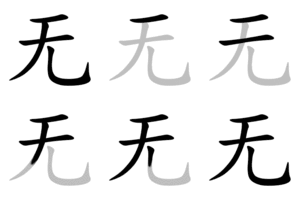
| Stroke order | |||
|---|---|---|---|
 | |||
Han character
无 (radical 71, 无+0, 4 strokes, cangjie input 一大山 (MKU))
- Kangxi radical #71, ⽆.
Derived characters
Related characters
- 無 (Traditional form of 无)
Descendants
- ん (Man'yōgana derivative)
Usage notes
- All characters sorted under this radical are actually derived from 旡.
References
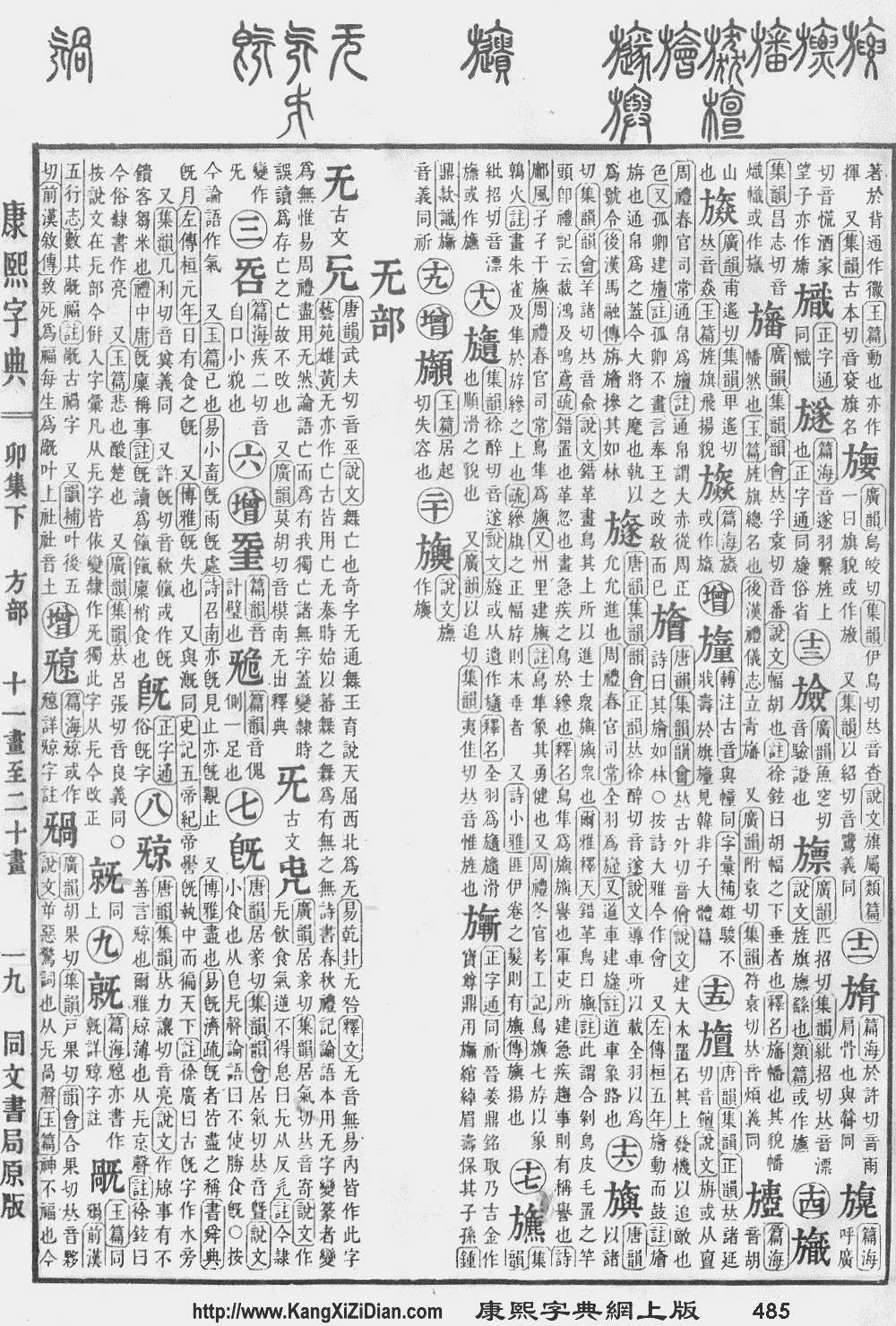
- KangXi: page 485, character 23
- Dai Kanwa Jiten: character 13716
- Dae Jaweon: page 847, character 26
- Hanyu Da Zidian: volume 2, page 1147, character 12
- Unihan data for U+65E0
Chinese
Glyph origin
| Historical forms of the character 无 | ||
|---|---|---|
| Western Zhou | Shuowen Jiezi (compiled in Han) | Liushutong (compiled in Ming) |
| Bronze inscriptions | Small seal script | Transcribed ancient scripts |
 |
 |
 |
One of the three characters (無, 无, 亡) that have historically been used to represent the word "no, not any". First attested in the Warring States period; used interchangeably with 無 until the Tang dynasty. Readopted by the PRC in 1956.
The origin of this character is unknown. Probably an ancient variant form of either 元, 天 or 堯.
Definitions
| For pronunciation and definitions of 无 – see 無 (“to not have something; there is not ...; etc.”). (This character, 无, is the simplified and variant form of 無.) |
Notes:
|
Japanese
Kanji
无
Readings
Korean
Hanja
无 • (mu) (hangeul 무, revised mu, McCune–Reischauer mu, Yale mu)
- This term needs a translation to English. Please help out and add a translation, then remove the text
{{rfdef}}.
Vietnamese
Han character
无 (vô)
- This term needs a translation to English. Please help out and add a translation, then remove the text
{{rfdef}}.
This article is issued from
Wiktionary.
The text is licensed under Creative Commons - Attribution - Sharealike.
Additional terms may apply for the media files.