佑
See also: 祐
| ||||||||
Translingual
Han character
佑 (radical 9 人+5, 7 strokes, cangjie input 人大口 (OKR) or X人大口 (XOKR), four-corner 24260, composition ⿰亻右)
Derived characters
- 㐛, 𫈈, 𫳌, 𭹐
References
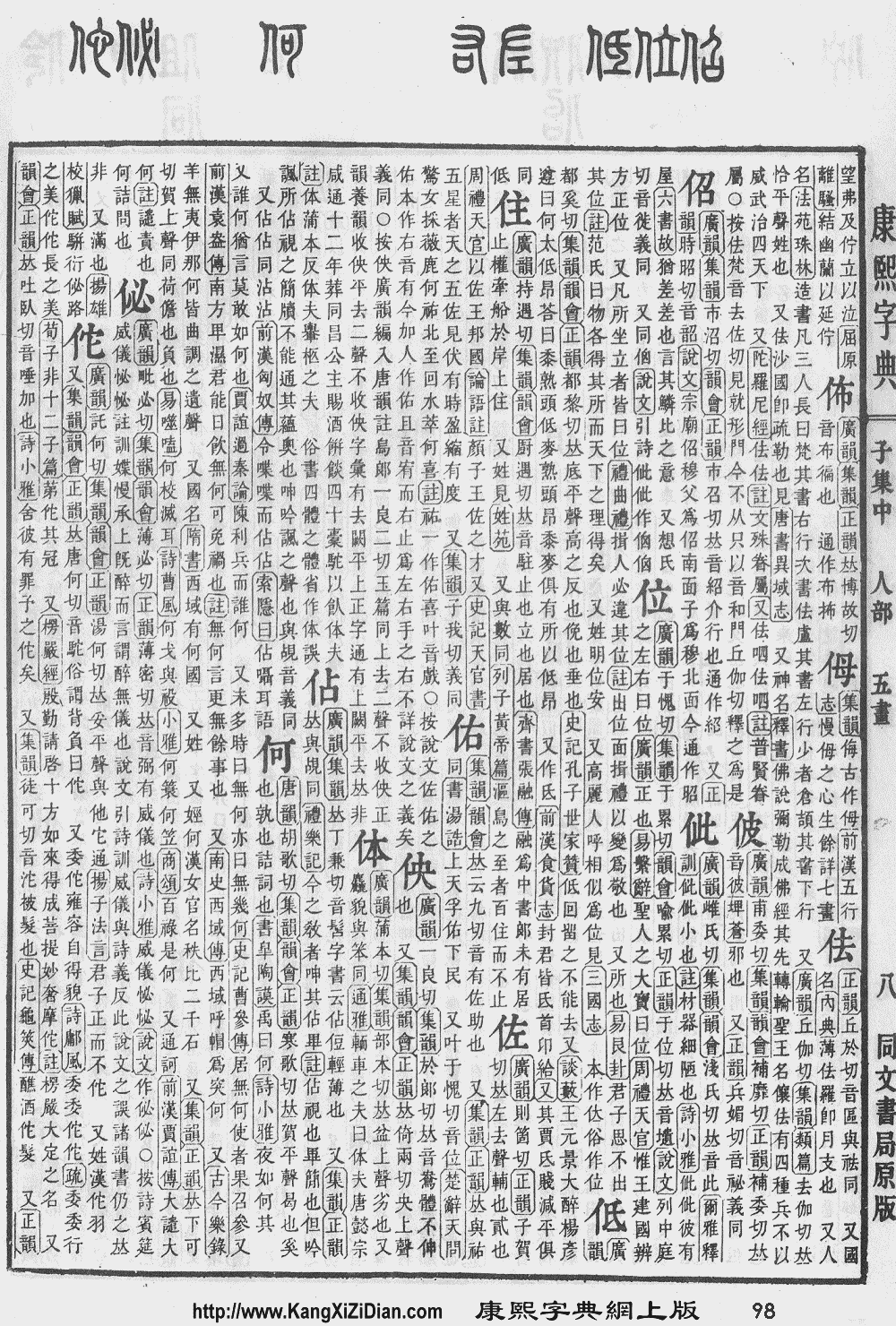
- KangXi: page 98, character 11
- Dai Kanwa Jiten: character 507
- Dae Jaweon: page 208, character 1
- Hanyu Da Zidian: volume 1, page 131, character 2
- Unihan data for U+4F51
Chinese
| simp. and trad. |
佑 | |
|---|---|---|
Glyph origin
| Characters in the same phonetic series (又) (Zhengzhang, 2003) | |
|---|---|
| Old Chinese | |
| 絠 | *kɯːʔ |
| 醢 | *qʰɯːʔ |
| 珛 | *qʰʷɯs |
| 栯 | *ɢʷɯʔ, *qʷɯ |
| 有 | *ɢʷɯʔ |
| 友 | *ɢʷɯʔ |
| 右 | *ɢʷɯʔ, *ɢʷɯs |
| 宥 | *ɢʷɯs |
| 囿 | *ɢʷɯs, *ɡʷɯ |
| 侑 | *ɢʷɯs |
| 酭 | *ɢʷɯs |
| 姷 | *ɢʷɯs |
| 又 | *ɢʷɯs |
| 佑 | *ɢʷɯs |
| 祐 | *ɢʷɯs |
| 賄 | *qʰʷɯːʔ |
| 蛕 | *qʰʷɯːʔ, *ɡʷɯː |
| 烠 | *ɡʷɯː |
| 倄 | *ɢraːw, *ɢʷɯːʔ |
| 鮪 | *ɢʷɯʔ |
| 洧 | *ɢʷɯʔ |
| 痏 | *ɢʷɯʔ |
| 郁 | *qʷɯ |
| 戫 | *qʷɯ |
| 哊 | *ɡʷɯ |
Phono-semantic compound (形聲, OC *ɢʷɯs) : semantic 亻 + phonetic 右 (OC *ɢʷɯʔ, *ɢʷɯs).
Etymology
From 右 (OC *ɢʷɯʔ, *ɢʷɯs, “right”).
“Right” and “left” are metaphors for “to assist” via the following semantic development: “left or right” > “to be on the left or right of a person” > “to assist, to help, to protect”.
Compare the derivation of 佐 (OC *ʔsaːls, “to assist; to help”) from 左 (OC *ʔsaːlʔ, *ʔsaːls, “left”).
Pronunciation
Definitions
佑
Compounds
Japanese
Kanji
佑
(“Jinmeiyō” kanji used for names)
Readings
Proper noun
- A male given name
Korean
Hanja
佑 • (u) (hangeul 우, revised u, McCune–Reischauer u)
- This term needs a translation to English. Please help out and add a translation, then remove the text
{{rfdef}}.
This article is issued from
Wiktionary.
The text is licensed under Creative Commons - Attribution - Sharealike.
Additional terms may apply for the media files.