ball
English
Pronunciation
- IPA(key): /bɔːl/
- (Canada, cot–caught merger) IPA(key): /bɑl/
Audio (US) (file) - Rhymes: -ɔːl
- Homophone: bawl
Etymology 1
From Middle English bal, ball, balle, from Old English *beall, *bealla (“round object, ball”) or Old Norse bǫllr (“a ball”) (whence Icelandic böllur (“scrotum; penis; a ball”)), both from Proto-Germanic *balluz, *ballô (“ball”), from Proto-Indo-European *bʰoln- (“bubble”), from Proto-Indo-European *bʰel- (“to blow, inflate, swell”). Cognate with Old Saxon ball, Dutch bal, Old High German bal, ballo (German Ball (“ball”); Ballen (“bale”)). Related forms in Romance are borrowings from Germanic. See also balloon, bale.
Noun
ball (plural balls)
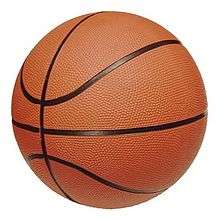
- A solid or hollow sphere, or part thereof.
- a ball of spittle; a fecal ball
- A quantity of string, thread, etc., wound into a spherical shape.
- a ball of wool; a ball of twine
- (ballistics) A solid, spherical nonexplosive missile for a cannon, etc.
- A roundish protuberant portion of some part of the body.
- the ball of the thumb; the ball of the foot
- (anatomy) The front of the bottom of the foot, just behind the toes.
- The globe; the earthly sphere.
- Joseph Addison (1672-1719)
- Move round the dark terrestrial ball.
- 1717, Alexander Pope, "Elegy to the Memory of an Unfortunate Lady"
- Thus, if eternal Justice rules the ball, / Thus shall your wives, and thus your children fall;
- Joseph Addison (1672-1719)
- (mathematics) The set of points in a metric space lying within a given distance (the radius) of a given point; specifically, the homologue of the disk in a Euclidean space of any number of dimensions.
- (mathematics, more generally) The set of points in a topological space lying within some open set containing a given point; the analogue of the disk in a Euclidean space.
- An object, generally spherical, used for playing games.
- 1922, Michael Arlen, “3/19/2”, in “Piracy”: A Romantic Chronicle of These Days:
- Ivor had acquired more than a mile of fishing rights with the house; he was not at all a good fisherman, but one must do something; one generally, however, banged a ball with a squash-racket against a wall.
- 2011 October 2, Aled Williams, “Swansea 2-0 Stoke”, in BBC Sport Wales:
- Graham secured victory with five minutes left, coolly lifting the ball over Asmir Begovic.
-
- (sports) The use of a round or ellipsoidal object.
- Any simple game involving a ball.
- The children were playing ball on the beach.
- The children were playing ball in the garden.
- (baseball) A pitch that falls outside of the strike zone.
- (pinball) An opportunity to launch the pinball into play.
- If you get to a million points, you get another ball.
- (cricket) A single delivery by the bowler, six of which make up an over.
- (soccer) A pass; a kick of the football towards a teammate.
- 2010 December 29, Chris Whyatt, “Chelsea 1-0 Bolton”, in BBC:
- After Essien's poor attempt flew into the stands, Rodrigo Moreno - Bolton's on-loan winger from Benfica who was making his full Premier League debut - nearly exposed the Blues with a lovely ball for Johan Elmander, but it just skipped away from his team-mate's toes.
-
- Any simple game involving a ball.
- (mildly vulgar, slang, usually in the plural) A testicle.
- (printing, historical) A leather-covered cushion, fastened to a handle called a ballstock; formerly used by printers for inking the form, then superseded by the roller.
- (farriery, historical) A large pill, a form in which medicine was given to horses; a bolus.
- (Can we find and add a quotation of White to this entry?)
Synonyms
Derived terms
(solid or hollow sphere):
(testicle):
|
Translations
|
|
|
|
|
|
|
|
- The translations below need to be checked and inserted above into the appropriate translation tables, removing any numbers. Numbers do not necessarily match those in definitions. See instructions at Wiktionary:Entry layout#Translations.
Verb
ball (third-person singular simple present balls, present participle balling, simple past and past participle balled)
- (transitive) To form or wind into a ball.
- to ball cotton
- (metalworking) To heat in a furnace and form into balls for rolling.
- (transitive, vulgar) To have sexual intercourse with.
- (transitive, intransitive) To gather balls which cling to the feet, as of damp snow or clay; to gather into balls.
- The horse balls; the snow balls.
- (slang, usually in present participle) To be hip or cool.
- (nonstandard, slang) To play basketball.
Synonyms
Translations
Interjection
ball
- (Australian rules football) An appeal by the crowd for holding the ball against a tackled player. This is heard almost any time an opposition player is tackled, without regard to whether the rules about "prior opportunity" to dispose of the ball are fulfilled.
- 2007, “Laws Of The Afl 2007”, in AFL Sydney Swans Rules Zone, archived from [ the original] on March 22, 2008:
- A good tackle (and some bad ones) will bring a cry of "Ball!" from the crowd – a plea for a holding the ball free kick.
-
Etymology 2
From French bal, from Late Latin ballō.
Noun
ball (plural balls)
Synonyms
- (very enjoyable time): blast, whale of a time
Derived terms
|
Related terms
Translations
|
|
Catalan
Pronunciation
- Rhymes: -aʎ
Noun
ball m (plural balls)
Synonyms
Related terms
Crimean Tatar
Etymology
Noun
ball
Declension
| nominative | ball |
|---|---|
| genitive | ballnıñ |
| dative | ballğa |
| accusative | ballnı |
| locative | ballda |
| ablative | balldan |
References
- Mirjejev, V. A.; Usejinov, S. M. (2002) Ukrajinsʹko-krymsʹkotatarsʹkyj slovnyk [Ukrainian – Crimean Tatar Dictionary], Simferopol: Dolya, →ISBN
Icelandic
Pronunciation
- IPA(key): /palː/
- Rhymes: -alː
Noun
ball n (genitive singular balls, nominative plural böll)
Declension
Irish
Etymology
From Old Irish ball, from Proto-Celtic *ballo-, from Proto-Indo-European *bʰel- (“to blow, swell, inflate”); compare English ball, Greek φαλλός (phallós, “penis”).
Pronunciation
Noun
ball m (genitive singular baill, nominative plural baill)
Declension
First declension
|
Bare forms:
|
Forms with the definite article:
|
Derived terms
|
|
|
Mutation
| Irish mutation | ||
|---|---|---|
| Radical | Lenition | Eclipsis |
| ball | bhall | mball |
| Note: Some of these forms may be hypothetical. Not every possible mutated form of every word actually occurs. | ||
References
- "ball" in Foclóir Gaeilge-Béarla, An Gúm, 1977, by Niall Ó Dónaill.
- “ball” in Dictionary of the Irish Language, Royal Irish Academy, 1913–76.
Middle English
Etymology 1
From Old English *beall.
Noun
ball
- Alternative form of bal
Etymology 2
Probably from Old French bale.
Noun
ball
- Alternative form of bale (“bale”)
Norwegian Bokmål
Etymology 1
Noun
ball m (definite singular ballen, indefinite plural baller, definite plural ballene)
Derived terms
Etymology 2
Noun
ball n (definite singular ballet, indefinite plural ball or baller, definite plural balla or ballene)
- ball (formal social occasion involving dancing)
Derived terms
References
- “ball” in The Bokmål Dictionary.
Norwegian Nynorsk
Etymology 1
Noun
ball m (definite singular ballen, indefinite plural ballar, definite plural ballane)
Derived terms
Etymology 2
Noun
ball n (definite singular ballet, indefinite plural ball, definite plural balla)
- ball (formal social occasion involving dancing)
Derived terms
References
- “ball” in The Nynorsk Dictionary.
Scottish Gaelic
Etymology
From Old Irish ball m (“limb, member, organ; member of community; part, portion, piece; article, object; place, spot; passage (of a book); spot, mark, blemish”) (compare Irish ball), from Proto-Celtic *ballo-, from Proto-Indo-European *bhel- (“to blow, swell, inflate”) (compare English ball, Ancient Greek φαλλός (phallós, “penis”)).
Noun
ball m (genitive singular buill, plural buill)
Mutation
| Scottish Gaelic mutation | |
|---|---|
| Radical | Lenition |
| ball | bhall |
| Note: Some of these forms may be hypothetical. Not every possible mutated form of every word actually occurs. | |
Derived terms
- Ball Pàrlamaid, BP (“Member of Parliament, MP”)
- ballrachd (“membership”)
- BPA
References
- Faclair Gàidhlig Dwelly Air Loidhne, Dwelly, Edward (1911), Faclair Gàidhlig gu Beurla le Dealbhan/The Illustrated [Scottish] Gaelic-English Dictionary (10th ed.), Edinburgh: Birlinn Limited, →ISBN
- “ball” in Dictionary of the Irish Language, Royal Irish Academy, 1913–76.
Swedish
Pronunciation
- IPA(key): /ˈbalː/
Adjective
ball
- (slang) cool, hip, fun, entertaining
- Det är ballt att åka skateboard.
- It’s cool to ride a skateboard.
- Synonym: cool
Declension
| Inflection of ball | |||
|---|---|---|---|
| Indefinite | Positive | Comparative | Superlative2 |
| Common singular | ball | ballare | ballast |
| Neuter singular | ballt | ballare | ballast |
| Plural | balla | ballare | ballast |
| Definite | Positive | Comparative | Superlative |
| Masculine singular1 | balle | ballare | ballaste |
| All | balla | ballare | ballaste |
| 1) Only used, optionally, to refer to things whose natural gender is masculine. 2) The indefinite superlative forms are only used in the predicative. | |||