佗
| ||||||||
Translingual
Han character
佗 (radical 9 人+5, 7 strokes, cangjie input 人十心 (OJP), four-corner 23211, composition ⿰亻它)
References
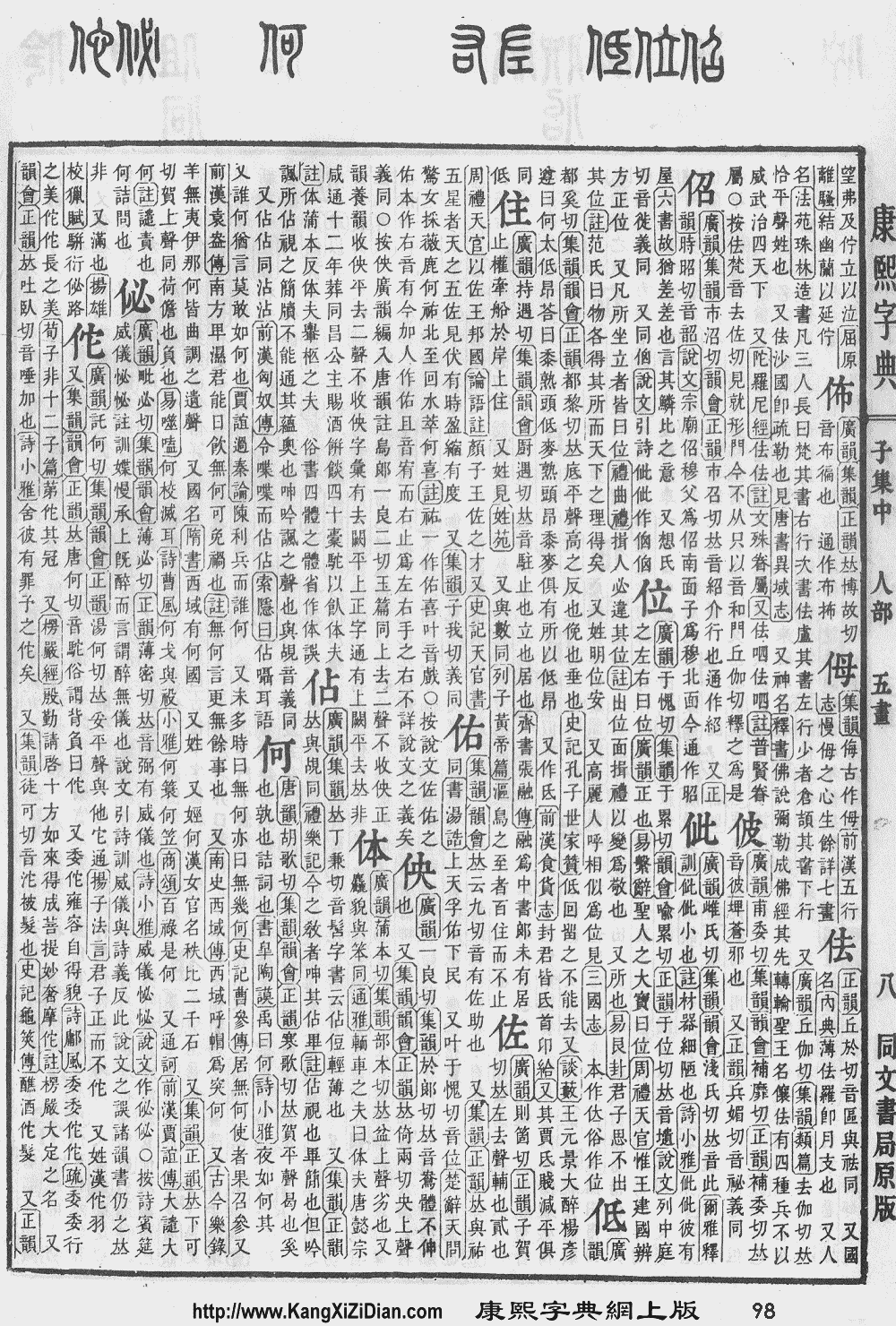
- KangXi: page 98, character 17
- Dai Kanwa Jiten: character 513
- Dae Jaweon: page 208, character 7
- Hanyu Da Zidian: volume 1, page 139, character 3
- Unihan data for U+4F57
Chinese
Glyph origin
| Historical forms of the character 佗 | ||||||||||||
|---|---|---|---|---|---|---|---|---|---|---|---|---|
| Warring States | Shuowen Jiezi (compiled in Han) | Liushutong (compiled in Ming) | ||||||||||
| Chu Slip and silk script | Small seal script | Transcribed ancient scripts | ||||||||||
 |
 |
 | ||||||||||
||
|
References: Mostly from Richard Sears' Chinese Etymology site (authorisation),
| ||||||||||||


| Characters in the same phonetic series (它) (Zhengzhang, 2003) | |
|---|---|
| Old Chinese | |
| 佗 | *l̥ʰaːl, *l'aːl |
| 拕 | *l̥ʰaːl, *l'aːlʔ |
| 它 | *l̥ʰaːl |
| 蛇 | *l̥ʰaːl, *ɦljaːl, *lal |
| 袉 | *l̥ʰaːlʔ, *l'aːl, *l'aːlʔ |
| 鴕 | *l'aːl |
| 駝 | *l'aːl |
| 紽 | *l'aːl |
| 鮀 | *l'aːl |
| 陀 | *l'aːl |
| 沱 | *l'aːl, *l'aːlʔ |
| 跎 | *l'aːl |
| 詑 | *l'aːl, *l'aːlʔ, *hlel, *lal, *l̥ʰoːl |
| 酡 | *l'aːl |
| 迱 | *l'aːl |
| 舵 | *l'aːlʔ |
| 柁 | *l'aːlʔ |
| 鉈 | *ɦljaːl, *hljal |
Phono-semantic compound (形聲, OC *l̥ʰaːl, *l'aːl) : semantic 人 (“human”) + phonetic 它 (OC *l̥ʰaːl).
Etymology 1
| simp. and trad. |
佗 | |
|---|---|---|
Pronunciation
Definitions
佗
Compounds
|
|
|
Etymology 2
| simp. and trad. |
佗 | |
|---|---|---|
Pronunciation
Definitions
佗
Etymology 3
| simp. and trad. |
佗 | |
|---|---|---|
| alt. forms | 倒 叨 叼 搭 | |
Pronunciation 1
Definitions
佗
Synonyms
| Dialectal synonyms of 哪 (“which”) [map] | ||
|---|---|---|
| Variety | Location | Words |
| Classical Chinese | 何 | |
| Formal (Written Standard Chinese) | 哪 | |
| Mandarin | Beijing | 哪 |
| Taiwan | 哪 | |
| Cantonese | Guangzhou | 邊 |
| Hong Kong | 邊 | |
| Hong Kong (Weitou) | 選 | |
| Taishan | 哪 | |
| Yangjiang | 邊 | |
| Hakka | Miaoli (N. Sixian) | 哪 |
| Liudui (S. Sixian) | 哪 | |
| Hsinchu (Hailu) | 哪 | |
| Dongshi (Dabu) | 哪 | |
| Zhuolan (Raoping) | 哪 | |
| Yunlin (Zhao'an) | 哪 | |
| Hong Kong | 哪 | |
| Min Nan | Xiamen | 佗 |
| Quanzhou | 佗 | |
| Zhangzhou | 佗 | |
| Taipei | 佗 | |
| Kaohsiung | 佗 | |
| Chaozhou | 底 | |
Pronunciation 2
Definitions
佗
Synonyms
Compounds
Etymology 4
| simp. and trad. |
佗 | |
|---|---|---|
Pronunciation
Definitions
佗
- † to add; to impute
- 舍彼有罪,予之佗矣。 [Classical Chinese, trad. and simp.]
- From: The Classic of Poetry, circa 11th – 7th centuries BCE, translated based on James Legge's version
- Shě bǐ yǒu zuì, yú zhī tuò yǐ. [Pinyin]
- He lets alone the guilty,
And imputes guilt to me.
Etymology 5
| simp. and trad. |
佗 | |
|---|---|---|
| alt. forms | 迤 | |
Pronunciation
Definitions
佗
Japanese
Kanji
佗
- This term needs a translation to English. Please help out and add a translation, then remove the text
{{rfdef}}.
Readings
Korean
Hanja
佗 • (ta) (hangeul 타, revised ta, McCune–Reischauer t'a)
- This term needs a translation to English. Please help out and add a translation, then remove the text
{{rfdef}}.
Vietnamese
Han character
佗 (đà)
- This term needs a translation to English. Please help out and add a translation, then remove the text
{{rfdef}}.
References
This article is issued from
Wiktionary.
The text is licensed under Creative Commons - Attribution - Sharealike.
Additional terms may apply for the media files.