叼
| ||||||||
Translingual
Han character
叼 (radical 30 口+2, 5 strokes, cangjie input 口尸一 (RSM), four-corner 67020, composition ⿰口刁)
References
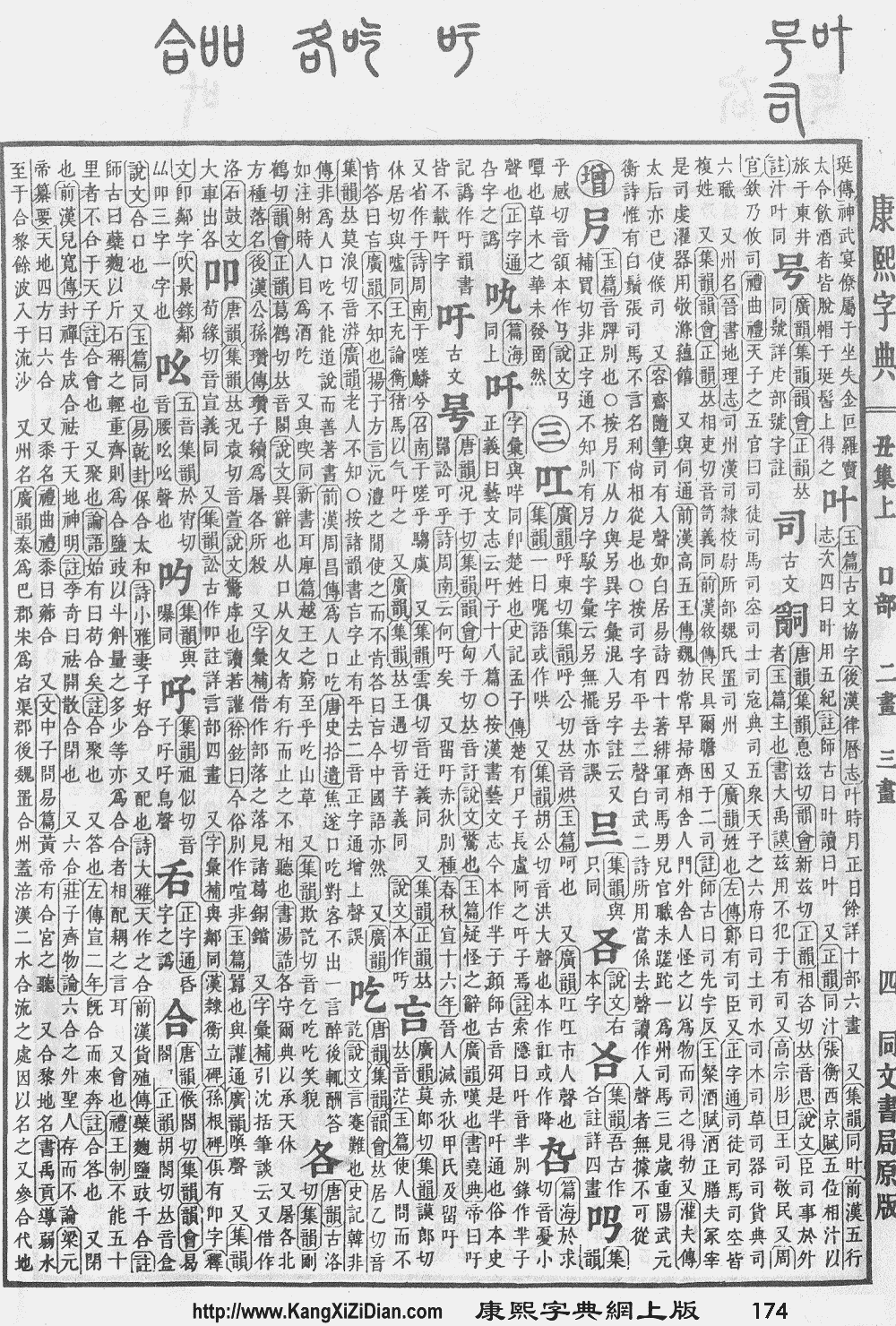
- KangXi: not present, would follow page 174, character 9
- Dai Kanwa Jiten: character 3270
- Hanyu Da Zidian: volume 1, page 573, character 1
- Unihan data for U+53FC
Chinese
| simp. and trad. |
叼 | |
|---|---|---|
Pronunciation
- Mandarin
- (Standard Chinese)+
- Pinyin:
- Zhuyin: ㄉㄧㄠ
- Wade-Giles: tiao1
- Gwoyeu Romatzyh: diau
- IPA (key): /ti̯ɑʊ̯⁵⁵/
- (Standard Chinese)+
- Cantonese
- (Standard Cantonese, Guangzhou)+
- Jyutping: diu1
- Yale: dīu
- Cantonese Pinyin: diu1
- Guangdong Romanization: diu1
- IPA (key): /tiːu̯⁵⁵/
- (Standard Cantonese, Guangzhou)+
- Min Nan
- (Hokkien: Xiamen, Quanzhou, Zhangzhou)
- Pe̍h-ōe-jī: tiau
- Tâi-lô: tiau
- Phofsit Daibuun: diaw
- IPA (Xiamen, Zhangzhou): /tiaʊ⁴⁴/
- IPA (Quanzhou): /tiaʊ³³/
- (Hokkien: mainstream Taiwanese)
- Pe̍h-ōe-jī: toh
- Tâi-lô: toh
- Phofsit Daibuun: doiq
- IPA (Taipei): /toʔ³²/
- IPA (Kaohsiung): /tɤʔ³²/
- (Hokkien: Xiamen, Quanzhou, Zhangzhou)
Definitions
叼
- to hang from mouth
Japanese
Kanji
叼
- This term needs a translation to English. Please help out and add a translation, then remove the text
{{rfdef}}.
Readings
This article is issued from
Wiktionary.
The text is licensed under Creative Commons - Attribution - Sharealike.
Additional terms may apply for the media files.