燒
| ||||||||
Translingual
| Traditional | 燒 |
|---|---|
| Shinjitai | 焼 |
| Simplified | 烧 |
Han character
燒 (radical 86, 火+12, 16 strokes, cangjie input 火土土山 (FGGU), four-corner 94811, composition ⿰火堯)
Descendants
References
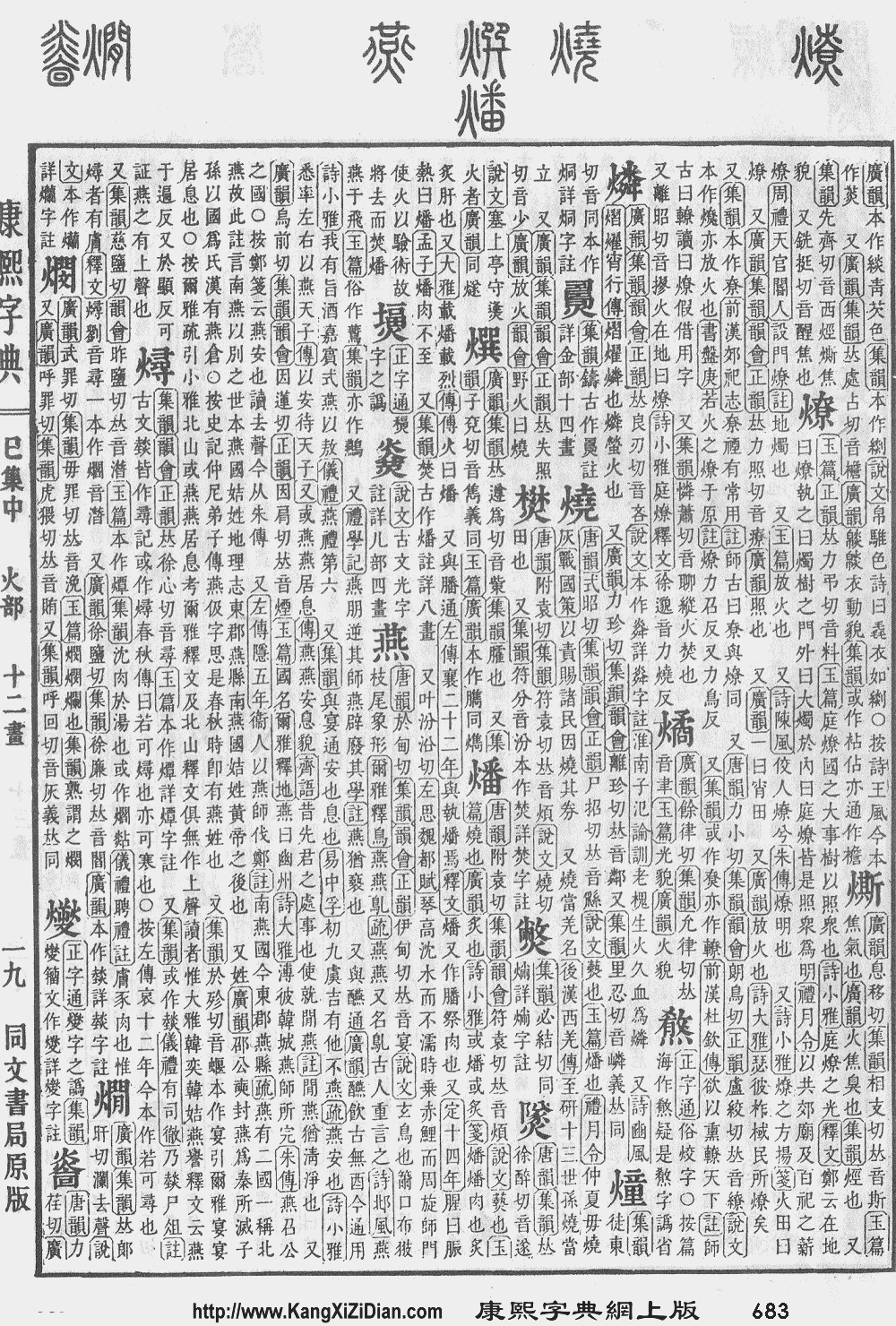
- KangXi: page 683, character 8
- Dai Kanwa Jiten: character 19420
- Dae Jaweon: page 1095, character 8
- Hanyu Da Zidian: volume 3, page 2231, character 7
- Unihan data for U+71D2
Chinese
| trad. | 燒 | |
|---|---|---|
| simp. | 烧 | |
| alt. forms | 焼 | |
Glyph origin
| Characters in the same phonetic series (垚) (Zhengzhang, 2003) | |
|---|---|
| Old Chinese | |
| 撓 | *hŋaːw, *rŋaːw, *rnaːwʔ |
| 鐃 | *rŋaːw |
| 譊 | *rŋaːw |
| 橈 | *rŋaːws, *ŋjew |
| 磽 | *ŋ̊ʰreːw, *ŋreːws, *ŋ̊ʰeːwʔ |
| 墝 | *ŋ̊ʰreːw |
| 穘 | *hŋreːw |
| 顤 | *hŋreːw, *ŋeːws |
| 燒 | *hŋjew, *hŋjaws |
| 饒 | *ŋjew, *ŋjaws |
| 蟯 | *ŋjew, *ʔŋew |
| 蕘 | *ŋjew |
| 襓 | *ŋjew |
| 繞 | *ŋjewʔ, *ŋjaws |
| 遶 | *ŋjewʔ |
| 嬈 | *njewʔ, *neːwʔ, *hŋeːws |
| 趬 | *ŋ̊ʰew, *ŋ̊ʰews |
| 蹺 | *ŋ̊ʰew |
| 翹 | *ɡew, *ɡews |
| 澆 | *ŋkeːw, *ŋeːws |
| 驍 | *ŋkeːw |
| 僥 | *kŋeːwʔ, *ŋeːw |
| 堯 | *ŋeːw |
| 垚 | *ŋeːw |
| 嶢 | *ŋeːw |
| 獟 | *ŋeːws |
| 膮 | *hŋeːw, *hŋeːwʔ |
| 嘵 | *hŋeːw |
| 憢 | *hŋeːw |
| 曉 | *hŋeːwʔ |
| 皢 | *hŋeːwʔ |
Phono-semantic compound (形聲, OC *hŋjew, *hŋjaws) : semantic 火 (“fire”) + phonetic 堯 (OC *ŋeːw).
Etymology
From 蕘 (OC *ŋjew, “firewood; fuel”) with causative devoicing (Schuessler, 2007).
Pronunciation
Definitions
燒
- to burn
- to heat up; to make warm
- to burn; to corrode
- to roast; to grill; to braise
- to stew after frying, or to fry after stewing
- to cook (food)
- (of a fuse) to blow
- (medicine) to have a fever; to run a temperature
- (medicine) fever; temperature
- (colloquial) bigheaded; conceited and forgetting oneself due to having too much resources (money etc.)
- (Central Plains Mandarin, Lanyin Mandarin, Gan, Hakka, Jin, Min Nan, Min Bei) hot (having a high temperature)
- (Cantonese) to set off (firecrackers, fireworks, etc.)
- (Cantonese, electronics) to burn out
- (Sichuan) to smoke
- (Sichuan) to trick; to deceive
- (Sichuan) to ridicule; to roast
- (Min Nan) hot; having a high temperature
Compounds
Derived terms from 燒
|
|
|
Japanese
| 焼 | |
| 燒 |
Kanji
燒
(“Jinmeiyō” kanji used for names, kyūjitai kanji, shinjitai form 焼)
- This term needs a translation to English. Please help out and add a translation, then remove the text
{{rfdef}}.
Readings
- Goon: しょう (shō)←せう (seu, historical)
- Kan’on: しょう (shō)←せう (seu, historical)
- Kun: やく (yaku, 燒く); やける (yakeru, 燒ける)
Korean
Hanja
燒 • (so) (hangeul 소, revised so, McCune–Reischauer so, Yale so)
Synonyms
Compounds
- 燒印 (소인, soin) brand, branding iron
- 燒酒 (소주, soju)
Vietnamese
Hán Tự
- This term needs a translation to English. Please help out and add a translation, then remove the text
{{rfdef}}.
This article is issued from
Wiktionary.
The text is licensed under Creative Commons - Attribution - Sharealike.
Additional terms may apply for the media files.