煙
| ||||||||
Translingual
| 煙 | |
| 烟 | |
| 煙 | |
| 煙 |
Han character
煙 (radical 86 火+9, 13 strokes, cangjie input 火一田土 (FMWG), four-corner 91814, composition ⿰火垔)
Derived characters
- 𫴍, 𬮕
Related characters
References
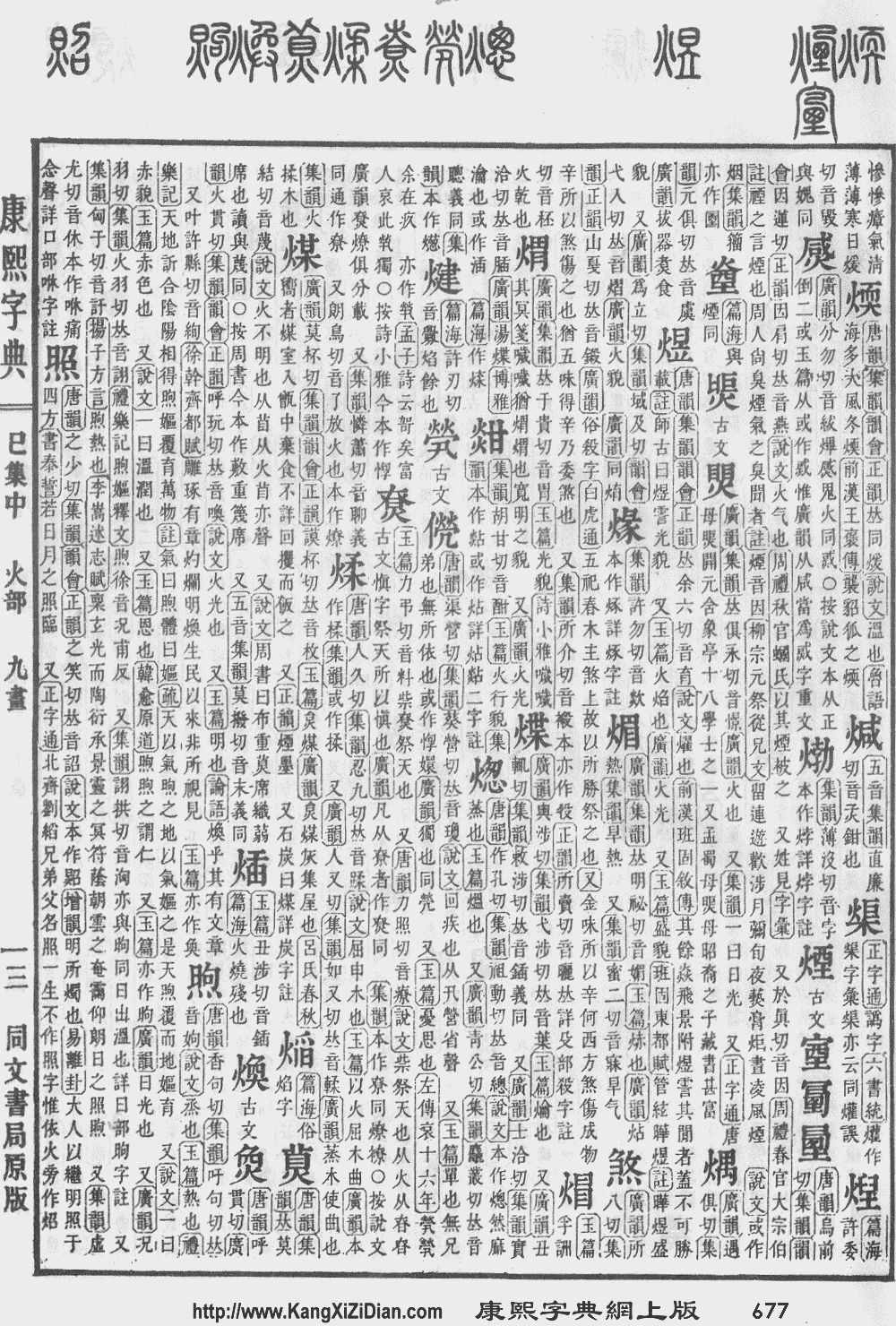
- KangXi: page 677, character 7
- Dai Kanwa Jiten: character 19203
- Dae Jaweon: page 1088, character 2
- Hanyu Da Zidian: volume 3, page 2215, character 9
- Unihan data for U+7159
Chinese
| trad. | 煙/菸* | |
|---|---|---|
| simp. | 烟 | |
| 菸 – when related to tobacco | ||
Glyph origin
| Characters in the same phonetic series (垔) (Zhengzhang, 2003) | |
|---|---|
| Old Chinese | |
| 黫 | *qriːn |
| 甄 | *ken, *kin |
| 薽 | *ken, *kjin |
| 籈 | *ken, *kjin |
| 煙 | *qiːn |
| 湮 | *qiːn, *qin |
| 堙 | *qin |
| 禋 | *qin |
| 闉 | *qin |
| 垔 | *qin |
| 陻 | *qin |
| 諲 | *qin |
| 歅 | *qin |
| 鄄 | *kʷens |
Phono-semantic compound (形聲, OC *qiːn) : semantic 火 (“fire”) + phonetic 垔 (OC *qin).
Pronunciation
Definitions
煙
- smoke; mist; vapour (Classifier: 陣/阵 m c; 團/团 m; 縷/缕 m c; 層/层 m c)
- tobacco
- cigarette (Classifier: 支 m c; 根 m)
- tobacco pipe
- opium
- soot
- (Cantonese, slang, informal, card games) ace
- to be irritated by smoke
- 煙燻 / 烟熏 ― yānxūn ― (please add an English translation of this example)
Synonyms
Compounds
|
|
|
Japanese
Kanji
Readings
Compounds
Etymology 1
| Kanji in this term |
|---|
| 煙 |
| けむり Grade: S |
| kun’yomi |
/keburi/ → /kemuri/
Shift from Old Japanese-derived keburi reading (see below) as a regular /b/ → /m/ change.[1][2][3] Appears in the Taiheiki of the late 1300s.
Now the most common reading.
Pronunciation
Alternative forms
- 烟 (less common)
Noun
Etymology 2
| Kanji in this term |
|---|
| 煙 |
| けむ Grade: S |
| kun’yomi |
Truncation of earlier kemuri (see above).[1][2] Appears in kabuki plays of the late Edo Period (late 1700s, early 1800s).
Pronunciation
Alternative forms
- 烟 (less common)
Noun
煙 (hiragana けむ, rōmaji kemu)
- (informal, colloquial) smoke
Etymology 3
| Kanji in this term |
|---|
| 煙 |
| けぶり Grade: S |
| kun’yomi |
The 連用形 (ren'yōkei, “continuative or stem form”) of verb 煙る (keburu, “to be smoky, to give off smoke”).[1][2][3] Appears with this reading in the Man'yōshū.
Pronunciation
Alternative forms
- 烟 (less common)
Noun
煙 (hiragana けぶり, rōmaji keburi)
- (archaic, possibly dialect) smoke
Etymology 4
| Kanji in this term |
|---|
| 煙 |
| けぶ Grade: S |
| kun’yomi |
Truncation of earlier keburi (see above).[1][2][3]
Pronunciation
Alternative forms
- 烟 (less common)
Noun
煙 (hiragana けぶ, rōmaji kebu)
- (archaic, possibly dialect) smoke
Etymology 5
| Kanji in this term |
|---|
| 煙 |
| えん Grade: S |
| on’yomi |
From Middle Chinese 煙 (MC ʔen).
Pronunciation
Affix
Usage notes
Only found in compounds.
Derived terms
References
- 1 2 3 4 1988, 国語大辞典(新装版) (Kokugo Dai Jiten, Revised Edition) (in Japanese), Tōkyō: Shogakukan
- 1 2 3 4 5 6 7 2006, 大辞林 (Daijirin), Third Edition (in Japanese), Tōkyō: Sanseidō, →ISBN
- 1 2 3 1995, 大辞泉 (Daijisen) (in Japanese), Tōkyō: Shogakukan, →ISBN
- ↑ 1998, NHK日本語発音アクセント辞典 (NHK Japanese Pronunciation Accent Dictionary) (in Japanese), Tōkyō: NHK, →ISBN
- 1 2 1997, 新明解国語辞典 (Shin Meikai Kokugo Jiten), Fifth Edition (in Japanese), Tōkyō: Sanseidō, →ISBN
Korean
Hanja
- This term needs a translation to English. Please help out and add a translation, then remove the text
{{rfdef}}.
Vietnamese
Han character
煙 (yên)
- This term needs a translation to English. Please help out and add a translation, then remove the text
{{rfdef}}.