種
| ||||||||
Translingual
Han character
種 (radical 115, 禾+9, 14 strokes, cangjie input 竹木竹十土 (HDHJG), four-corner 22914, composition ⿰禾重)
References
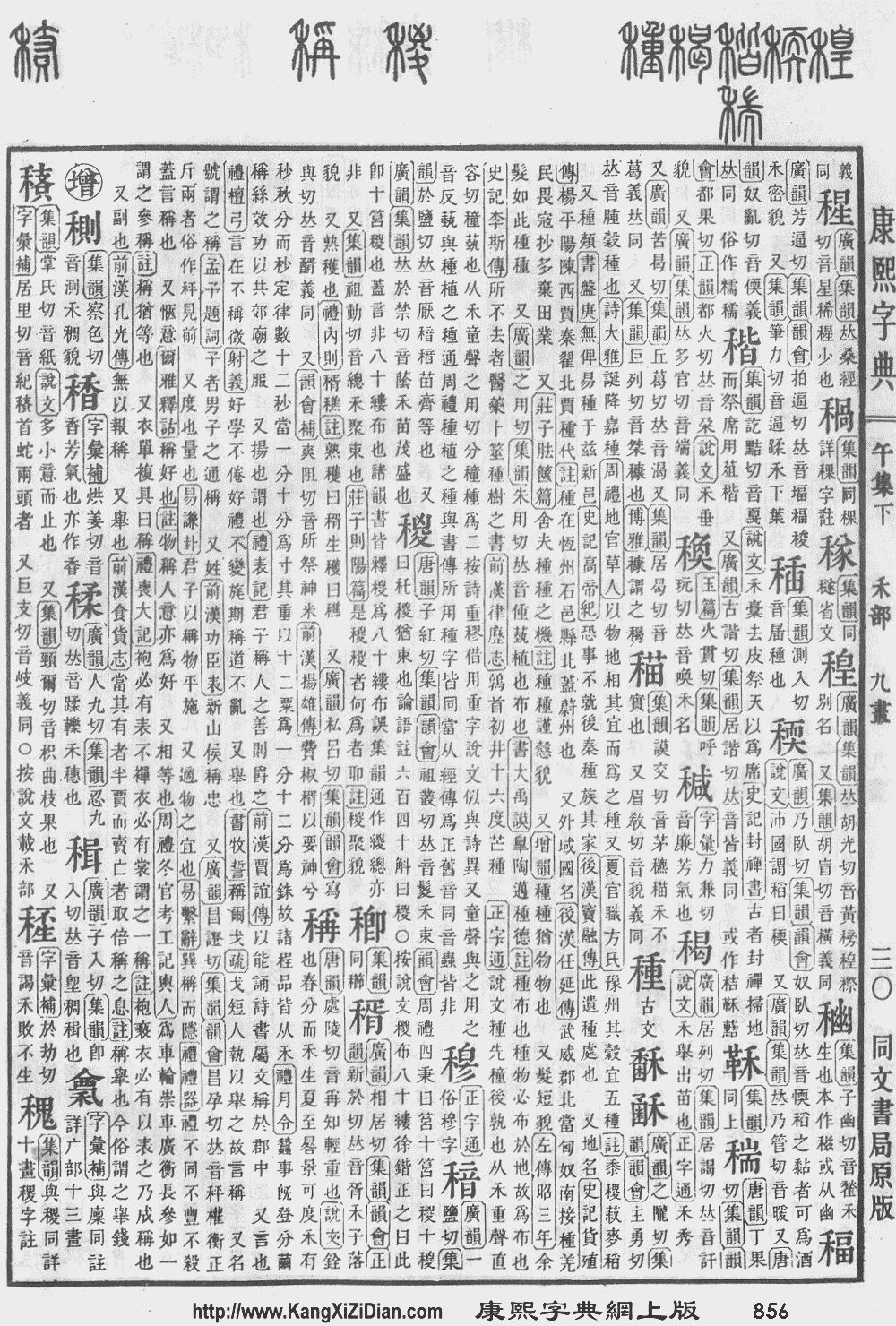
- KangXi: page 856, character 16
- Dai Kanwa Jiten: character 25174
- Dae Jaweon: page 1281, character 33
- Hanyu Da Zidian: volume 4, page 2617, character 17
- Unihan data for U+7A2E
Chinese
| trad. | 種 | |
|---|---|---|
| simp. | 种* | |
Glyph origin
| Historical forms of the character 種 |
|---|
| Shuowen Jiezi (compiled in Han) |
| Small seal script |
 |
| Characters in the same phonetic series (重) (Zhengzhang, 2003) | |
|---|---|
| Old Chinese | |
| 撞 | *rdoːŋ, *rdoːŋs |
| 幢 | *rdoːŋ, *rdoːŋs |
| 橦 | *rdoːŋ, *doːŋ, *tjoŋ |
| 噇 | *rdoːŋ |
| 𩪘 | *rdoːŋ |
| 艟 | *rdoːŋs, *tʰjoŋ |
| 憧 | *rdoːŋs, *tʰjoŋ |
| 畽 | *tʰoːnʔ, *tʰuːnʔ |
| 董 | *toːŋʔ |
| 蕫 | *toːŋʔ, *doːŋ |
| 箽 | *toːŋʔ |
| 懂 | *toːŋʔ |
| 湩 | *toːŋs, *tuːŋʔ, *toŋs |
| 曈 | *tʰoːŋ, *tʰoːŋʔ, *doːŋ |
| 童 | *doːŋ |
| 僮 | *doːŋ |
| 瞳 | *doːŋ |
| 罿 | *doːŋ, *tʰjoŋ |
| 犝 | *doːŋ |
| 潼 | *doːŋ, *tʰjoŋ |
| 穜 | *doːŋ, *doŋ |
| 動 | *doːŋʔ |
| 慟 | *doːŋs |
| 堹 | *toŋs |
| 諥 | *toŋs |
| 蹱 | *tʰoŋ, *tʰoŋs, *tjoŋ |
| 重 | *doŋ, *doŋʔ, *doŋs |
| 緟 | *doŋ, *doŋs |
| 蝩 | *doŋ |
| 褈 | *doŋ, *tʰjoŋ |
| 鐘 | *tjoŋ, *tjoŋ |
| 鍾 | *tjoŋ |
| 籦 | *tjoŋ |
| 種 | *tjoŋʔ, *tjoŋs |
| 腫 | *tjoŋʔ |
| 踵 | *tjoŋʔ |
| 歱 | *tjoŋʔ |
| 喠 | *tjoŋʔ, *tʰjoŋʔ |
| 偅 | *tjoŋs |
| 衝 | *tʰjoŋ |
| 揰 | *tʰjoŋs |
| 尰 | *djoŋʔ |
Phono-semantic compound (形聲, OC *tjoŋʔ, *tjoŋs) : semantic 禾 + phonetic 重 (OC *doŋ, *doŋʔ, *doŋs).
Etymology
Perhaps Sino-Tibetan: Chepang [script needed] (tuŋʔ-, “to plant”), दुङ् (duŋ, “shoot; sprout”), दुङ्सा (duŋ-, “to sprout; to grow”). Compare 腫 (OC *tjoŋʔ, “to swell”) and 踵 (OC *tjoŋʔ, “heel”).
Related to Proto-Vietic *k-coːŋʔ (“seed”) (Vietnamese giống (“seed”)), which is likely a loanword from Chinese (Wang, 1948).
Pronunciation 1
Definitions
種
- seed; kernel; cereal
- clan; ethnic group; ethnicity; race
- species; breed
- kind; sort; type
- Classifier for varieties: kind; sort; type ⇒ all nouns using this classifier
- 難忘妳對我那種體貼入微,時時刻刻腦海中都緊記 [Literary Cantonese, trad.]
- From: 許冠傑, 難忘你
- naan4 mong4 nei5 deoi3 ngo5 naa5 zung2 tai2 tip3 jap6 mei4, si4 si4 hak1 hak1 nou5 hoi2 zung1 dou1 gan2 gei3 [Jyutping]
- I can't forget that attention you gave me; it's still stuck fast in my mind all the time
难忘你对我那种体贴入微,时时刻刻脑海中都紧记 [Literary Cantonese, simp.]
- (colloquial) guts; grit
- A surname.
Compounds
|
|
|
Pronunciation 2
Definitions
種
Compounds
Pronunciation 3
Definitions
種
Japanese
Kanji
Readings
Compounds
- 種類 (shurui)
Etymology 1
From Old Japanese.
Possibly related to Proto-Malayo-Polynesian *tanəm; compare Indonesian tanam, Malay tanam (“to plant, to bury”); Chamorro tanom (“to plant”), Samoan tanu (“to bury”); Cebuano tanum (“a plant”).
Pronunciation
Noun
- a seed
- a pit or stone in a fruit
- a gamete, a reproductive cell such as a spermatozoan or egg
- a lineage, a bloodline
- an origin, a cause
- the materials or ingredients from which something is made
- capital, funds, seed money
Synonyms
Proper noun
種 (hiragana たね, rōmaji Tane)
- A surname.
Etymology 2
From Middle Chinese.
Pronunciation
Noun
Korean
Hanja
種 • (jong) (hangeul 종, revised jong, McCune–Reischauer chong, Yale cong)
- This term needs a translation to English. Please help out and add a translation, then remove the text
{{rfdef}}.
Vietnamese
Han character
種 (chõng, chỏng, chổng, chủng, giống, trồng)
- This term needs a translation to English. Please help out and add a translation, then remove the text
{{rfdef}}.