呉
| ||||||||
Translingual
| Traditional | 吳 |
|---|---|
| Shinjitai | 呉 |
| Simplified | 吴 |
Glyph origin
Variant of 吳.
The modern Japanese usage is of reform (shinjitai) nature.
Han character
呉 (radical 30, 口+4, 7 strokes, cangjie input 口女弓金 (RVNC), composition ⿳⿺𠃑口一八)
Derived characters
References
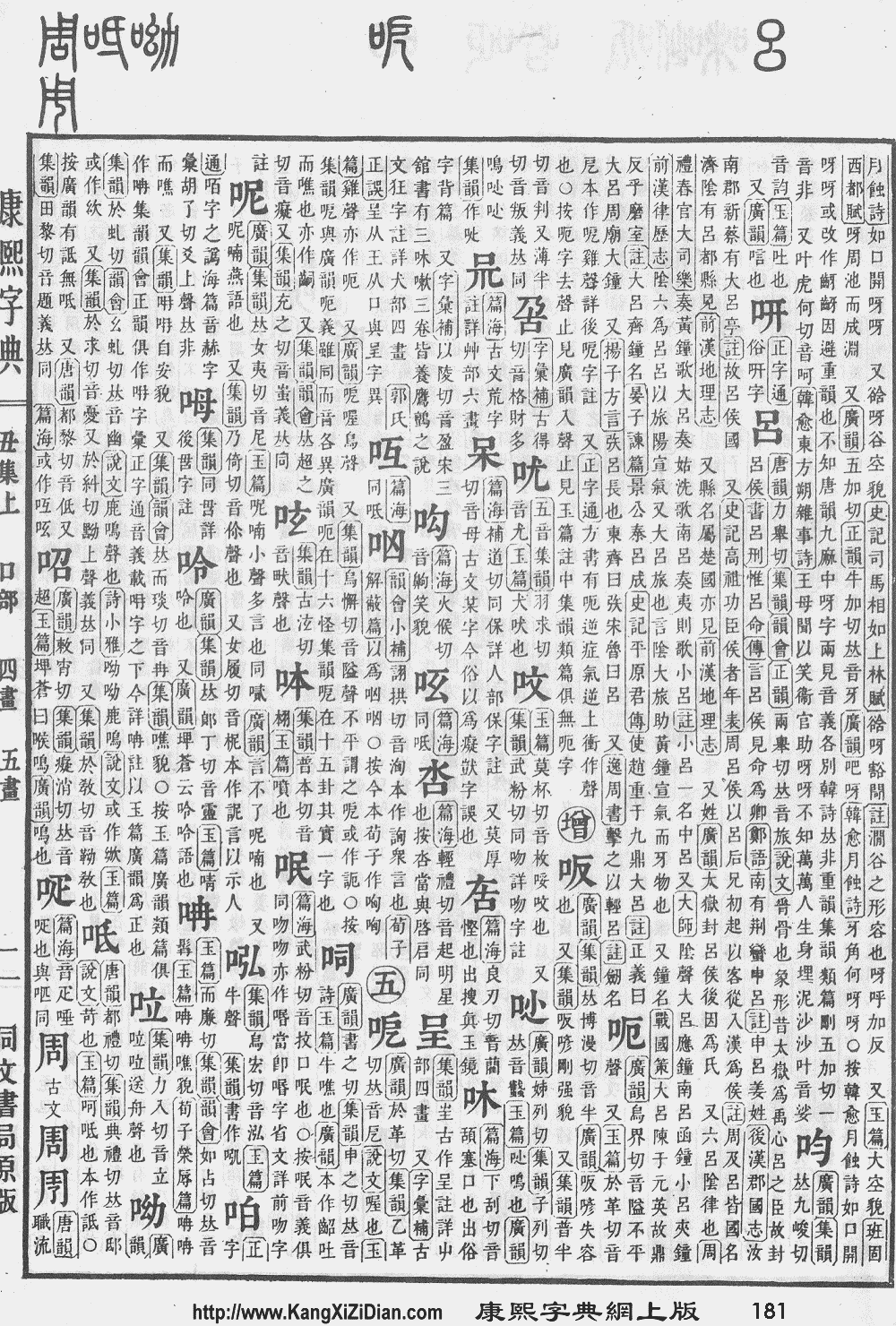
- KangXi: not present, would follow page 181, character 19
- Dai Kanwa Jiten: character 3365
- Hanyu Da Zidian: not present, would follow volume 1, page 595, character 8
- Unihan data for U+5449
Chinese
| For pronunciation and definitions of 呉 – see 吳 (“to speak loudly; to shout; big; etc.”). (This character, 呉, is a variant form of 吳.) |
Japanese
Kanji
呉
Readings
Compounds
Compounds
- 呉牛 (gogyū): water buffalo
Etymology 1
| Kanji in this term |
|---|
| 呉 |
| ご Grade: S |
| on’yomi |
From Middle Chinese 吳 (ngu, name of a state). Compare modern Mandarin 吳/吴 (Wú).
Pronunciation
Proper noun
呉 (shinjitai kanji, kyūjitai kanji 吳, hiragana ご, rōmaji Go)
- Japanese reading of the Chinese surname Wu.
- the ancient State of Wu
- China, Chinese
- More commonly found in compounds in modern Japanese.
Derived terms
Etymology 2
| Kanji in this term |
|---|
| 呉 |
| くれ Grade: S |
| kun’yomi |
The 連用形 (ren'yōkei, “continuative or stem form”) of verb 暮れる (kureru, “to set (said of the sun or moon), to get dark”), from the way that China lies to the west of Japan, in the direction of the setting sun.[1] Originally referred more specifically to the ancient State of Wu (roughly analogous with the modern Jiangnan region), and later referring to China as a whole.[1][2]
Pronunciation
Proper noun
呉 (shinjitai kanji, kyūjitai kanji 吳, hiragana くれ, rōmaji Kure)
- (archaic) China, Chinese
- More commonly found in compounds in modern Japanese.
- a place name, such as that of Kure City in Hiroshima Prefecture
Derived terms
Derived terms
- 呉楽 (kuregaku): gigaku, an extinct form of masked drama performance originally imported from China
- 呉竹 (kuretake): alternate name for 淡竹 (hachiku): henon bamboo, a form of Phyllostachys nigra (black bamboo)
- 紅 (kurenai): crimson
References
This article is issued from
Wiktionary.
The text is licensed under Creative Commons - Attribution - Sharealike.
Additional terms may apply for the media files.