唐黍
Japanese
Etymology 1
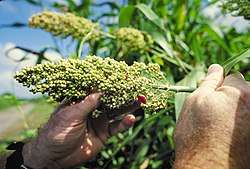
唐黍 (morokoshi kibi, morokoshi, tōkibi): sorghum.
| Kanji in this term | |
|---|---|
| 唐 | 黍 |
| もろこし Grade: S |
きび Hyōgaiji |
| kun’yomi | |
Compound of 唐 (morokoshi, “China in general; (by extension) foreign”) + 黍 (kibi, “millet”).
Pronunciation
Alternative forms
Noun
唐黍 (hiragana もろこしきび, rōmaji morokoshi kibi)
Usage notes
The longer term morokoshi kibi has been largely replaced by the shorter form morokoshi below.
Synonyms
- 蜀黍 (morokoshi), 唐黍 (morokoshi)
- 唐黍 (tōkibi)
- 高黍 (takakibi)
Etymology 2
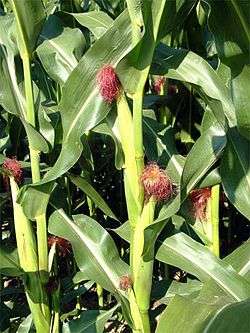
唐黍 (morokoshi, tōkibi): maize.
| Kanji in this term | |
|---|---|
| 唐 | 黍 |
| Grade: S | Hyōgaiji |
| Irregular | |
Abbreviation of morokoshi kibi above, with the abbreviated reading then re-applied to the entire kanji compound.[1]
Pronunciation
Alternative forms
Noun
唐黍 (hiragana もろこし, rōmaji morokoshi)
- sorghum
- maize, corn (especially corn on the cob)
Synonyms
Usage notes
The term 玉蜀黍 (tōmorokoshi) is more common for the maize sense.
Etymology 3
| Kanji in this term | |
|---|---|
| 唐 | 黍 |
| とう Grade: S |
きび Hyōgaiji |
| jūbakoyomi | |
/taukibi/ → /tɔːkibi/ → /toːkibi/
Compound of 唐 (tō, “Tang Dynasty; China in general; (by extension) foreign”) + 黍 (kibi, “millet”).[1][2]
Pronunciation
Noun
唐黍 (hiragana とうきび, rōmaji tōkibi)
- maize, corn (especially corn on the cob)
- sorghum
Synonyms
References
This article is issued from
Wiktionary.
The text is licensed under Creative Commons - Attribution - Sharealike.
Additional terms may apply for the media files.