玉蜀黍
Chinese
| jade | sorghum | ||
|---|---|---|---|
| simp. and trad. (玉蜀黍) |
玉 | 蜀黍 | |
Pronunciation
Noun
玉蜀黍
Synonyms
Japanese
| Kanji in this term | ||
|---|---|---|
| 玉 | 蜀 | 黍 |
| Grade: 1 | Hyōgaiji | Hyōgaiji |
| Irregular | ||
Etymology
/taumorokoɕi/ → /tɔːmorokoɕi/ → /toːmorokoɕi/
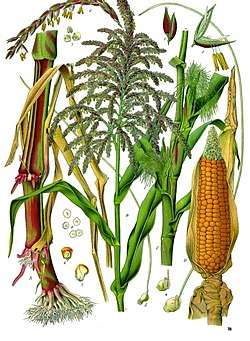
Originally a compound of 唐 (tō, “Tang Dynasty; China in general; (by extension) foreign”) + 蜀黍 or 唐黍 (morokoshi, “sorghum”),[1] from the visual similarities between the sorghum and maize plants.
The spelling is from Chinese,[1] and appears to be a compound of 玉 (“jade, jewel”) + 蜀黍 (“sorghum”, literally “Shu millet”). Compare modern Mandarin 玉蜀黍 (yùshǔshǔ, “maize”).
Pronunciation
Noun
玉蜀黍 (hiragana とうもろこし, katakana トウモロコシ, rōmaji tōmorokoshi, historical hiragana たうもろこし)
- maize, corn (especially corn on the cob)
Usage notes
For loose-kernel corn, the more common term in Japanese is コーン (kōn).
References
This article is issued from
Wiktionary.
The text is licensed under Creative Commons - Attribution - Sharealike.
Additional terms may apply for the media files.