匹
| ||||||||
Translingual
Han character
匹 (radical 23, 匸+2, 4 strokes, cangjie input 尸金 (SC), four-corner 71711, composition ⿷匚儿)
Derived characters
References
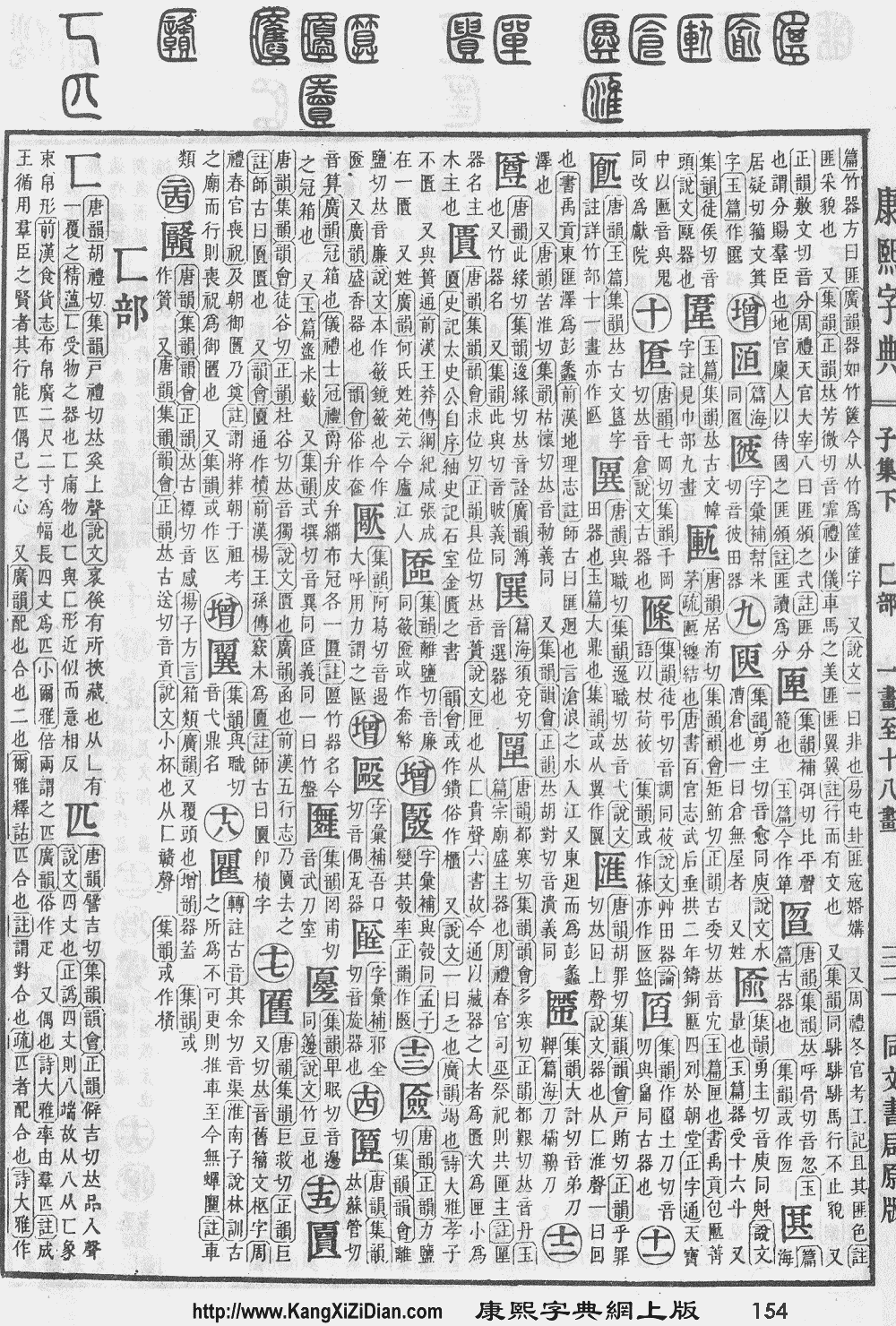
- KangXi: page 154, character 36
- Dai Kanwa Jiten: character 2673
- Dae Jaweon: page 347, character 11
- Hanyu Da Zidian: volume 1, page 81, character 6
- Unihan data for U+5339
Chinese
| simp. and trad. |
匹 | |
|---|---|---|
| alt. forms | 疋 | |
Glyph origin
| Historical forms of the character 匹 | |||
|---|---|---|---|
| Western Zhou | Warring States | Shuowen Jiezi (compiled in Han) | Liushutong (compiled in Ming) |
| Bronze inscriptions | Chu Slip and silk script | Small seal script | Transcribed ancient scripts |
 |
 |
 |
 |
| Characters in the same phonetic series (匹) (Zhengzhang, 2003) | |
|---|---|
| Old Chinese | |
| 匹 | *pʰid |
| 鴄 | *pʰid |
Uncertain. Shuowen considers it to be an ideogrammic compound (會意) and phono-semantic compound (形聲, OC *pʰid) : phonetic 八 (OC *preːd, “eight”) + semantic 匸 (“to conceal”) – unit of measuring cloth. 八 refers to eight folds in one 匹 of cloth (two bolts of cloth), and 匸 refers to concealing the two ends of the cloth when rolling it up. This interpretation is not likely since the older forms evidently do not contain these components.
Various theories have been proposed based on the evidence from the bronze inscriptions:
Etymology 1
Uncertain. Possibly related to Khmer ពីរ (pii, “two”) or Mizo phîr (“double; forked; twin”) (Schuessler, 2007).
Wang (1982) considers it to be cognate with 比 (OC *piʔ, “to compare; to match”), 媲 (OC *pʰiːs, “to match; to pair”).
The meaning “four zhang of cloth” is probably a special application, but it is reminiscent of Proto-Sino-Tibetan *b-ləj (“four”) (ibid.).
Pronunciation 1
Definitions
匹
- † to match; to be equal
- † match; equal; opponent
- † mate; spouse
- † single; one
- † four zhang of cloth
- Classifier for bolts of cloth.
- (Sichuan) Classifier for flat surfaces or objects (hillside, leaves, tiles, etc.).
- (Sichuan) Classifier for long, thin objects (bones, feathers, grass, bamboo strips, etc.).
- (Sichuan) Classifier for pieces or lumps (bricks, etc.).
- (Sichuan) Classifier for mountains.
- A surname.
Compounds
Pronunciation 2
Definitions
匹
- Classifier for horses, donkeys, mules, etc.
- (dialectal, including Sichuan) Classifier for animals.
- 阿Q沒有說完話,拔步便跑;追來的是一匹很肥大的黑狗。 [MSC, trad.]
- From: 1922, 魯迅 (Lu Xun), 阿Q正傳 (The True Story of Ah Q), translation from the Marxists Internet Archive
- Ā Q méiyǒu shuō wán huà, bábù biàn pǎo; zhuī lái de shì yī pǐ hěn féidà de hēi gǒu. [Pinyin]
- Leaving his sentence unfinished, Ah Q took to his heels as fast as he could, followed by an enormously fat, black dog.
阿Q没有说完话,拔步便跑;追来的是一匹很肥大的黑狗。 [MSC, simp.]
- (colloquial) horsepower
- 張女士投訴稱,因為家裡一台一匹分體空調不製冷,以為是雪種不夠了,就花了100元加雪種,但是兩天之後又不製冷了。 [MSC, trad.]
- From: 2007 August 3, 空调加雪种陷阱面面观, in 南方都市报
- Zhāng nǚshì tóusù chēng, yīnwèi jiālǐ yī tái yī pǐ fēntǐ kōngdiào bù zhìlěng, yǐwèi shì xuězhǒng bùgòu le, jiù huā le 100 yuán jiā xuězhǒng, dànshì liǎng tiān zhīhòu yòu bù zhìlěng le. [Pinyin]
- Ms. Zhang filed a complaint, saying that because her house's one-horsepower split air conditioner was not blowing cold air, she thought there were not enough freons. She spent 100 yuan to add freons, but two days later it was not blowing cold air again.
张女士投诉称,因为家里一台一匹分体空调不制冷,以为是雪种不够了,就花了100元加雪种,但是两天之后又不制冷了。 [MSC, simp.]
Compounds
Etymology 2
| For pronunciation and definitions of 匹 – see 鴄 (“duck”). (This character, 匹, is a variant form of 鴄.) |
Japanese
Kanji
Readings
Counter
- small animals
- 犬が一匹います。
- Inu ga ippiki imasu.
- There is one dog.
- 猫三匹を飼っています。
- Neko sanbiki o katte imasu.
- I have three cats.
- 2010 March 17 [Jul 5 2010], Isayama, Hajime, “その日 [That Day]”, in 進撃の巨人 [attack on titan], volume 1 (in Japanese), 4th edition, Tokyo: Kodansha, →ISBN, page 86–87:
- 駆逐してやる‼この世から…一匹…残らず‼
- Kuchikushite yaru‼ Kono yo kara… ippiki… nokorazu‼
- I will wipe them out‼ Every single one… of those pests… off the face of the earth‼
- 駆逐してやる‼この世から…一匹…残らず‼
- 犬が一匹います。
- rolls of cloth
- (historical) numbers of 銭 (sen)
Usage notes
Alternative forms
See also
- 頭 (tō): counter for large animals
References
- 2002, Yasuo Kitahara, 明鏡国語辞典 (Meikyō Kokugo Jiten), First Edition (in Japanese), Tokyo: Taishūkan Shoten, →ISBN
Korean
Hanja
匹 • (pil, mok) (hangeul 필, 목, revised pil, mok, McCune–Reischauer p'il, mok)
- This term needs a translation to English. Please help out and add a translation, then remove the text
{{rfdef}}.
Vietnamese
Han character
匹 (thất, sất, sơ, sớt, sứt, thớt)
- This term needs a translation to English. Please help out and add a translation, then remove the text
{{rfdef}}.