疋
| ||||||||
Translingual
| Stroke order | |||
|---|---|---|---|
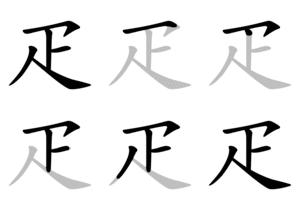 | |||
| Stroke order (alternative) | |||
|---|---|---|---|
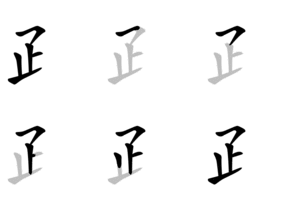 | |||
Glyph origin
| Historical forms of the character 疋 | |
|---|---|
| Shuowen Jiezi (compiled in Han) | Liushutong (compiled in Ming) |
| Small seal script | Transcribed ancient scripts |
 |
 |
| Characters in the same phonetic series (疋) (Zhengzhang, 2003) | |
|---|---|
| Old Chinese | |
| 疋 | *ŋraːʔ, *sŋra, *sŋraʔ |
| 蝑 | *sŋas, *sŋa |
| 壻 | *sŋeːs |
| 婿 | *sŋeːs |
| 胥 | *sŋa, *sŋaʔ |
| 稰 | *sŋa, *sŋaʔ |
| 楈 | *sŋa, *sŋaʔ |
| 諝 | *sŋa, *sŋaʔ |
| 湑 | *sŋa, *sŋaʔ |
| 揟 | *sŋa |
| 醑 | *sŋaʔ |
| 糈 | *sŋaʔ, *sŋraʔ |
| 楚 | *sŋ̊ʰraʔ, *sŋ̊ʰras |
| 礎 | *sŋ̊ʰraʔ |
| 憷 | *sŋ̊ʰraʔ |
| 齼 | *sŋ̊ʰraʔ |
| 濋 | *sŋ̊ʰraʔ |
| 儊 | *sŋ̊ʰras |
| 綀 | *sŋra |
| 疎 | *sŋra |
| 疏 | *sŋra, *sŋras |
| 蔬 | *sŋra |
| 梳 | *sŋra |
Han character
疋 (radical 103 疋+0, 5 strokes, cangjie input 弓卜人 (NYO), four-corner 17801, composition ⿱乛龰)
- Kangxi radical #103, ⽦.
Derived characters
- Index:Chinese radical/疋
- 楚
References
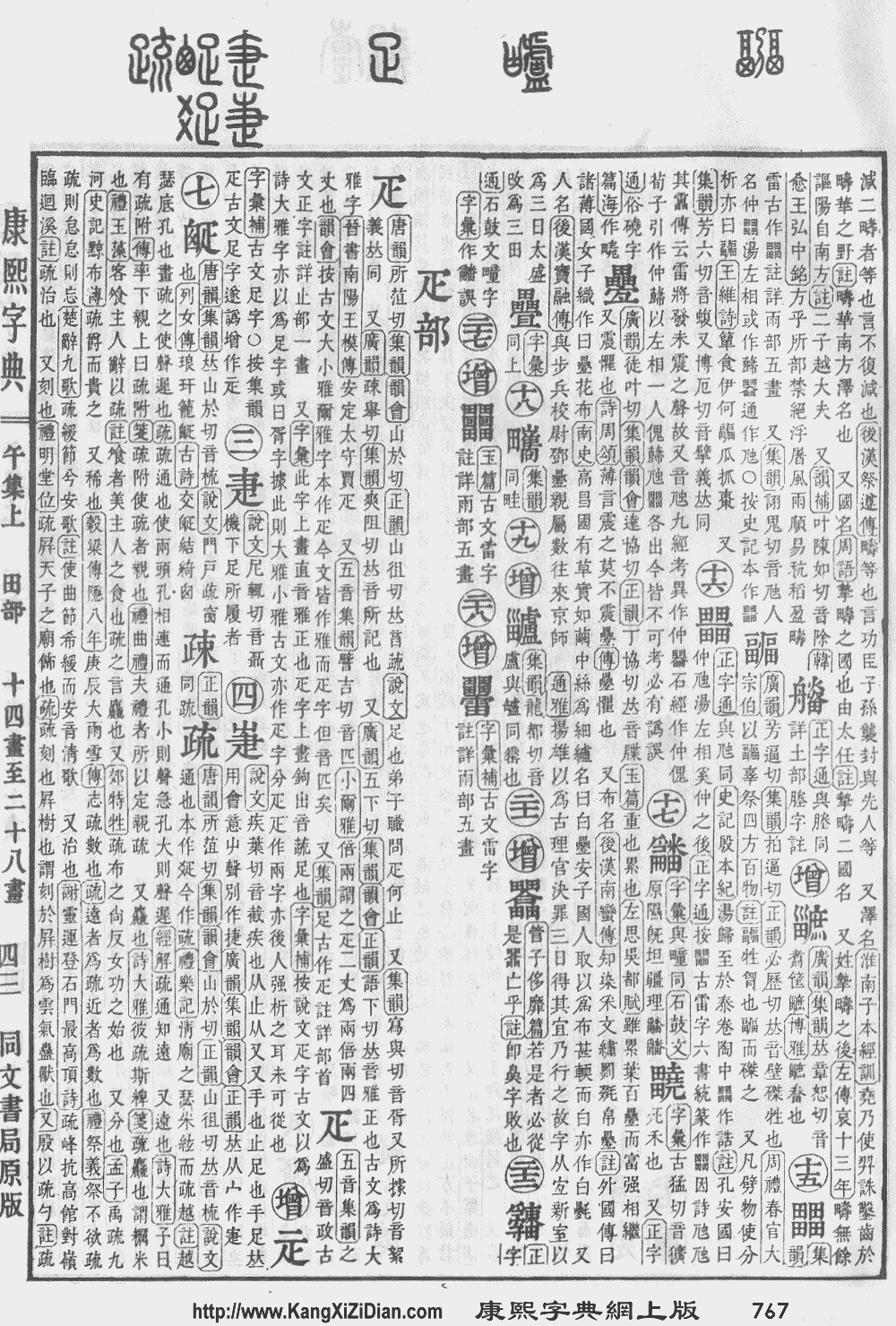
- KangXi: page 767, character 16
- Dai Kanwa Jiten: character 21994
- Dae Jaweon: page 1177, character 18
- Hanyu Da Zidian: volume 4, page 2749, character 1
- Unihan data for U+758B
Chinese
Etymology 1
| simp. and trad. |
疋 | |
|---|---|---|
Pronunciation
Definitions
疋
Etymology 2
| For pronunciation and definitions of 疋 – see 匹 (“to match; to be equal; match; equal; opponent; etc.”). (This character, 疋, is a variant form of 匹.) |
Etymology 3
| For pronunciation and definitions of 疋 – see 雅 (“elegant, graceful, refined; pretty”). (This character, 疋, is a variant form of 雅.) |
Etymology 4
| For pronunciation and definitions of 疋 – see 正 (“straight; upright; central; in proper position; right; proper; correct; etc.”). (This character, 疋, is a variant form of 正.) |
References
Japanese
Kanji
疋
(“Jinmeiyō” kanji used for names)
- counter for horses, mules, and small animals
- counter for rolls of cloth
- a measure of cloth
- foot (rare)
Readings
Etymology
| Kanji in this term |
|---|
| 疋 |
| ひき Jinmeiyō |
| on’yomi |
From Middle Chinese 疋 (srjo, “foot; roll of cloth”). Conflated in Japanese with Middle Chinese 匹 (phjit, “counter for horses and mules; counter for rolls of cloth”), both in meaning and in reading. The hichi reading evolved into hiki by association with 引き (hiki, “pulling”), from the way that an animal's leash is pulled.[1]
Pronunciation
- Kan’yōyomi
- IPA(key): [çikʲi]
Counter
References
- ↑ 1988, 国語大辞典(新装版) (Kokugo Dai Jiten, Revised Edition) (in Japanese), Tōkyō: Shogakukan
Korean
Hanja
疋 • (pil, so) (hangeul 필, 소, revised pil, so, McCune–Reischauer p'il, so, Yale phil, so)
Vietnamese
Han character
- This term needs a translation to English. Please help out and add a translation, then remove the text
{{rfdef}}.
This article is issued from
Wiktionary.
The text is licensed under Creative Commons - Attribution - Sharealike.
Additional terms may apply for the media files.