乙
| ||||||||
Translingual
| Stroke order | |||
|---|---|---|---|
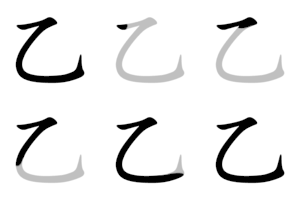 | |||
Han character
乙 (radical 5 乙+0, 1 stroke, cangjie input 弓山 (NU), four-corner 17710)
- Kangxi radical #5, ⼄.
Derived characters
References
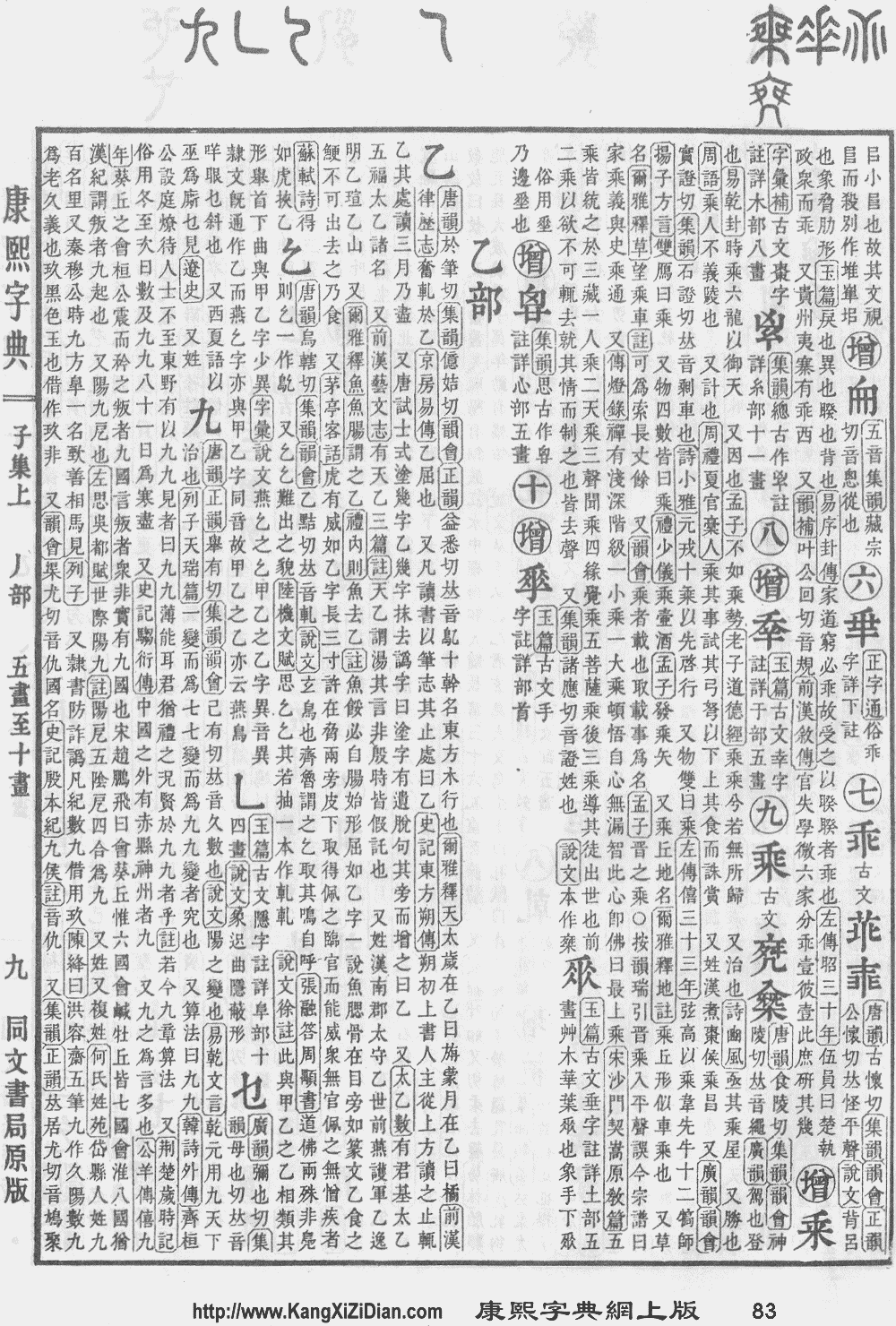
- KangXi: page 83, character 15
- Dai Kanwa Jiten: character 161
- Dae Jaweon: page 167, character 7
- Hanyu Da Zidian: volume 1, page 47, character 4
- Unihan data for U+4E59
Chinese
| simp. and trad. |
乙 | |
|---|---|---|
Glyph origin
| Historical forms of the character 乙 | |||||||||||||||||||||||||||||||||||||||||||||||||||||||||||||||||||||||||||||||||||||||||||||||||||||||||||||||||||||||||||||||||||||||||||||||||
|---|---|---|---|---|---|---|---|---|---|---|---|---|---|---|---|---|---|---|---|---|---|---|---|---|---|---|---|---|---|---|---|---|---|---|---|---|---|---|---|---|---|---|---|---|---|---|---|---|---|---|---|---|---|---|---|---|---|---|---|---|---|---|---|---|---|---|---|---|---|---|---|---|---|---|---|---|---|---|---|---|---|---|---|---|---|---|---|---|---|---|---|---|---|---|---|---|---|---|---|---|---|---|---|---|---|---|---|---|---|---|---|---|---|---|---|---|---|---|---|---|---|---|---|---|---|---|---|---|---|---|---|---|---|---|---|---|---|---|---|---|---|---|---|---|---|
| Shang | Western Zhou | Warring States | Shuowen Jiezi (compiled in Han) | Liushutong (compiled in Ming) | |||||||||||||||||||||||||||||||||||||||||||||||||||||||||||||||||||||||||||||||||||||||||||||||||||||||||||||||||||||||||||||||||||||||||||||
| Oracle bone script | Bronze inscriptions | Chu Slip and silk script | Small seal script | Transcribed ancient scripts | |||||||||||||||||||||||||||||||||||||||||||||||||||||||||||||||||||||||||||||||||||||||||||||||||||||||||||||||||||||||||||||||||||||||||||||
 |
 |
 |
 |
 | |||||||||||||||||||||||||||||||||||||||||||||||||||||||||||||||||||||||||||||||||||||||||||||||||||||||||||||||||||||||||||||||||||||||||||||
||||
|
References: Mostly from Richard Sears' Chinese Etymology site (authorisation),
| |||||||||||||||||||||||||||||||||||||||||||||||||||||||||||||||||||||||||||||||||||||||||||||||||||||||||||||||||||||||||||||||||||||||||||||||||


| Characters in the same phonetic series (乙) (Zhengzhang, 2003) | |
|---|---|
| Old Chinese | |
| 劜 | *qreːd |
| 札 | *sqriːd |
| 扎 | *sqriːd |
| 蚻 | *ʔsriːd |
| 紮 | *ʔsriːd |
| 軋 | *qriːd |
| 圠 | *qriːd |
| 穵 | *qriːd, *qʷriːd |
| 挖 | *qʷriːd |
| 鳦 | *qriːd, *qrid |
| 耴 | *ŋrid, *teb |
| 乙 | *qriɡ |
| 肊 | *qrɯɡ |
Pronunciation
Definitions
乙
- The second of the ten heavenly stems (天干 (tiāngān))
- second, 2, B, II, beta (used for unnamed people or object, to enumarate headings in a list, for grade)
- (chemistry) eth-; ethyl
- the seventh scale degree in Gongche musical notation (工尺譜/工尺谱 (gōngchěpǔ))
- (literary, formal) one
- A surname.
Coordinate terms
Compounds
See also
Japanese
Kanji
Readings
Compounds
Etymology 1
| Kanji in this term |
|---|
| 乙 |
| おつ Grade: S |
| on’yomi |
Originally from Middle Chinese 乙 (MC ʔˠiɪt̚), arising from the proper noun sense. Appears in texts from at least 833 CE.[1]
Pronunciation
Proper noun
- the second of the ten Celestial Stems
Noun
- the second item of any ordered list
- (music) one tone lower than the note indicated by 甲 (kō, “the first of something”)
- (by extension from the musical sense) a lower, sonorous and moving sound or tone
- (noh theater) in noh musical accompaniment, a specific kind of muffled drum beat played by striking the head of the taiko drum and keeping the mallet pressed against the head
- (Kansai dialect, slang) a stupid person, someone who is slow on the uptake
- (rare, possibly archaic) the state or circumstances of a thing
- (rare, possibly archaic) dressing up in an odd fashion
Etymology 2
| Kanji in this term |
|---|
| 乙 |
| おつ Grade: S |
| on’yomi |
By extension from the moving tone noun sense. Appears in texts from the late Edo period, in the early 1800s.[1]
Pronunciation
Adjective
乙 (-na inflection, hiragana おつ, rōmaji otsu)
- out of the ordinary, strange or unusual in an interesting or stylish way
- strange, odd, weird
-
:ja:東海道中膝栗毛 (Tōkaidōchū Hizakurige, “Footing It along the Tokaido Road”, or “Shank's Mare”), serial published 1802-1814:
- ヲヤ弥次さん、おつな手つきをしておめへ何をする
- Oya Yaji-san, otsu na tetsuki o shite omē nani o suru
- Oy, Yaji, what do you think you're doing with your weird way of using your hands?
- ヲヤ弥次さん、おつな手つきをしておめへ何をする
-
:ja:東海道中膝栗毛 (Tōkaidōchū Hizakurige, “Footing It along the Tokaido Road”, or “Shank's Mare”), serial published 1802-1814:
Inflection
| Stem forms | |||
|---|---|---|---|
| Imperfective (未然形) | 乙だろ | おつだろ | otsu daro |
| Continuative (連用形) | 乙で | おつで | otsu de |
| Terminal (終止形) | 乙だ | おつだ | otsu da |
| Attributive (連体形) | 乙な | おつな | otsu na |
| Hypothetical (仮定形) | 乙なら | おつなら | otsu nara |
| Imperative (命令形) | 乙であれ | おつであれ | otsu de are |
| Key constructions | |||
| Informal negative | 乙ではない 乙じゃない |
おつではない おつじゃない |
otsu de wa nai otsu ja nai |
| Informal past | 乙だった | おつだった | otsu datta |
| Informal negative past | 乙ではなかった 乙じゃなかった |
おつではなかった おつじゃなかった |
otsu de wa nakatta otsu ja nakatta |
| Formal | 乙です | おつです | otsu desu |
| Formal negative | 乙ではありません 乙じゃありません |
おつではありません おつじゃありません |
otsu de wa arimasen otsu ja arimasen |
| Formal past | 乙でした | おつでした | otsu deshita |
| Formal negative past | 乙ではありませんでした 乙じゃありませんでした |
おつではありませんでした おつじゃありませんでした |
otsu de wa arimasen deshita otsu ja arimasen deshita |
| Conjunctive | 乙で | おつで | otsu de |
| Conditional | 乙なら(ば) | おつなら(ば) | otsu nara (ba) |
| Provisional | 乙だったら | おつだったら | otsu dattara |
| Volitional | 乙だろう | おつだろう | otsu darō |
| Adverbial | 乙に | おつに | otsu ni |
| Degree | 乙さ | おつさ | otsusa |
Etymology 3
| Kanji in this term |
|---|
| 乙 |
| おつ Grade: S |
| on’yomi |
Derived as aggressive clipping of お疲れ様です (otsukaresama desu, used as a kind of greeting at work, literally “that's honorable exhaustion (from hard work)”). The use of 乙 for the spelling is an example of phonetic ateji (当て字).
Pronunciation
Interjection
- (Internet slang) Clipping of お疲れ様です (otsukaresama desu).
Derived terms
- うp乙 (upotsu), うぽつ (upotsu)
Etymology 4
| Kanji in this term |
|---|
| 乙 |
| きのと Grade: S |
| kun’yomi |
Compound of 木 (Ki, “Wood”, one of the Five Elements) + の (no, attributive marker) + 弟 (oto, “younger brother”).
Pronunciation
Proper noun
乙 (hiragana きのと, rōmaji Kinoto)
- the second of the ten Heavenly Stems
References
Korean
Hanja
乙 • (eul)
- This term needs a translation to English. Please help out and add a translation, then remove the text
{{rfdef}}.
References
Vietnamese
Han character
乙 (ất, át, ắc, ắt, hắt, ặc, lớt)
- This term needs a translation to English. Please help out and add a translation, then remove the text
{{rfdef}}.