石
| ||||||||
Translingual
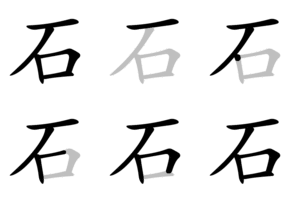
| Stroke order | |||
|---|---|---|---|
 | |||
Han character
石 (radical 112, 石+0, 5 strokes, cangjie input 一口 (MR), four-corner 10600, composition ⿸丆口)
- Kangxi radical #112, ⽯.
Derived characters
- Index:Chinese radical/石
References
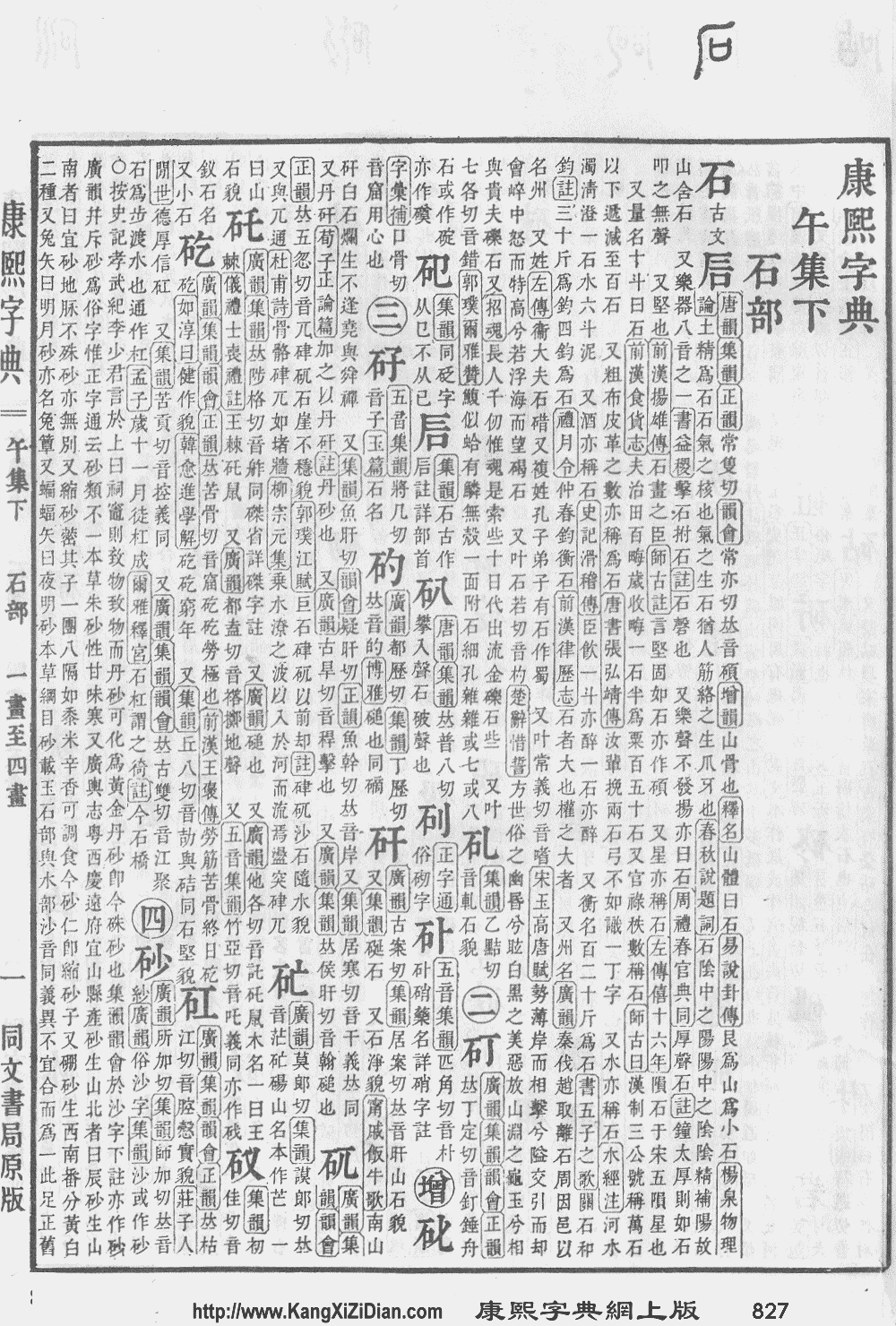
- KangXi: page 827, character 1
- Dai Kanwa Jiten: character 24024
- Dae Jaweon: page 1239, character 7
- Hanyu Da Zidian: volume 4, page 2416, character 1
- Unihan data for U+77F3
Chinese
| simp. and trad. |
石 | |
|---|---|---|
Glyph origin
| Historical forms of the character 石 | ||||
|---|---|---|---|---|
| Shang | Western Zhou | Warring States | Shuowen Jiezi (compiled in Han) | Liushutong (compiled in Ming) |
| Oracle bone script | Bronze inscriptions | Chu Slip and silk script | Small seal script | Transcribed ancient scripts |
 |
 |
 |
 |
 |
| Characters in the same phonetic series (石) (Zhengzhang, 2003) | |
|---|---|
| Old Chinese | |
| 柘 | *tjaɡs |
| 妬 | *taːɡs |
| 蠹 | *taːɡs |
| 沰 | *taːɡ, *tʰaːɡ |
| 拓 | *tʰaːɡ, *tjaɡ |
| 橐 | *tʰaːɡ |
| 袥 | *tʰaːɡ |
| 驝 | *tʰaːɡ, *raːɡ |
| 斫 | *tjaɡ |
| 磭 | *ŋrɯnʔ, *ŋ̊ʰjaɡ, *ŋaɡ |
| 磔 | *rtaːɡ |
| 跖 | *tjaɡ |
| 石 | *djaɡ |
| 碩 | *djaɡ |
| 祏 | *djaɡ |
| 鉐 | *djaɡ |
| 鼫 | *djaɡ |
Pictogram (象形) : a stone beneath a cliff (厂). The cliff was subsequently distorted into 丆.
Alternatively, a cave set into the side of a cliff or mountain.
Etymology 1
Pronunciation
Definitions
石
Compounds
Derived terms from 石
|
|
|
Etymology 2
Pronunciation
Definitions
石
Compounds
|
|
|
Japanese
Kanji
石
Readings
Compounds
Compounds
- 石蓴 (aosa): sea lettuce
- 石室 (ishimuro): a stone hut
- 懐石 (kaiseki): a simple meal eaten before tea is served
- 化石 (kaseki): a fossil, fossil remains; petrifaction, fossilisation
- 岩石 (ganseki): rock (natural mineral aggregate)
- 奇石 (kiseki): rare stone; precious gem
- 輝石 (kiseki): (mineralogy) pyroxene, augite
- 金剛石 (kongōseki): diamond
- 歯石 (shiseki): dental calculus (tartar)
- 硝石 (shōseki): saltpetre
- 聖石 (seiseki): a holy stone, rock or mineral
- 石英 (sekiei): quartz; crystal
- 石菖 (sekishō): (flower) Japanese sweet flag
- 石製 (sekisei): stonen
- 石炭 (sekitan): coal
- 石板 (sekiban): a slate
- 石版 (sekiban): a lithograph
- 石盤 (sekiban): a slate
- 石油 (sekiyu): oil, petroleum
- 石灰 (sekkai): lime (mineral), quicklime, caustic lime
- 石棺 (sekkan): a sarcophagus; a stone coffin
- 胆石 (tanseki): gallstones
- 宝石 (hōseki): gemstone
- 木石 (bokuseki): (scenery) trees and stones
Etymology 1
| Kanji in this term |
|---|
| 石 |
| いし Grade: 1 |
| kun’yomi |
From Old Japanese.[1] Likely cognate with 磯 (iso, “a pebble; gravel; a rocky beach”).
Pronunciation
Noun
- stone
- 1999 March 27, “ストーン・アルマジラー [Stone Armadiller]”, in Vol.2 (in Japanese), Konami:
- 体が石のように堅い毛で覆われており、守りがかたい。
- Karada ga ishi no yō ni katai ke de ōwareteori, mamori ga katai.
- With a body covered in a coat as hard as stones, its defense is rock solid.
- 体が石のように堅い毛で覆われており、守りがかたい。
-
- (slang, electronics) transistor
Etymology 2
Noun
- koku (traditional Japanese unit of volume, approx. 180 litres)
Derived terms
- 石高 (kokudaka)
Etymology 3
Counter
石 (hiragana せき, rōmaji -seki)
- (slang, electronics) transistor, especially discrete ones
- 六石ラジオ
- rokuseki rajio
- six-transistor radio
- 六石ラジオ
References
Korean
Hanja
- This term needs a translation to English. Please help out and add a translation, then remove the text
{{rfdef}}.
Vietnamese
Han character
- This term needs a translation to English. Please help out and add a translation, then remove the text
{{rfdef}}.
Yonaguni
Etymology
Kanji
Noun
This article is issued from
Wiktionary.
The text is licensed under Creative Commons - Attribution - Sharealike.
Additional terms may apply for the media files.