乖
| ||||||||
Translingual
| Stroke order | |||
|---|---|---|---|
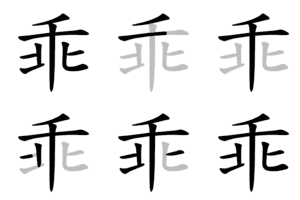 | |||
Han character
乖 (radical 4 丿+7, 8 strokes, cangjie input 竹十中心 (HJLP), four-corner 20111, composition ⿻千北)
References
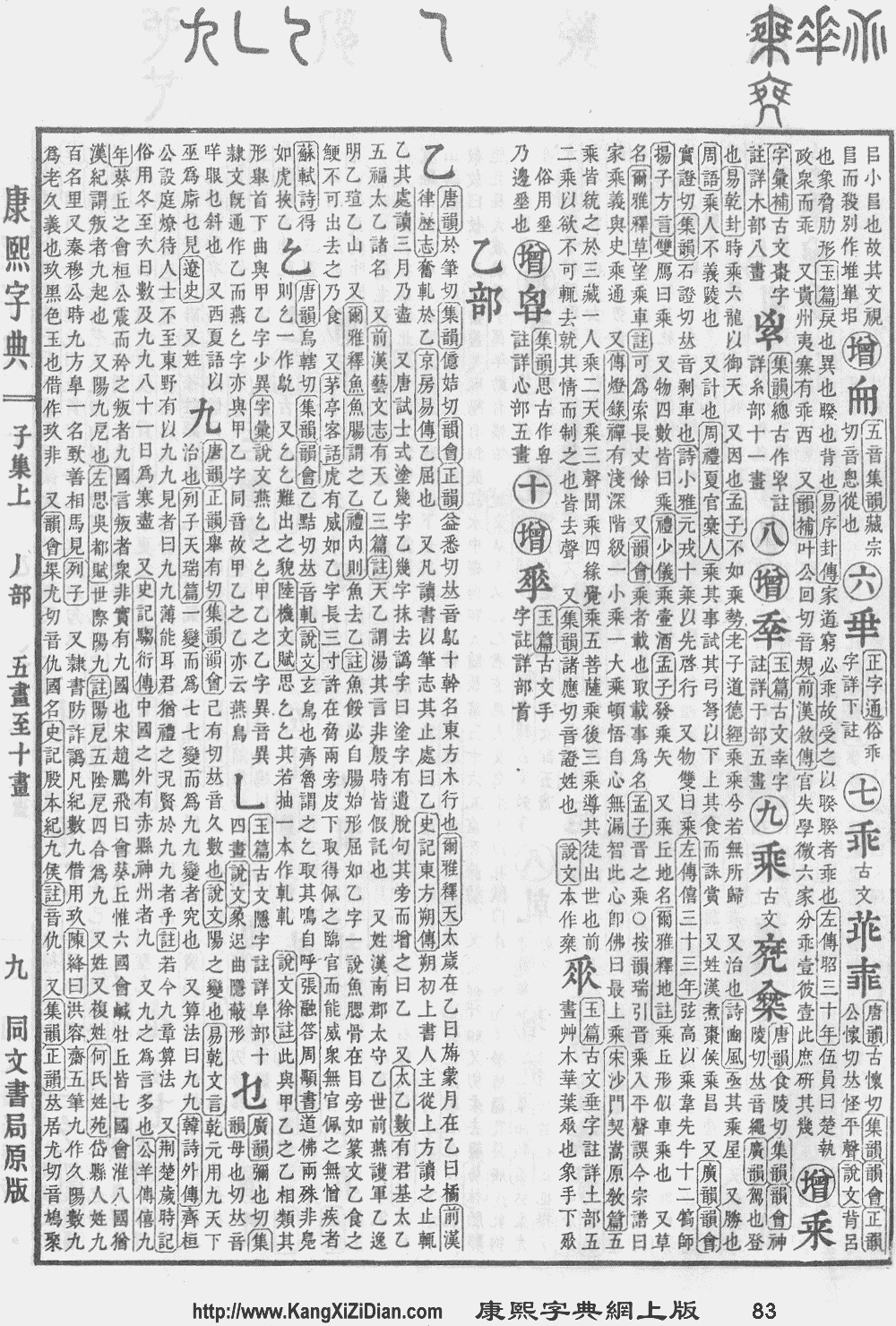
- KangXi: page 83, character 3
- Dai Kanwa Jiten: character 149
- Dae Jaweon: page 166, character 26
- Hanyu Da Zidian: volume 1, page 38, character 18
- Unihan data for U+4E56
Chinese
| simp. and trad. |
乖 | |
|---|---|---|
| alt. forms | 𠁰 | |
Glyph origin
| Historical forms of the character 乖 | |||||||||||||
|---|---|---|---|---|---|---|---|---|---|---|---|---|---|
| Shuowen Jiezi (compiled in Han) | Liushutong (compiled in Ming) | ||||||||||||
| Small seal script | Transcribed ancient scripts | ||||||||||||
 |
 | ||||||||||||
|
|
References: Mostly from Richard Sears' Chinese Etymology site (authorisation),
| |||||||||||||


Pronunciation
Definitions
乖
- to violate; to rebel
- to separate; to split
- to break off; to cut off
- difference; mistake
- crafty; shrewd; wicked
- clever; alert
- (usually of a child) well-behaved; obedient; nice
- (dialectal) beautiful
Usage notes
Unlike English obedient, 乖 is almost always a positive compliment when used to describe a child. When used for an adult, the word is often disparaging.
Antonyms
- (naughty): (Cantonese) 曳 (jai5)
Compounds
Derived terms from 乖
Japanese
Kanji
乖
Readings
Korean
Hanja
乖 • (goe)
- Eumhun:
- Sound (hangeul): 괴 (revised: goe, McCune–Reischauer: koe, Yale: koy)
- Name (hangeul): 어그러질 (revised: eogeureojil, McCune–Reischauer: ǒgǔrǒjil)
- This term needs a translation to English. Please help out and add a translation, then remove the text
{{rfdef}}.
References
Vietnamese
Han character
- This term needs a translation to English. Please help out and add a translation, then remove the text
{{rfdef}}.
References
This article is issued from
Wiktionary.
The text is licensed under Creative Commons - Attribution - Sharealike.
Additional terms may apply for the media files.