随
See also: 隨
| ||||||||
Translingual
| Japanese | 随 |
|---|---|
| Simplified | 随 |
| Traditional | 隨 |
Etymology
Simplified from 隨 (遀 → 迶) in simplified Chinese and Japanese shinjitai.
Han character
随 (radical 170 阜+9, in Chinese 11 strokes, in Japanese 12 strokes, cangjie input 弓中卜大月 (NLYKB) or X弓中卜大 (XNLYK), composition ⿰⻖迶)
Derived characters
References
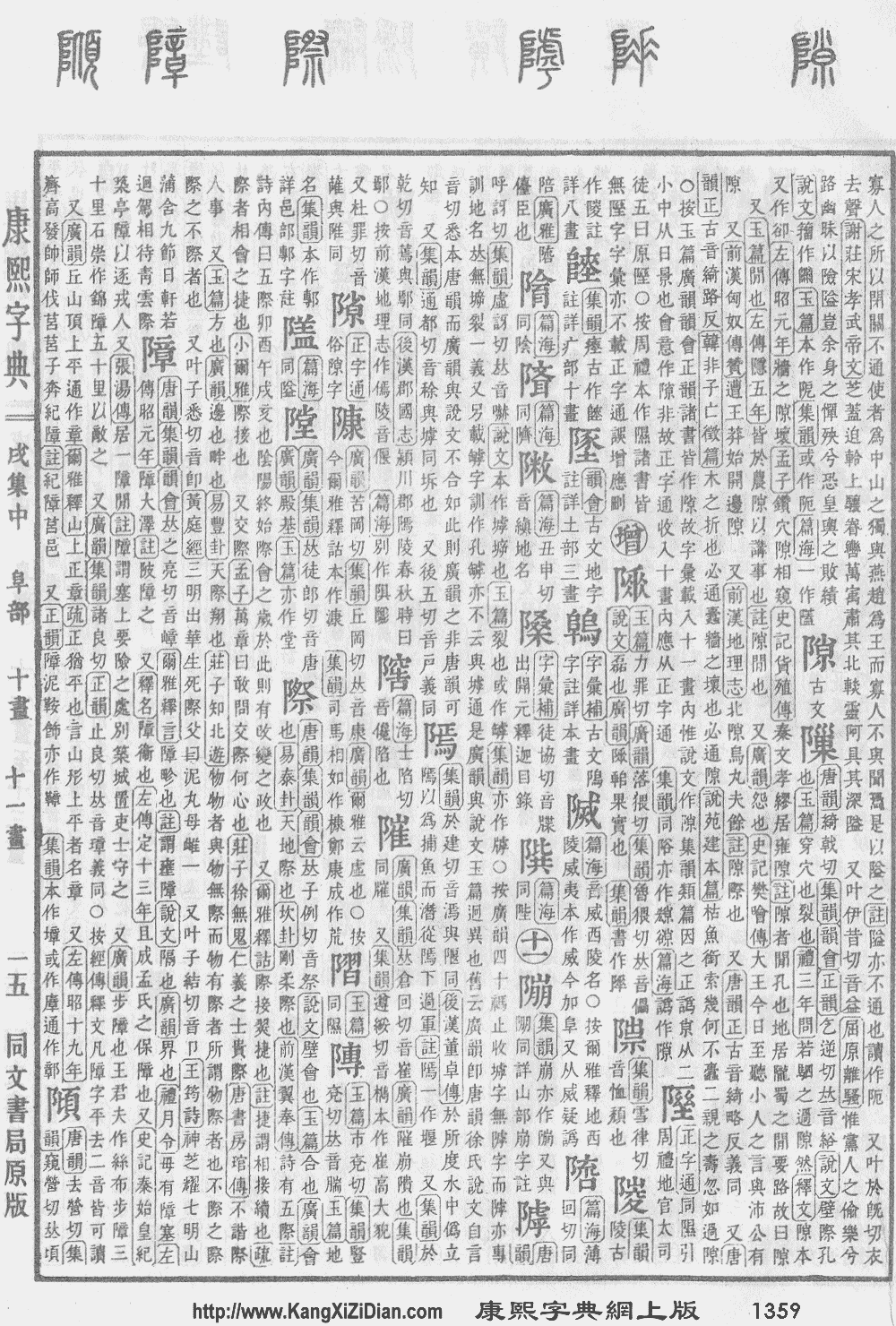
- KangXi: not present, would follow page 1359, character 16
- Dai Kanwa Jiten: character 41764
- Dae Jaweon: page 1862, character 5
- Hanyu Da Zidian: volume 6, page 4143, character 2
- Unihan data for U+968F
Chinese
| For pronunciation and definitions of 随 – see 隨 (“to follow; to listen to, to submit; etc.”). (This character, 随, is the simplified form of 隨.) |
Notes:
|
Japanese
| 随 | |
| 隨 |
Kanji
随
(common “Jōyō” kanji, shinjitai kanji, kyūjitai form 隨)
- follow, though, notwithstanding
- while, during, according to
- to obey, submit, comply, act as one is told to
Readings
Compounds
- 随筆 (zuihitsu): essays, jottings, miscellaneous writings
- 随分 (zuibun): very, considerably, extremely
- 随時 (zuiji): at any time
- 随一 (zuīchi): one of the best, greatest
- 随所 (zuisho): everywhere
- 随意 (zuii): voluntary, optional
Korean
Hanja
随 • (su) (hangeul 수, revised su, McCune–Reischauer su, Yale swu)
- This term needs a translation to English. Please help out and add a translation, then remove the text
{{rfdef}}.
This article is issued from
Wiktionary.
The text is licensed under Creative Commons - Attribution - Sharealike.
Additional terms may apply for the media files.