力
| ||||||||
Translingual
| Stroke order | |||
|---|---|---|---|
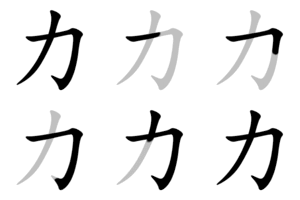 | |||
Han character
力 (radical 19, 力+0, 2 strokes, cangjie input 大尸 (KS), four-corner 40027)
- Kangxi radical #19, ⼒.
Derived characters
Descendants
See also
- カ (Japanese katakana)
References
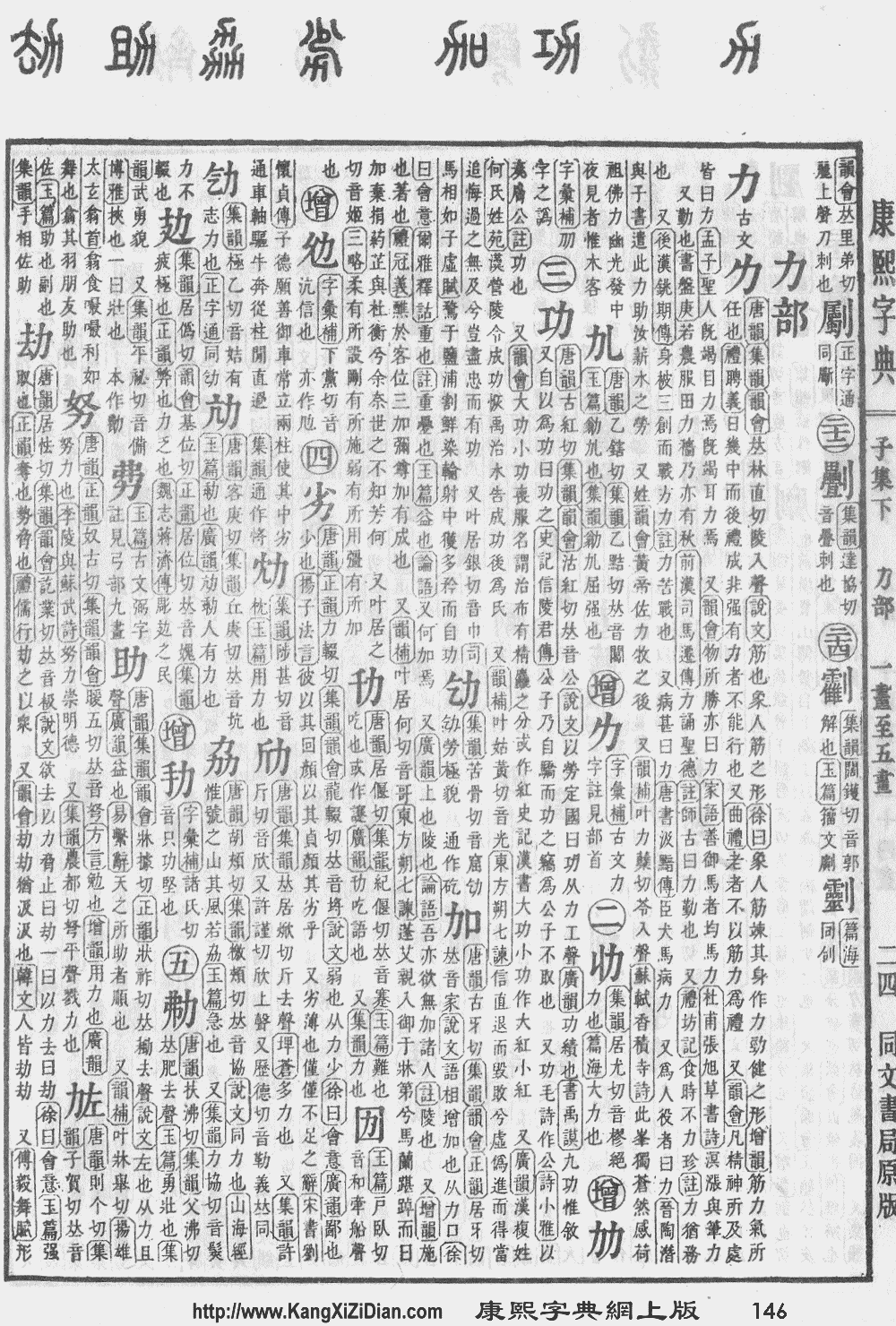
- KangXi: page 146, character 5
- Dai Kanwa Jiten: character 2288
- Dae Jaweon: page 327, character 31
- Hanyu Da Zidian: volume 1, page 364, character 4
- Unihan data for U+529B
Chinese
| simp. and trad. |
力 | |
|---|---|---|
| alt. forms | 𠠲 ⿻力丶 | |
Glyph origin
| Historical forms of the character 力 | |||||||
|---|---|---|---|---|---|---|---|
| Shang | Western Zhou | Spring and Autumn | Warring States | Shuowen Jiezi (compiled in Han) | Liushutong (compiled in Ming) | ||
| Oracle bone script | Bronze inscriptions | Bronze inscriptions | Bronze inscriptions | Chu Slip and silk script | Qin slip script | Small seal script | Transcribed ancient scripts |
 |
 |
 |
 |
 |
 |
 |
 |
| Characters in the same phonetic series (力) (Zhengzhang, 2003) | |
|---|---|
| Old Chinese | |
| 勒 | *rɯːɡ |
| 肋 | *rɯːɡ |
| 扐 | *rɯːɡ |
| 仂 | *rɯːɡ, *rɯɡ |
| 艻 | *rɯːɡ |
| 朸 | *rɯːɡ, *rɯɡ |
| 玏 | *rɯːɡ |
| 泐 | *rɯːɡ, *rɯɡ |
| 阞 | *rɯːɡ |
| 竻 | *rɯːɡ |
| 力 | *rɯɡ |
| 屴 | *rɯɡ |
| 鳨 | *rɯɡ |
Pictogram (象形) – alternative interpretation, either an arm bending out from the side of the body, or a plough.
Pronunciation
Definitions
力
Compounds
|
|
|
Japanese
Kanji
Readings
Etymology 1
| Kanji in this term |
|---|
| 力 |
| ちから Grade: 1 |
| kun’yomi |
From Old Japanese. Compound of Old Japanese elements 霊 (chi, “power, life force, essence”) + から (kara, “from”).
Pronunciation
Noun
力 (hiragana ちから, rōmaji chikara)
Derived terms
- 力足 (chikara ashi): a tensed leg; tensing one's legs; (sumo) the traditional sumo stomp at the beginning of a match
- 力合わせ (chikara awase): matching strength: a competition of strength; (by extension) a sumo match
- 力軍 (chikara ikusa): a test of strength, a competition of strength
- 力石 (chikara ishi): a large stone used as a dumbbell for purposes of tests of strength
- 力一杯 (chikara ippai): with all one's strength, as hard as one can
- 力持ち (chikaramochi): a very strong person
- 力添え (chikarazoe): help, assistance, aid
Proper noun
力 (hiragana ちから, rōmaji Chikara)
- A male given name.
Etymology 2
| Kanji in this term |
|---|
| 力 |
| りき Grade: 1 |
| on’yomi |
From Middle Chinese 力 (lik). The goon reading, so likely the initial borrowing. Compare modern Cantonese reading lik6.
Pronunciation
Affix
Noun
- physical strength
- (Buddhism) capability, especially mystical power
- (Buddhism) the suchness of ability, one of the Ten Suchnesses in Mahayana Buddhism
- short for 力者 (rikisha): a strong person
- (archaic) short for 車力 (shariki), 力車 (rikisha): a rickshaw
- (archaic) a rickshaw operator's wages
Derived terms
Etymology 3
| Kanji in this term |
|---|
| 力 |
| りょく Grade: 1 |
| on’yomi |
From Middle Chinese 力, but apparently from a different source dialect or at a different time than 力 (lik). The kan'on reading, so likely a later borrowing. Compare reconstructed Middle Chinese reading /li̯ək/ or Korean reading ryeok.
Only found in compounds and idioms in modern Japanese.
Pronunciation
Affix
力 (hiragana りょく, rōmaji ryoku)
Derived terms
References
Korean
Noun
力 • (ryeok) (hangeul 력)
Hanja
力 • (ryeok) (hangeul 력, McCune–Reischauer ryŏk)
- This term needs a translation to English. Please help out and add a translation, then remove the text
{{rfdef}}.
Compounds
- 魔力 마력 (maryeok)