丿
See also: ノ
| ||||||||
Translingual
| Stroke order | |||
|---|---|---|---|
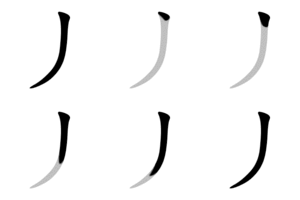 | |||
Han character
丿 (radical 4 丿+0, 1 stroke, cangjie input 竹 (H) or X竹 (XH), four-corner 20000)
- Kangxi radical #4, ⼃.
Derived characters
- Index:Chinese radical/丿
References
- KangXi: page 81, character 6
- Dai Kanwa Jiten: character 106
- Dae Jaweon: page 164, character 7
- Hanyu Da Zidian: volume 1, page 31, character 2
- Unihan data for U+4E3F
Chinese
| simp. and trad. |
丿 | |
|---|---|---|
Glyph origin
| Historical forms of the character 丿 | ||
|---|---|---|
| Shuowen Jiezi (compiled in Han) | Liushutong (compiled in Ming) | |
| Small seal script | Transcribed ancient scripts | |
 |
 | |
| ||
|
References: Mostly from Richard Sears' Chinese Etymology site (authorisation),
| ||

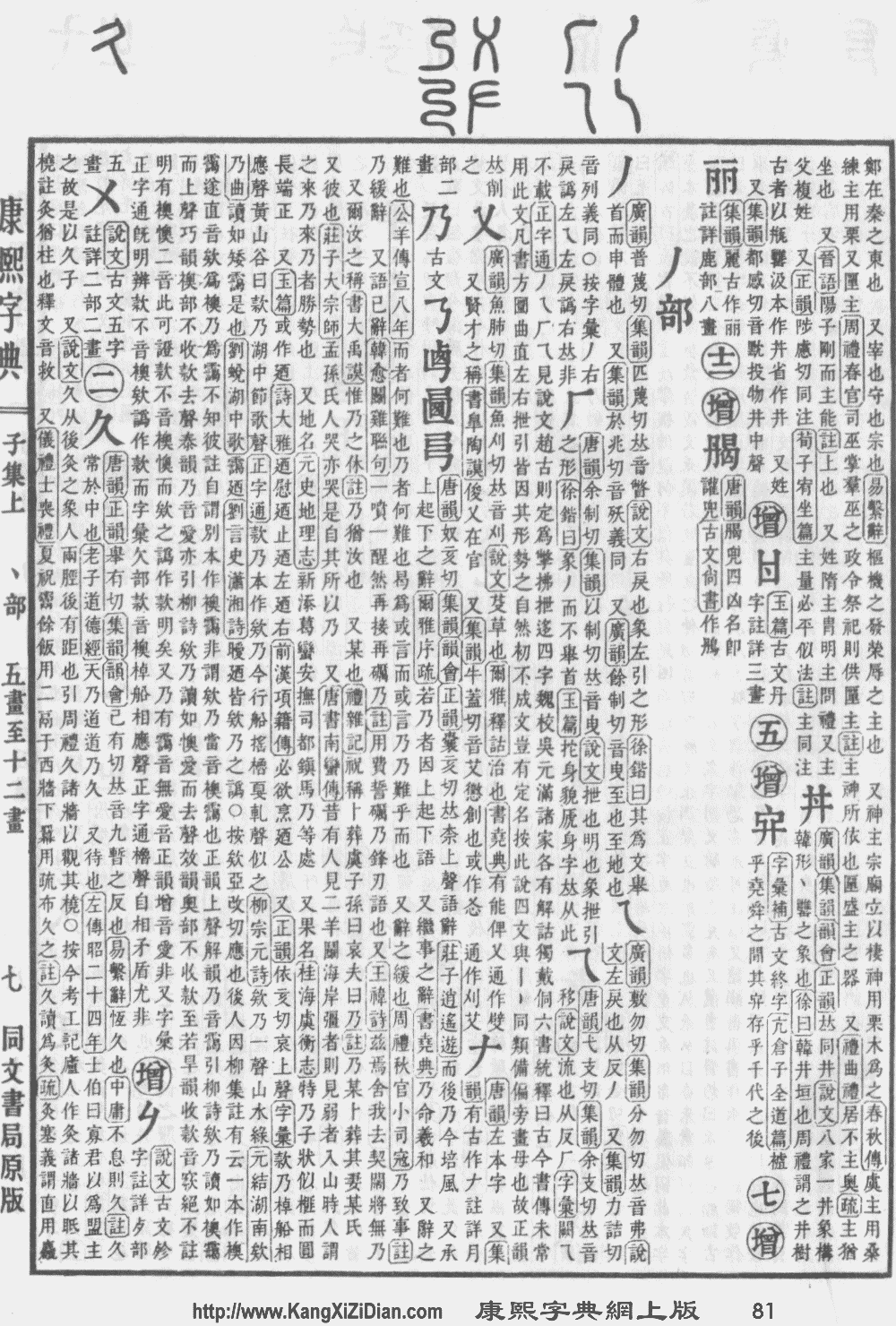
Pronunciation 1
Definitions
丿
- left-falling stroke, usually read as 撇
Pronunciation 2
Definitions
丿
- ‡ to arrive
Japanese
Kanji
丿
Readings
“Curving from right to left; raising one's head and standing upright”:
- Goon: へち (hechi); よう (yō)←えう (eu, historical)
- Kan’on: へつ (hetsu); よう (yō)←えう (eu, historical)
“Arrive”:
References
|
- Source: EDICT and KANJIDIC files licensed by the Electronic Dictionaries Research Group.
Korean
Hanja
丿 • (byeol) (hangeul 별)
- line
- KangXi radical 4
Vietnamese
Han character
Usage notes
Further reading
This article is issued from
Wiktionary.
The text is licensed under Creative Commons - Attribution - Sharealike.
Additional terms may apply for the media files.