尾
| ||||||||
Translingual
Han character
尾 (radical 44 尸+4, 7 strokes, cangjie input 尸竹手山 (SHQU), four-corner 77214, composition ⿸尸毛)
References
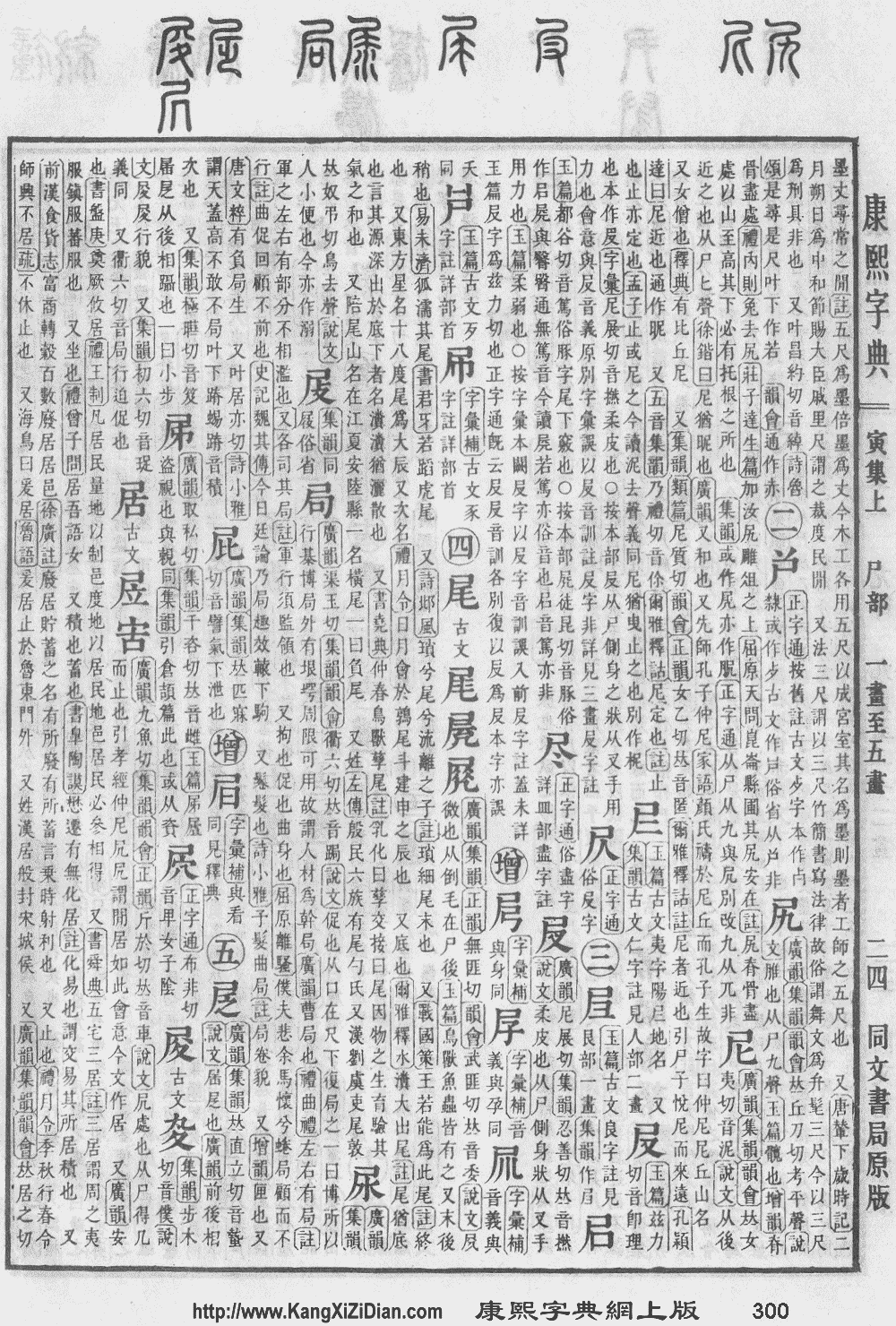
- KangXi: page 300, character 16
- Dai Kanwa Jiten: character 7650
- Dae Jaweon: page 596, character 12
- Hanyu Da Zidian: volume 2, page 966, character 16
- Unihan data for U+5C3E
Chinese
| simp. and trad. |
尾 | |
|---|---|---|
Glyph origin
| Characters in the same phonetic series (尾) (Zhengzhang, 2003) | |
|---|---|
| Old Chinese | |
| 娓 | *mrɯls, *mɯlʔ |
| 尾 | *mɯlʔ |
| 浘 | *mɯlʔ |
Pronunciation
Definitions
尾
Compounds
Derived terms from 尾
|
|
|
Japanese
Kanji
尾
Readings
Etymology 1
| Kanji in this term |
|---|
| 尾 |
| お Grade: S |
| kun’yomi |
/wo/ → /o/.
Pronunciation
Noun
尾 (hiragana お, rōmaji o, historical hiragana を)
- a tail
- the foot of a mountain
- the end of something
Synonyms
- (tail): 尻尾 (shippo)
Derived terms
Etymology 2
| Kanji in this term |
|---|
| 尾 |
| び Grade: S |
| on’yomi |
Pronunciation
Affix
Derived terms
Counter
Proper noun
Synonyms
References
Korean
Hanja
尾 • (mi) (hangeul 미, revised mi, McCune–Reischauer mi)
- This term needs a translation to English. Please help out and add a translation, then remove the text
{{rfdef}}.
Vietnamese
Han character
尾 (vĩ, vãi, vả, vã, vải, nhân)
- This term needs a translation to English. Please help out and add a translation, then remove the text
{{rfdef}}.
This article is issued from
Wiktionary.
The text is licensed under Creative Commons - Attribution - Sharealike.
Additional terms may apply for the media files.