麻
| ||||||||
| ||||||||
Translingual
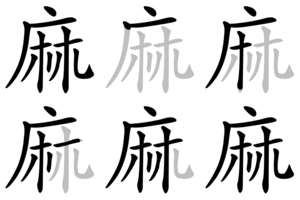
| Stroke order | |||
|---|---|---|---|
 | |||
| Japanese | 麻 |
|---|---|
| Simplified | 麻 |
| Traditional | 麻 |
Han character
麻 (radical 200, 麻+0, 11 strokes, cangjie input 戈木木 (IDD) or 戈十金金 (IJCC), four-corner 00294, composition ⿸广林(GJV) or ⿸广𣏟(HTK))
- Kangxi radical #200, ⿇.
Derived characters
See also
References
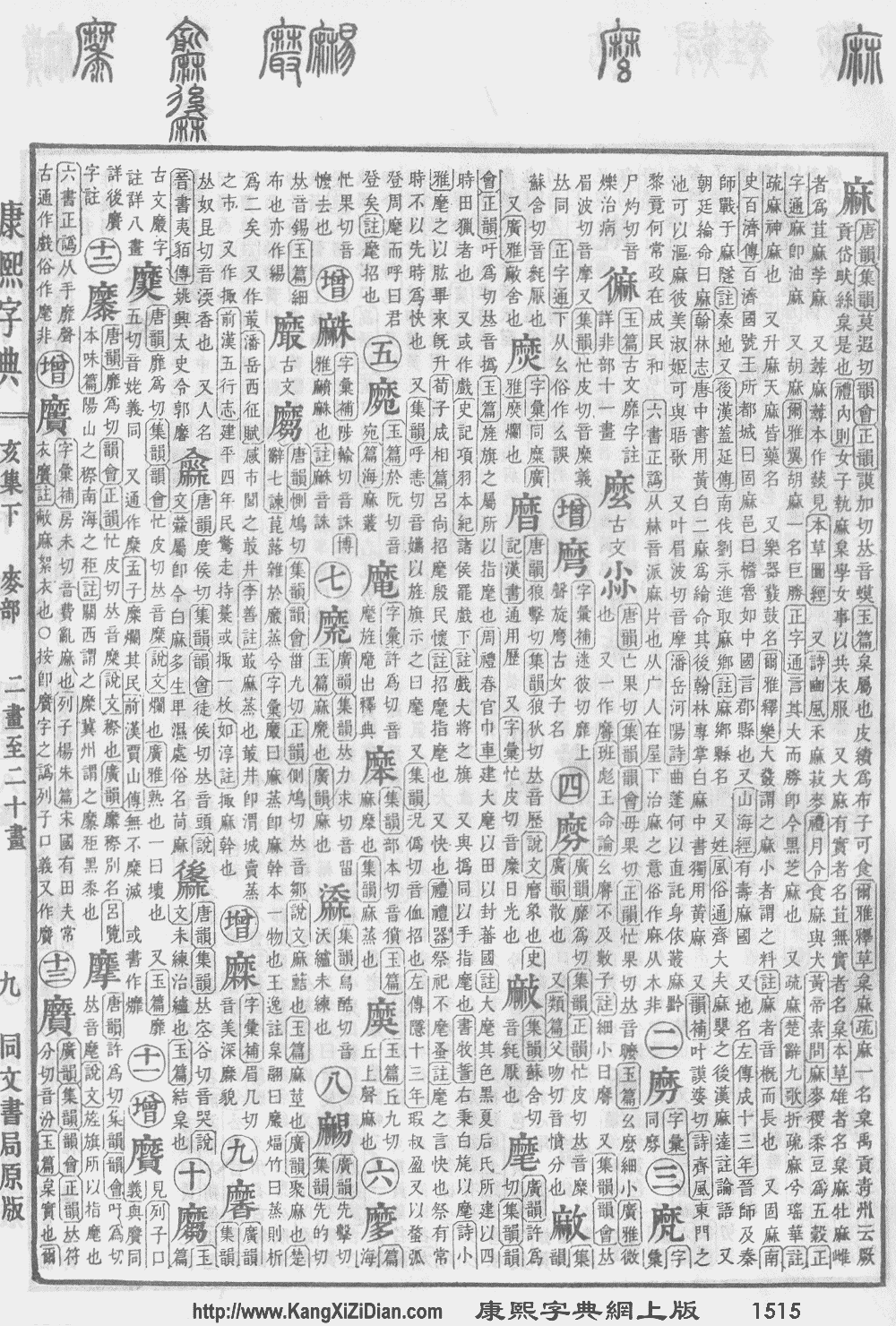
- KangXi: page 1515, character 1
- Dai Kanwa Jiten: character 47888
- Dae Jaweon: page 2044, character 29
- Hanyu Da Zidian: volume 7, page 4723, character 1
- Unihan data for U+9EBB
Chinese
| simp. and trad. |
麻 | |
|---|---|---|
Glyph origin
| Historical forms of the character 麻 | ||
|---|---|---|
| Western Zhou | Shuowen Jiezi (compiled in Han) | Liushutong (compiled in Ming) |
| Bronze inscriptions | Small seal script | Transcribed ancient scripts |
 |
 |
 |
| Characters in the same phonetic series (麻) (Zhengzhang, 2003) | |
|---|---|
| Old Chinese | |
| 麻 | *mraːl |
| 痲 | *mraːl |
| 犘 | *mraːl |
| 縻 | *mral |
| 醿 | *mral |
| 爢 | *mral |
| 蘼 | *mral, *mralʔ, *mrɯl |
| 靡 | *mralʔ |
| 摩 | *maːl, *maːls |
| 魔 | *maːl |
| 磨 | *maːl, *maːls |
| 劘 | *maːl |
| 麽 | *maːl |
| 麼 | *maːlʔ |
| 塺 | *maːls, *mɯːl |
| 麾 | *hmral |
Ideogrammic compound (會意) : 厂 + 𣏟: a representation of hemp leaves.
Pronunciation
Definitions
麻
- hemp
- hemp fibre; linen
- 其竹節度三尺,柔細可為索,亦以皮為麻。 [Classical Chinese, trad.]
- From: Tang Dynasty, Fan Chuo, Manshu, chapter 7, part 7
- Qí zhú jié duó sān chǐ, róuxì kě wéi suǒ, yì yǐ pí wéi má. [Pinyin]
- Each bamboo joint measures three chi; thin and supple, it may be used as a rope, and its skin may also be used as linen.
其竹节度三尺,柔细可为索,亦以皮为麻。 [Classical Chinese, simp.]
- rope made of hemp, flax, jute, etc.
- mourning garment; mourning apparel
- (historical) imperial edict
- Short for 芝麻 (zhīma, “sesame”).
- numerous; chaotic
- coarse; rough
- spotty; pity
- (traditional Chinese medicine) Short for 麻疹 (mázhěn, “measles”).
- pockmark; pock
- numb; senseless
- (of foods) numbingly spicy
- anaesthesia
Compounds
Derived terms from 麻
|
|
|
Japanese
Kanji
麻
Readings
Compounds
Etymology 1
| Kanji in this term |
|---|
| 麻 |
| あさ Grade: S |
| kun’yomi |
From Old Japanese.
Pronunciation
Noun
Proper noun
- A surname.
Etymology 2
| Kanji in this term |
|---|
| 麻 |
| お Grade: S |
| kun’yomi |
/wo/ → /o/
From Old Japanese 麻 (wo).[3]
Pronunciation
Noun
Etymology 3
| Kanji in this term |
|---|
| 麻 |
| そ Grade: S |
| kun’yomi |
Possibly from an altered pronunciation of asa.
Pronunciation
Noun
Usage notes
Most often found in compounds.
Etymology 4
| Kanji in this term |
|---|
| 麻 |
| ま Grade: S |
| kan’yōon |
From Middle Chinese 麻 (mæ, “hemp”).
Pronunciation
- Kan’yōyomi
- IPA(key): [ma̠]
Noun
References
- Tsukishima, Hiroshi (c. 800) Kojisho Ongi Shūsei 2: Shibunritsu Ongi (in Japanese), Tōkyō: Kyūko Shoin, published 1979, →ISBN
Korean
Hanja
麻 • (ma)
- This term needs a translation to English. Please help out and add a translation, then remove the text
{{rfdef}}.
Compounds
Vietnamese
Han character
- This term needs a translation to English. Please help out and add a translation, then remove the text
{{rfdef}}.
This article is issued from
Wiktionary.
The text is licensed under Creative Commons - Attribution - Sharealike.
Additional terms may apply for the media files.