童
| ||||||||
See also: 𝌑
Translingual
| Stroke order | |||
|---|---|---|---|
 | |||
| Japanese stroke order | |||
|---|---|---|---|
 | |||
Han character
童 (radical 117, 立+7, 12 strokes, cangjie input 卜廿田土 (YTWG), four-corner 00104, composition ⿱立里)
References
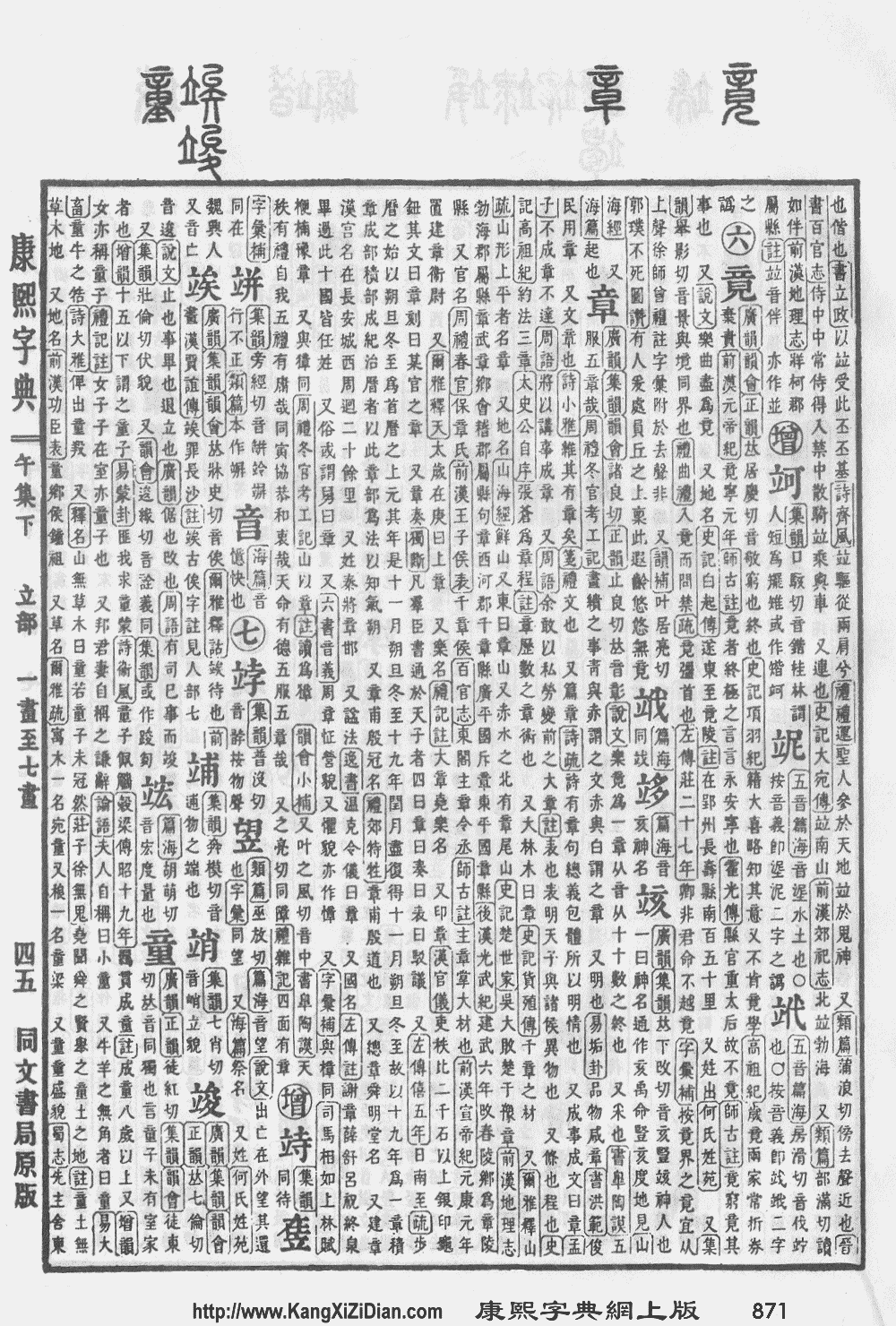
- KangXi: page 871, character 20
- Dai Kanwa Jiten: character 25775
- Dae Jaweon: page 1302, character 12
- Hanyu Da Zidian: volume 4, page 2711, character 9
- Unihan data for U+7AE5
Chinese
| simp. and trad. |
童 | |
|---|---|---|
Glyph origin
| Historical forms of the character 童 | ||||
|---|---|---|---|---|
| Shang | Western Zhou | Warring States | Shuowen Jiezi (compiled in Han) | Liushutong (compiled in Ming) |
| Oracle bone script | Bronze inscriptions | Chu Slip and silk script | Small seal script | Transcribed ancient scripts |
 |
 |
 |
 |
 |
| Characters in the same phonetic series (重) (Zhengzhang, 2003) | |
|---|---|
| Old Chinese | |
| 撞 | *rdoːŋ, *rdoːŋs |
| 幢 | *rdoːŋ, *rdoːŋs |
| 橦 | *rdoːŋ, *doːŋ, *tjoŋ |
| 噇 | *rdoːŋ |
| 𩪘 | *rdoːŋ |
| 艟 | *rdoːŋs, *tʰjoŋ |
| 憧 | *rdoːŋs, *tʰjoŋ |
| 畽 | *tʰoːnʔ, *tʰuːnʔ |
| 董 | *toːŋʔ |
| 蕫 | *toːŋʔ, *doːŋ |
| 箽 | *toːŋʔ |
| 懂 | *toːŋʔ |
| 湩 | *toːŋs, *tuːŋʔ, *toŋs |
| 曈 | *tʰoːŋ, *tʰoːŋʔ, *doːŋ |
| 童 | *doːŋ |
| 僮 | *doːŋ |
| 瞳 | *doːŋ |
| 罿 | *doːŋ, *tʰjoŋ |
| 犝 | *doːŋ |
| 潼 | *doːŋ, *tʰjoŋ |
| 穜 | *doːŋ, *doŋ |
| 動 | *doːŋʔ |
| 慟 | *doːŋs |
| 堹 | *toŋs |
| 諥 | *toŋs |
| 蹱 | *tʰoŋ, *tʰoŋs, *tjoŋ |
| 重 | *doŋ, *doŋʔ, *doŋs |
| 緟 | *doŋ, *doŋs |
| 蝩 | *doŋ |
| 褈 | *doŋ, *tʰjoŋ |
| 鐘 | *tjoŋ, *tjoŋ |
| 鍾 | *tjoŋ |
| 籦 | *tjoŋ |
| 種 | *tjoŋʔ, *tjoŋs |
| 腫 | *tjoŋʔ |
| 踵 | *tjoŋʔ |
| 歱 | *tjoŋʔ |
| 喠 | *tjoŋʔ, *tʰjoŋʔ |
| 偅 | *tjoŋs |
| 衝 | *tʰjoŋ |
| 揰 | *tʰjoŋs |
| 尰 | *djoŋʔ |
Ideogrammic compound (會意) : A needle 䇂 (abbreviated to 立) going through a slave's eye. In ancient China, slaves were blinded. Compare 民.
It is also possible that it is a phono-semantic compound (形聲, OC *doːŋ) : semantic 立 + phonetic 重 (OC *doŋ, *doŋʔ, *doŋs). The bottom component is unrelated to 里.
Original meaning was “boy servant”.
Pronunciation
Definitions
童
Compounds
Derived terms from 童
|
|
|
Japanese
Kanji
童
Readings
Korean
Hanja
童 • (dong) (hangeul 동, revised dong, McCune–Reischauer tong, Yale tong)
- This term needs a translation to English. Please help out and add a translation, then remove the text
{{rfdef}}.
Vietnamese
Han character
童 (đồng)
- This term needs a translation to English. Please help out and add a translation, then remove the text
{{rfdef}}.
This article is issued from
Wiktionary.
The text is licensed under Creative Commons - Attribution - Sharealike.
Additional terms may apply for the media files.