耒
| ||||||||
Translingual
| Stroke order | |||
|---|---|---|---|
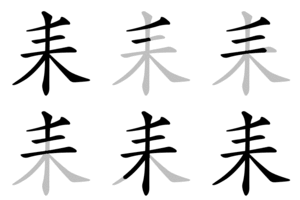 | |||
Glyph origin
| Historical forms of the character 耒 | |
|---|---|
| Shuowen Jiezi (compiled in Han) | Liushutong (compiled in Ming) |
| Small seal script | Transcribed ancient scripts |
 |
 |
| Characters in the same phonetic series (耒) (Zhengzhang, 2003) | |
|---|---|
| Old Chinese | |
| 頛 | *ruːlʔ |
| 郲 | *rɯː, *ruːlʔ, *ruːlʔ |
| 耒 | *ruːls, *rulʔ |
| 銇 | *ruːls |
| 洡 | *ruːls |
| 誄 | *rulʔ |
Pictogram (象形) – a wooden (木) plow with originally three cross lines (彡) for the furrows of the plow, later simplified to two.
Han character
耒 (radical 127 耒+0, 6 strokes, cangjie input 手木 (QD), four-corner 50900, composition ⿻一未(GV) or ⿻丿未(HTJK))
- Kangxi radical #127, ⽾.
Derived characters
- Index:Chinese radical/耒
References
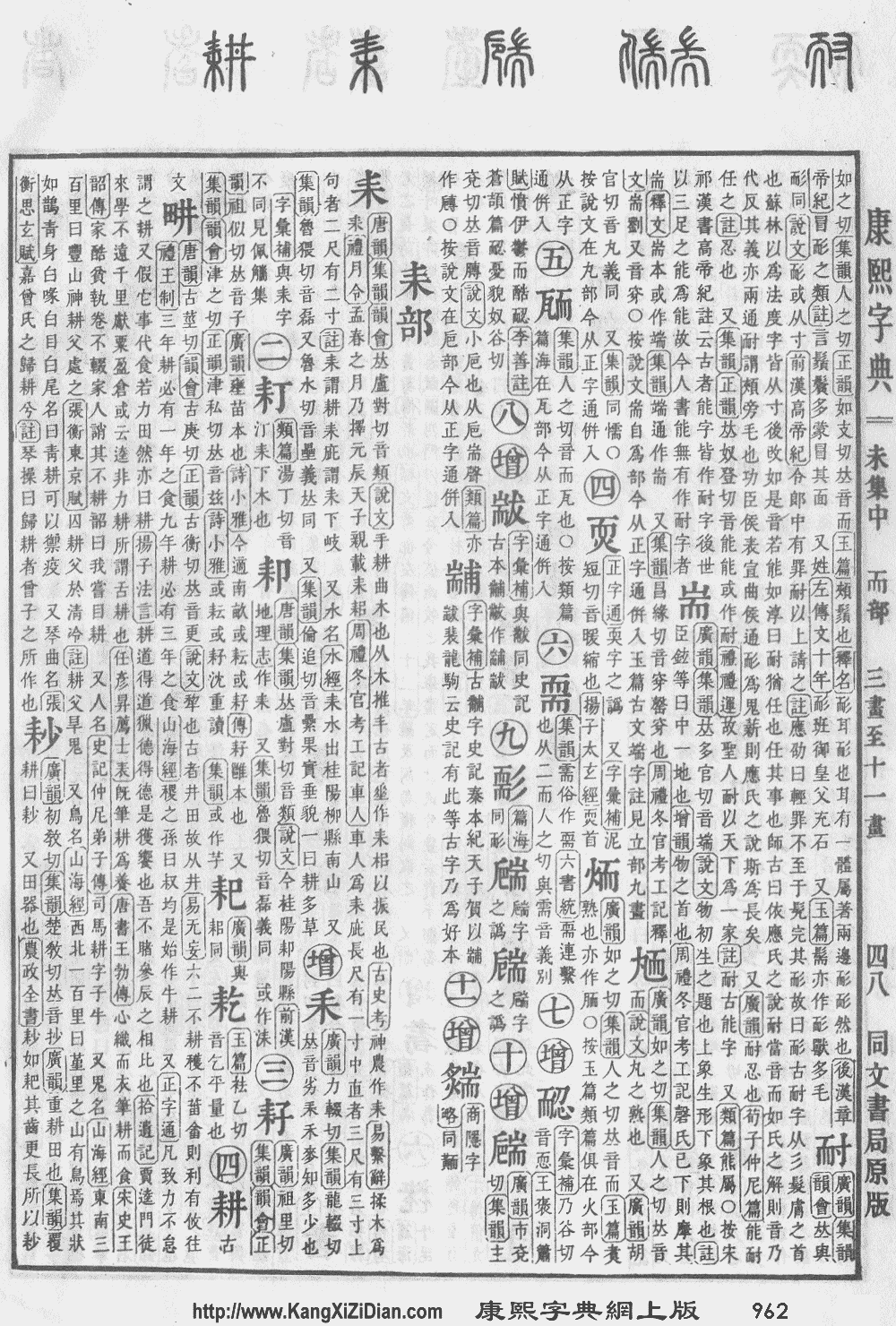
- KangXi: page 962, character 16
- Dai Kanwa Jiten: character 28898
- Dae Jaweon: page 1410, character 15
- Hanyu Da Zidian: volume 4, page 2770, character 1
- Unihan data for U+8012
Chinese
| simp. and trad. |
耒 | |
|---|---|---|
Etymology 1
Pronunciation
Definitions
耒
Etymology 2
| For pronunciation and definitions of 耒 – see 來 (“to come; to arrive; to happen; to occur; etc.”). (This character, 耒, is the former (1969–1976) Singaporean simplified form of 來.) |
Notes:
|
Japanese
Kanji
耒
- This term needs a translation to English. Please help out and add a translation, then remove the text
{{rfdef}}.
Readings
Korean
Hanja
耒 • (roe>noe) (hangeul 뢰>뇌, revised roe>noe, McCune–Reischauer roe>noe, Yale loy>noy)
- This term needs a translation to English. Please help out and add a translation, then remove the text
{{rfdef}}.
Vietnamese
Han character
- This term needs a translation to English. Please help out and add a translation, then remove the text
{{rfdef}}.
This article is issued from
Wiktionary.
The text is licensed under Creative Commons - Attribution - Sharealike.
Additional terms may apply for the media files.