難
| ||||||||
| ||||||||
| ||||||||
Translingual
| Japanese | 難 |
|---|---|
| Simplified | 难 |
| Traditional | 難 |
Alternative forms
Note that in traditional Chinese, the component 

Han character
難 (radical 172, 隹+11 in Chinese, 隹+10 in Japanese, 19 strokes in Chinese, 18 strokes in Japanese, cangjie input 廿人人土 (TOOG), four-corner 40514, composition ⿰𦰩隹(GHTKV or U+FA68) or ⿰⿱艹⿻口夫+隹(J or U+FAC7))
References
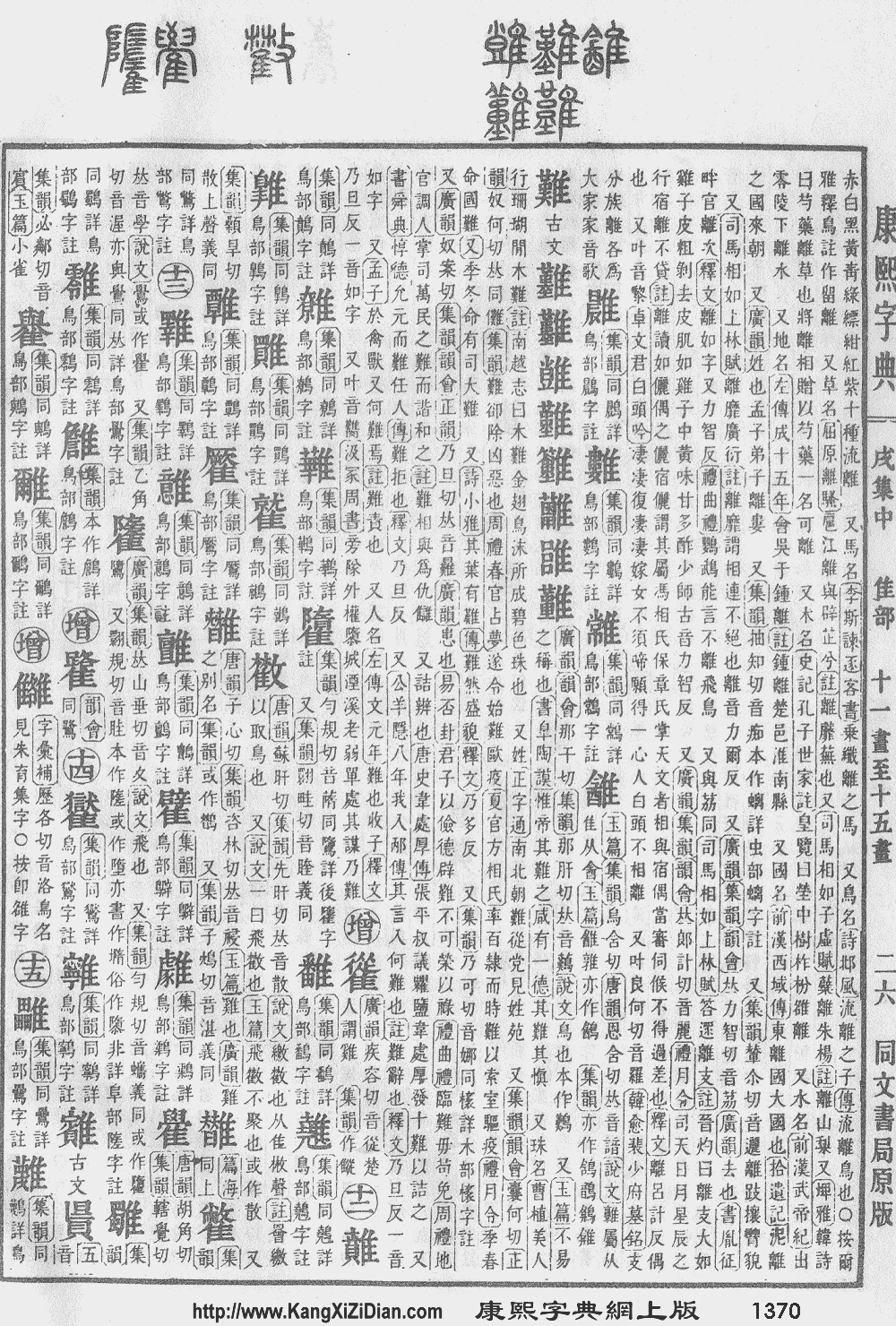
- KangXi: page 1370, character 5
- Dai Kanwa Jiten: character 42128
- Dae Jaweon: page 1876, character 2
- Hanyu Da Zidian: volume 6, page 4108, character 5
- Unihan data for U+96E3
- Unihan data for U+FA68
- Unihan data for U+FAC7
Chinese
| trad. | 難 | |
|---|---|---|
| simp. | 难 | |
| alt. forms | 难 | |
Glyph origin
| Characters in the same phonetic series (暵) (Zhengzhang, 2003) | |
|---|---|
| Old Chinese | |
| 儺 | *naːl |
| 臡 | *naːl, *neːl, *njeːl |
| 嘆 | *n̥ʰaːn, *n̥ʰaːns |
| 灘 | *n̥ʰaːn, *naːns, *hnaːnʔ, *hnaːns |
| 擹 | *n̥ʰaːn |
| 攤 | *n̥ʰaːn, *naːnʔ, *naːns |
| 癱 | *n̥ʰaːn |
| 歎 | *n̥ʰaːns |
| 難 | *n̥ʰaːn, *naːns |
| 暵 | *hnaːnʔ, *hnaːns |
| 熯 | *hnaːnʔ, *hnaːns, *njanʔ |
| 漢 | *hnaːns |
| 戁 | *rnaːnʔ, *njanʔ |
Phono-semantic compound (形聲, OC *n̥ʰaːn, *naːns) : phonetic 𦰩 + semantic 隹.
Etymology
From Proto-Sino-Tibetan *na-n/t (“ill, pain, difficult, evil spirit”).
Cognate with Tibetan མནར (mnar, “to suffer; suffering”), ན (na, “to be sick, ill”), ནན་ཏེ (nan te, “sick, ill”), ནད (nad, “disease, suffering”), Burmese နာ (na, “to suffer pain, to be ill”), နတ် (nat, “nat (spirit), evil spirit”).
Pronunciation 1
Definitions
難
- difficult; hard; troublesome
- bad; unpleasant
- to feel difficult
- to make things difficult for; to put someone in a difficult position
- difficulty; something which is difficult; issue
- 79th tetragram of the Taixuanjing; "difficulties"
- Alternative form of 戁 (“to dread; to fear”).
- Alternative form of 攤/摊 (tān, “sacrificial rites for getting rid of bogeys”).
Compounds
|
|
|
Pronunciation 2
Definitions
難
Compounds
|
|
|
Japanese
| 難 | |
| 難 |
Kanji
(grade 6 “Kyōiku” kanji, shinjitai kanji, kyūjitai form 難)
Readings
Compounds
Etymology
| Kanji in this term |
|---|
| 難 |
| なん Grade: 6 |
| on’yomi |
From Middle Chinese 難 (MC nɑn).
Pronunciation
Noun
References
Korean
Hanja
難 • (nan, na) (hangeul 난, 나, revised nan, na, McCune–Reischauer nan, na, Yale nan, na)
- This term needs a translation to English. Please help out and add a translation, then remove the text
{{rfdef}}.
Vietnamese
Han character
- This term needs a translation to English. Please help out and add a translation, then remove the text
{{rfdef}}.