源
See also: 厵
| ||||||||
Translingual
Han character
源 (radical 85 水+10, 13 strokes, cangjie input 水一竹火 (EMHF), four-corner 31196, composition ⿰氵原)
Derived characters
- 𡀶, 𪒳, 𢢵
References
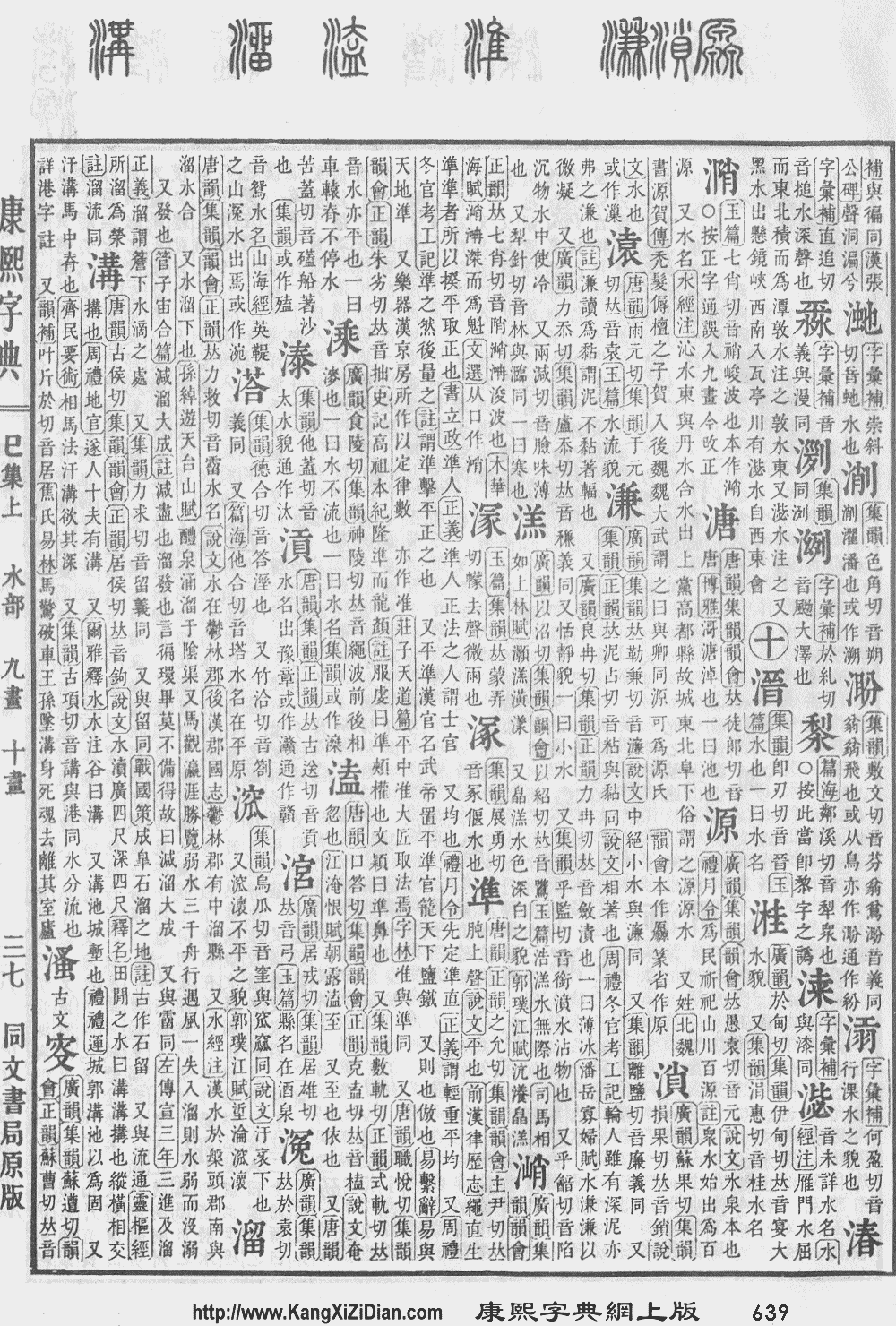
- KangXi: page 639, character 16
- Dai Kanwa Jiten: character 17926
- Dae Jaweon: page 1046, character 9
- Hanyu Da Zidian: volume 3, page 1697, character 2
- Unihan data for U+6E90
Chinese
| simp. and trad. |
源 | |
|---|---|---|
| alt. forms | 厵 | |
Glyph origin
| Characters in the same phonetic series (原) (Zhengzhang, 2003) | |
|---|---|
| Old Chinese | |
| 羱 | *ŋʷaːn, *ŋʷan |
| 豲 | *ɦŋʷaːn |
| 謜 | *sŋ̊ʰʷan, *ŋʷan |
| 縓 | *sŋ̊ʰʷan, *sŋ̊ʰʷans |
| 原 | *ŋʷan |
| 源 | *ŋʷan |
| 厵 | *ŋʷan |
| 嫄 | *ŋʷan |
| 騵 | *ŋʷan |
| 榞 | *ŋʷan |
| 獂 | *ŋʷan |
| 蒝 | *ŋʷan |
| 願 | *ŋʷans |
| 傆 | *ŋʷans |
| 愿 | *ŋʷans |
Phono-semantic compound (形聲, OC *ŋʷan) and ideogrammic compound (會意) : semantic 水 (“vegetation”) + phonetic 原 (OC *ŋʷan, “origin”).
Pronunciation
Definitions
源
Compounds
Derived terms from 源
|
|
|
Japanese
Kanji
源
Readings
Compounds
Etymology 1
| Kanji in this term |
|---|
| 源 |
| みなもと Grade: 6 |
| kun’yomi |
From 水 (mi, “water”) + な (na, possessive particle) + 元 (moto, “origin, source”)
Pronunciation
Noun
源 (hiragana みなもと, rōmaji minamoto)
Proper noun
源 (hiragana みなもと, rōmaji Minamoto)
- A surname.
See also
Etymology 2
From Middle Chinese 源 (nguan, reconstructed by some linguists as /ŋʉɐn/, )
Pronunciation
Suffix
Korean
Hanja
源 • (won) (hangeul 원, revised won, McCune–Reischauer wŏn, Yale wen)
Vietnamese
Han character
- This term needs a translation to English. Please help out and add a translation, then remove the text
{{rfdef}}.
References
This article is issued from
Wiktionary.
The text is licensed under Creative Commons - Attribution - Sharealike.
Additional terms may apply for the media files.