爲
| ||||||||
Translingual
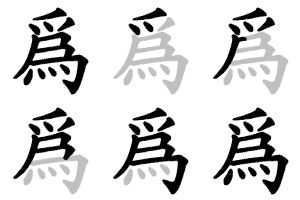
| Stroke order | |||
|---|---|---|---|
 | |||
Han character
爲 (radical 87 爪+8, 12 strokes, cangjie input 月竹弓火 (BHNF), four-corner 20227 or 20327)
References
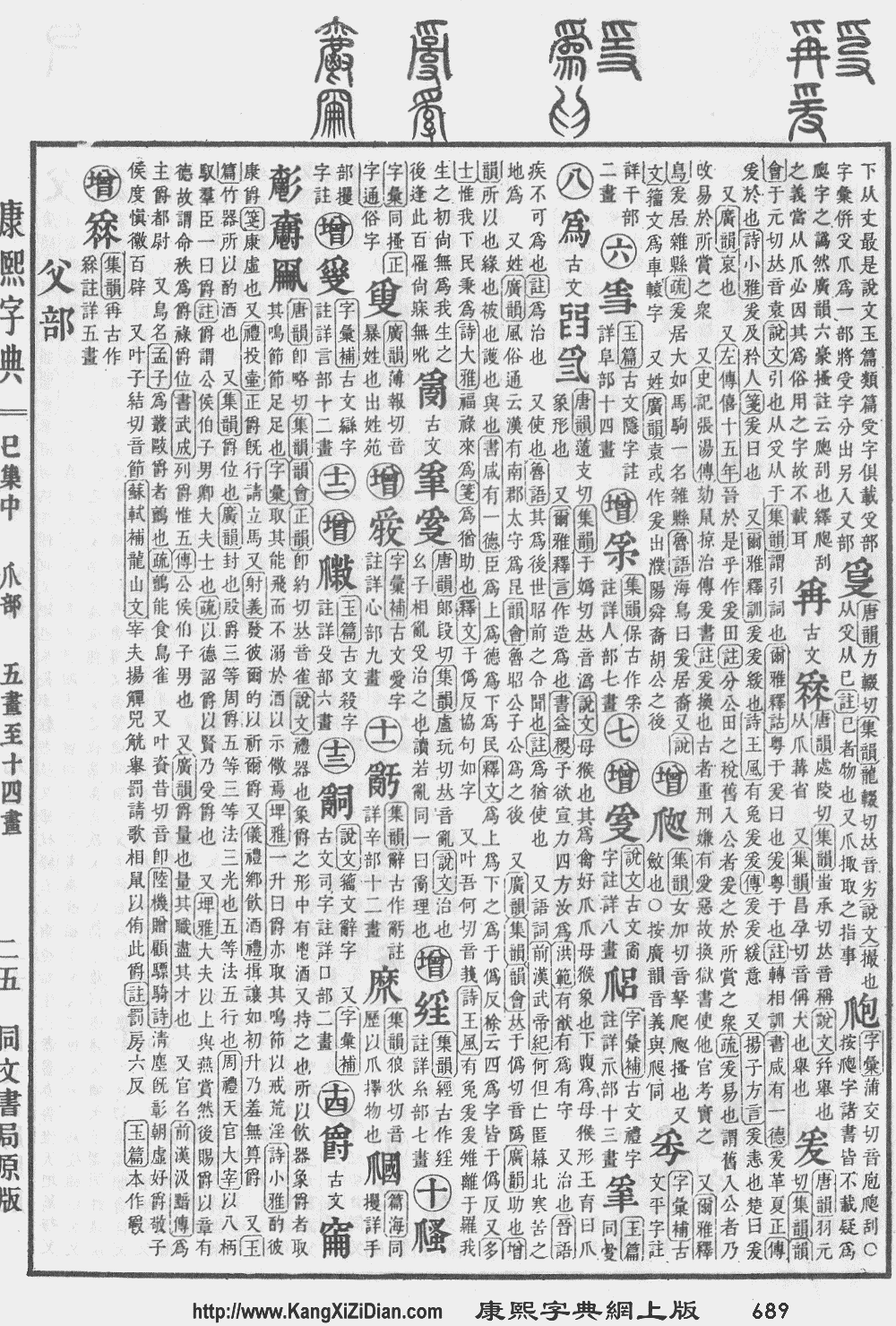
- KangXi: page 689, character 13
- Dai Kanwa Jiten: character 19686
- Dae Jaweon: page 1102, character 16
- Hanyu Da Zidian: volume 3, page 2033, character 21
- Unihan data for U+7232
Chinese
Glyph origin
| Characters in the same phonetic series (爲) (Zhengzhang, 2003) | |
|---|---|
| Old Chinese | |
| 譌 | *ŋʷaːl |
| 嬀 | *kʷral |
| 潙 | *kʷral, *ɢʷal |
| 蟡 | *kʷralʔ, *qʷral |
| 僞 | *ŋʷrals |
| 噅 | *qʰʷral |
| 撝 | *qʰʷral |
| 爲 | *ɢʷal, *ɢʷal, *ɢʷals |
| 鄬 | *ɢʷal, *ɢʷalʔ |
| 蔿 | *ɢʷalʔ |
| 儰 | *ɢʷalʔ |
| 寪 | *ɢʷalʔ |
| 蘤 | *ɢʷalʔ |
Originally an Ideogrammic compound (會意) : 又 (“hand”) + 象 (“elephant”). See 為 for the full etymology and historical forms.
Definitions
| For pronunciation and definitions of 爲 – see 為 (“to do; to make; into; to; etc.”). (This character, 爲, is a variant traditional form of 為.) |
Japanese
| 為 | |
| 爲 |
Kanji
爲
(“Jinmeiyō” kanji used for names, kyūjitai kanji, shinjitai form 為)
- This term needs a translation to English. Please help out and add a translation, then remove the text
{{rfdef}}.
Readings
Usage notes
Rarely used except for historical surnames such as 爲ケ谷 (ためがや), nowadays written 為谷.
Korean
Hanja
爲 • (wi) (hangeul 위, revised wi, McCune–Reischauer wi, Yale wi)
- This term needs a translation to English. Please help out and add a translation, then remove the text
{{rfdef}}.
- 爲國/위국
- 爲始/위시
- 爲政者/위정자
- 爲主/위주
- 爲親契/위친계
- 刻燭爲詩/각촉위시
- 當爲/당위
- 伐齊爲名/벌제위명
- 無爲徒食/무위도식
- 無所不爲/무소불위
- 削髮爲僧/삭발위승
- 人爲/인위
- 作爲/작위
- 轉禍爲福/전화위복
- 行爲/행위
Vietnamese
Han character
爲 (vay, vì, vĩ, voi vơ, vờ, vi, ví, vị)
- This term needs a translation to English. Please help out and add a translation, then remove the text
{{rfdef}}.
This article is issued from
Wiktionary.
The text is licensed under Creative Commons - Attribution - Sharealike.
Additional terms may apply for the media files.