酢
| ||||||||
Translingual
Han character
酢 (radical 164 酉+5, 12 strokes, cangjie input 一田人尸 (MWOS), four-corner 18611, composition ⿰酉乍)
References
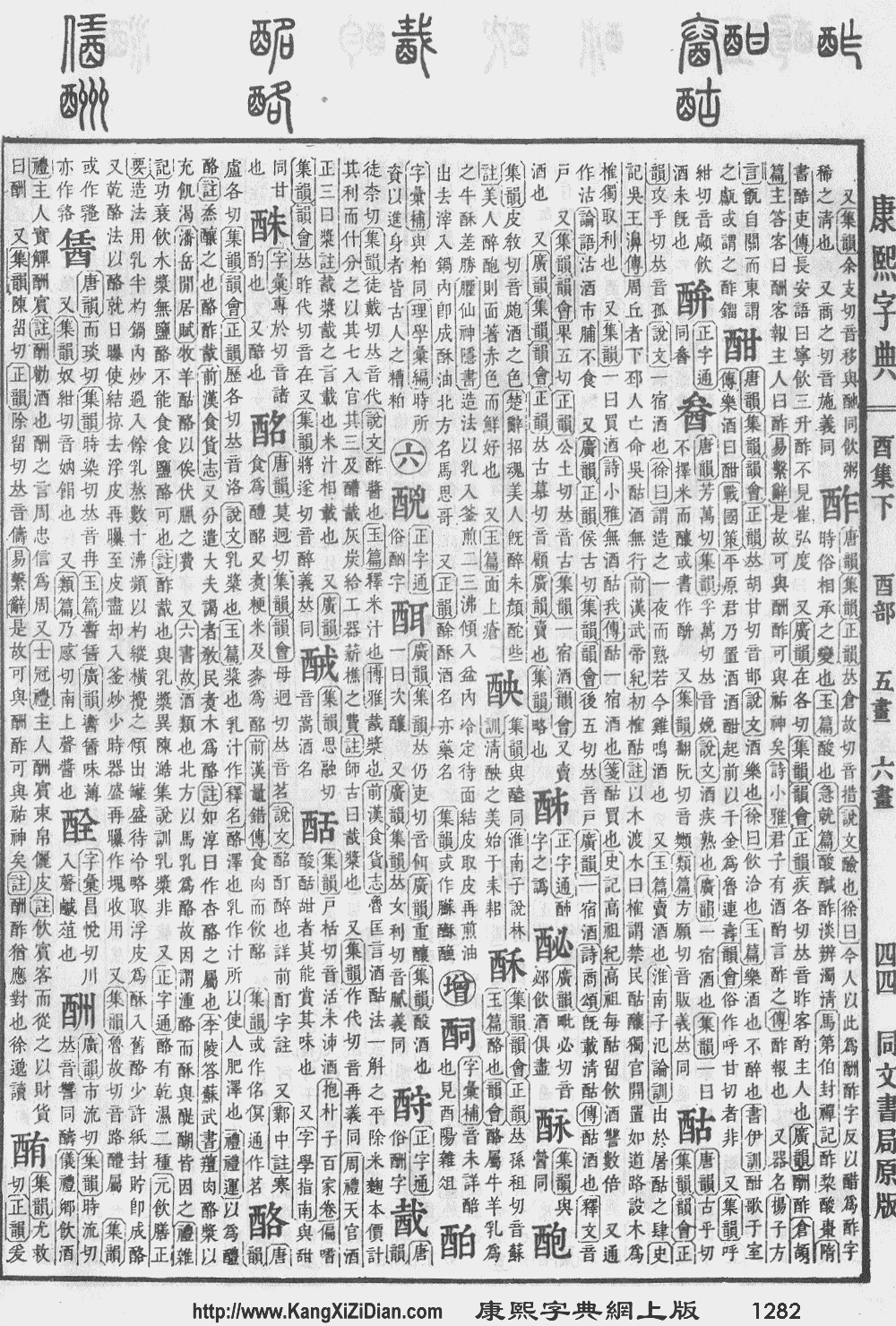
- KangXi: page 1282, character 1
- Dai Kanwa Jiten: character 39824
- Dae Jaweon: page 1781, character 43
- Hanyu Da Zidian: volume 6, page 3578, character 9
- Unihan data for U+9162
Chinese
| simp. and trad. |
酢 | |
|---|---|---|
Glyph origin
| Historical forms of the character 酢 | |
|---|---|
| Western Zhou | Shuowen Jiezi (compiled in Han) |
| Bronze inscriptions | Small seal script |
 |
 |
| Characters in the same phonetic series (乍) (Zhengzhang, 2003) | |
|---|---|
| Old Chinese | |
| 作 | *ʔsaːɡs, *ʔsaːɡs, *ʔsaːɡ |
| 鲊 | *ʔsraːʔ |
| 痄 | *ʔsraːʔ |
| 厏 | *ʔsraːʔ, *zraːʔ |
| 詐 | *ʔsraːɡs |
| 咋 | *ʔsraːɡs, *zraːɡ, *ʔsreːɡ |
| 笮 | *ʔsraːɡs, *zaːɡ, *ʔsraːɡ |
| 榨 | *ʔsraːɡs |
| 炸 | *ʔr'aːɡs, *zreːb |
| 乍 | *zraːɡs |
| 拃 | *ʔsraːnʔ |
| 酢 | *sʰaːɡs, *zaːɡ |
| 祚 | *zaːɡs |
| 胙 | *zaːɡs |
| 阼 | *zaːɡs |
| 飵 | *zaːɡs, *zaːɡ |
| 秨 | *zaːɡs, *zaːɡ |
| 迮 | *ʔsaːɡ, *ʔsraːɡ |
| 柞 | *ʔsaːɡ, *zaːɡ |
| 昨 | *zaːɡ |
| 怍 | *zaːɡ |
| 砟 | *zaːɡ |
| 莋 | *zaːɡ |
| 岝 | *zaːɡ, *zraːɡ |
| 鈼 | *zaːɡ |
| 筰 | *zaːɡ |
| 葃 | *zaːɡ, *zreːɡ, *zaɡ |
| 舴 | *ʔr'aːɡ, *ʔsraːɡ |
| 窄 | *ʔsraːɡ |
| 蚱 | *ʔsraːɡ |
| 齚 | *zraːɡ |
| 泎 | *zraːɡ |
Etymology 1
Pronunciation
Definitions
酢
Compounds
|
|
Etymology 2
Pronunciation
Definitions
酢
- Alternative form of 醋 (“vinegar”)
Compounds
|
|
|
Japanese
Kanji
Readings
Compounds
- 酢酸 (sakusan, “acetic acid”)
Etymology
| Kanji in this term |
|---|
| 酢 |
| す Grade: S |
| on’yomi |
| Kanji in this term |
|---|
| 酢 |
| す Grade: S |
| kun’yomi |
Unknown. One theory is that this is a native Japanese term, with the su reading somehow related to the way that very sour things cause one to pucker.
Given that vinegar was historically introduced to Japan in the 300-400s from China, another possibility is that the su reading is from Middle Chinese 醋 (MC t͡sʰuoH) instead, with the 酢 spelling as an example of jukujikun (熟字訓), and that this su reading naturalized and came to be regarded as a native kun'yomi rather than a Chinese-derived on'yomi. Compare modern Mandarin 醋 (cù) or Cantonese 醋 (cou3).
Pronunciation
Alternative forms
Noun
- vinegar (condiment)
Derived terms
Idioms
- 酢が過ぎる (su ga sugiru): “vinegar is excessive, too much vinegar” → doing too much, being excessive
- 酢でさいて飲む (su de saite nomu): “cutting something with vinegar and swallowing it down” → in reference with the ease of cutting a fish, dipping it in vinegar, and eating it: doing something very simple
- 酢でも酒塩でも (su de mo sakashio de mo), 酢でも蒟蒻でも (su de mo konnyaku de mo): (used with a negative verb): “by vinegar or by cooking wine”, “by vinegar or by konjac” → something that cannot be done in the usual fashion, or cannot be done easily
- 酢に当て粉に当て (su ni ate ko ni ate), 酢につけ粉につけ (su ni tsuke ko ni tsuke): “with regard to vinegar and flour”, “about vinegar and flour” → about something, about various things; from time to time
- 酢にも粉にも (su ni mo ko ni mo), 酢にも塩にも (su ni mo shio ni mo]), 酢にも蛸にも (su ni mo tako ni mo), 酢にも味噌にも (su ni mo miso ni mo): “about/in vinegar and flour”, “about/in vinegar and salt”, “about/in vinegar and octopus”, “about/in vinegar and miso” → about anything, in anything
- 酢の粉の (su no ko no), 酢の蒟蒻の (su no konnyaku no): “of vinegar, of flour”, “of vinegar, of konjac” → of anything, belonging to anything
- 酢を買う (su o kau), 酢を乞う (su o kou): “to buy vinegar”, “to beg vinegar” → to lose goodwill through excessive sycophancy, to anger someone by saying more than one should; to agitate or instigate, to stir things up
References
Korean
Hanja
酢 • (cho, jak) (hangeul 초, 작, revised cho, jak, McCune–Reischauer ch'o, chak, Yale cho, cak)
- This term needs a translation to English. Please help out and add a translation, then remove the text
{{rfdef}}.
Vietnamese
Han character
酢 (tạc, thố)
- This term needs a translation to English. Please help out and add a translation, then remove the text
{{rfdef}}.