餘
| ||||||||
Translingual
| Traditional | 餘 |
|---|---|
| Shinjitai | 余 |
| Simplified | 余/馀 |
Alternative forms
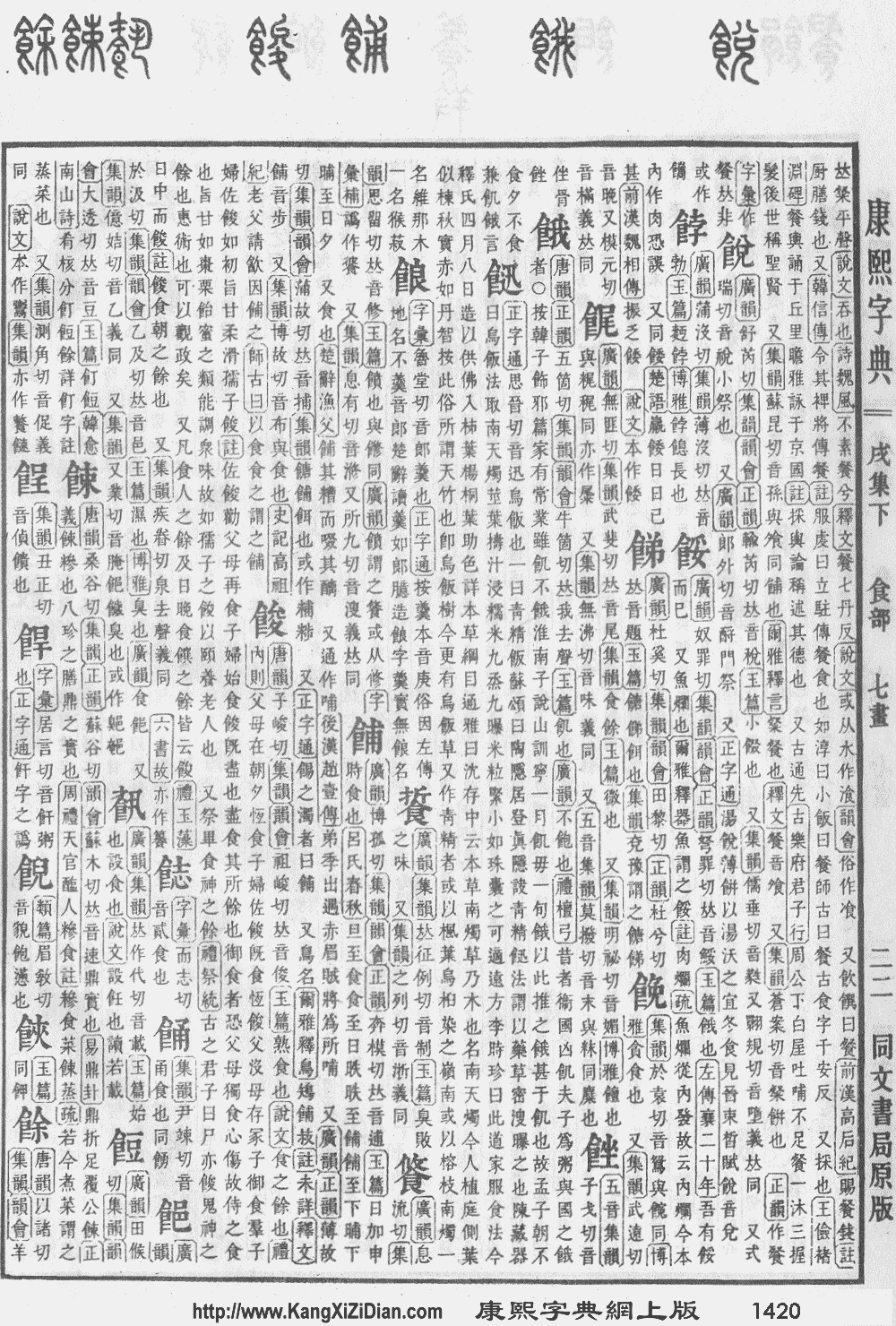
- In Japanese kyūjitai and Korean Hanja, this character is written with the left component 𩙿 which is also the historical form found in the Kangxi dictionary. In traditional Chinese and Vietnamese Nom, the left component is written with 飠 instead.
Han character
餘 (radical 184, 食+7, 16 strokes, cangjie input 人戈人一木 (OIOMD), four-corner 88794, composition ⿰飠余(GHTV) or ⿰𩙿余(JK))
Derived characters
- 𬉣, 𮣧, 𧃋
Related characters
- 余 (Japanese shinjitai and Simplified Chinese) - Note that 余 and 餘 are unrelated in traditional Chinese
- 馀 (Non-standard form in mainland China, only used when it is desirable to distinguish 餘 from 余)
References
- KangXi: page 1420, character 25
- Dai Kanwa Jiten: character 44185
- Dae Jaweon: page 1945, character 24
- Hanyu Da Zidian: volume 7, page 4456, character 9
- Unihan data for U+9918
Chinese
| trad. | 餘 | |
|---|---|---|
| simp. | 余*/馀 | |
Glyph origin
| Historical forms of the character 餘 | |
|---|---|
| Shuowen Jiezi (compiled in Han) | Liushutong (compiled in Ming) |
| Small seal script | Transcribed ancient scripts |
 |
 |
| Characters in the same phonetic series (余) (Zhengzhang, 2003) | |
|---|---|
| Old Chinese | |
| 斜 | *lja, *laː |
| 茶 | *rlaː |
| 荼 | *rlaː, *ɦlja, *l'aː |
| 梌 | *rlaː, *l̥ʰaː, *l'aː |
| 搽 | *rlaː |
| 塗 | *rlaː, *l'aː |
| 佘 | *ɦlja |
| 賒 | *hljaː |
| 畬 | *hljaː, *la |
| 舍 | *hljaːʔ, *hljaːs |
| 捨 | *hljaːʔ |
| 騇 | *hljaːʔ, *hljaːs |
| 涻 | *hljaːs |
| 稌 | *l̥ʰaː, *l̥ʰaːʔ |
| 悇 | *l̥ʰaː, *l̥ʰas, *las |
| 庩 | *l̥ʰaː |
| 捈 | *l̥ʰaː, *l'aː |
| 途 | *l'aː |
| 酴 | *l'aː |
| 駼 | *l'aː |
| 鵌 | *l'aː, *la |
| 涂 | *l'aː, *l'a |
| 嵞 | *l'aː |
| 峹 | *l'aː |
| 筡 | *l'aː, *l̥ʰa |
| 蒤 | *l'aː |
| 徐 | *lja |
| 俆 | *lja |
| 叙 | *ljaʔ |
| 漵 | *ljaʔ |
| 除 | *l'a, *l'as |
| 篨 | *rla |
| 滁 | *rla |
| 蒢 | *rla |
| 蜍 | *ɦlja, *la |
| 鵨 | *hljaː |
| 瑹 | *hlja |
| 余 | *la |
| 餘 | *la |
| 艅 | *la |
| 狳 | *la |
| 雓 | *la |
| 悆 | *las |
Phono-semantic compound (形聲, OC *la) : semantic 食 + phonetic 余 (OC *la).
Pronunciation 1
Definitions
餘
- to remain; to have left
- time after an event
- over; more than
- long
- remainder
- Alternative form of 余 (yú, “I”).
- salt
- A surname.
Usage notes
In simplified Chinese, 馀 is a non-standard form of 餘 only used as a surname or when it is desirable to distinguish 餘 from 余.
Compounds
Derived terms from 餘
|
|
|
Pronunciation 2
Definitions
餘
- Only used in 緒餘/绪余.
Japanese
| 余 | |
| 餘 |
Kanji
餘
(uncommon “Hyōgai” kanji, kyūjitai kanji, shinjitai form 余)
Readings
Usage notes
余 is the preferred form used in modern Japanese.
Korean
Hanja
餘 • (yeo) (hangeul 여, revised yeo, McCune–Reischauer yŏ, Yale ye)
- This term needs a translation to English. Please help out and add a translation, then remove the text
{{rfdef}}.
Vietnamese
Han character
- This term needs a translation to English. Please help out and add a translation, then remove the text
{{rfdef}}.
References
This article is issued from
Wiktionary.
The text is licensed under Creative Commons - Attribution - Sharealike.
Additional terms may apply for the media files.