荼
| ||||||||
Translingual
Han character
荼 (radical 140 艸+7, 10 strokes, cangjie input 廿人一木 (TOMD), four-corner 44904, composition ⿱艹余)
References
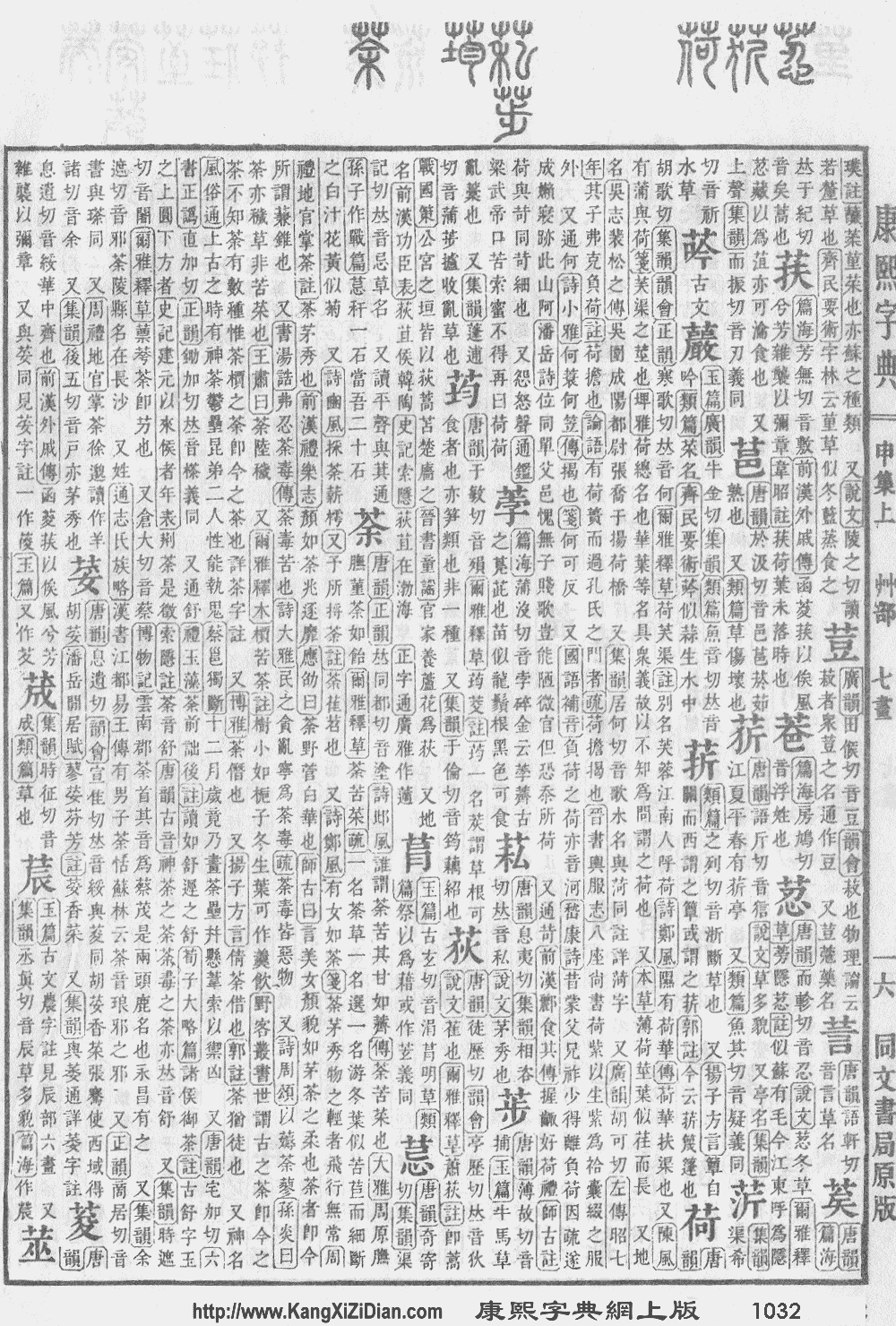
- KangXi: page 1032, character 21
- Dai Kanwa Jiten: character 31008
- Dae Jaweon: page 1492, character 8
- Hanyu Da Zidian: volume 5, page 3221, character 11
- Unihan data for U+837C
Chinese
| simp. and trad. |
荼 | |
|---|---|---|
Glyph origin
| Historical forms of the character 荼 | |
|---|---|
| Shuowen Jiezi (compiled in Han) | Liushutong (compiled in Ming) |
| Small seal script | Transcribed ancient scripts |
 |
 |
| Characters in the same phonetic series (余) (Zhengzhang, 2003) | |
|---|---|
| Old Chinese | |
| 斜 | *lja, *laː |
| 茶 | *rlaː |
| 荼 | *rlaː, *ɦlja, *l'aː |
| 梌 | *rlaː, *l̥ʰaː, *l'aː |
| 搽 | *rlaː |
| 塗 | *rlaː, *l'aː |
| 佘 | *ɦlja |
| 賒 | *hljaː |
| 畬 | *hljaː, *la |
| 舍 | *hljaːʔ, *hljaːs |
| 捨 | *hljaːʔ |
| 騇 | *hljaːʔ, *hljaːs |
| 涻 | *hljaːs |
| 稌 | *l̥ʰaː, *l̥ʰaːʔ |
| 悇 | *l̥ʰaː, *l̥ʰas, *las |
| 庩 | *l̥ʰaː |
| 捈 | *l̥ʰaː, *l'aː |
| 途 | *l'aː |
| 酴 | *l'aː |
| 駼 | *l'aː |
| 鵌 | *l'aː, *la |
| 涂 | *l'aː, *l'a |
| 嵞 | *l'aː |
| 峹 | *l'aː |
| 筡 | *l'aː, *l̥ʰa |
| 蒤 | *l'aː |
| 徐 | *lja |
| 俆 | *lja |
| 叙 | *ljaʔ |
| 漵 | *ljaʔ |
| 除 | *l'a, *l'as |
| 篨 | *rla |
| 滁 | *rla |
| 蒢 | *rla |
| 蜍 | *ɦlja, *la |
| 鵨 | *hljaː |
| 瑹 | *hlja |
| 余 | *la |
| 餘 | *la |
| 艅 | *la |
| 狳 | *la |
| 雓 | *la |
| 悆 | *las |
Pronunciation 1
Definitions
荼
- a type of bitter vegetable, of Sonchus or Lactuca
- (figuratively) pain; suffering
- white flower of cogon grass or reed
Usage notes
- 荼 can refer to one of several types of bitter tasting vegetables. Early Chinese texts are rather vague in their description. This makes it difficult to determine which species it originally referred to.
Compounds
Pronunciation 2
| For pronunciation and definitions of 荼 – see 茶 (“tea; tea; etc.”). (This character, 荼, is a variant form of 茶.) |
Pronunciation 3
Definitions
荼
- A surname.
Pronunciation 4
Definitions
荼
- Only used in 神荼 (shēnshū).
Compounds
Pronunciation 5
| For pronunciation and definitions of 荼 – see 舒 (“to open up; to unfold; to stretch out; comfortable; easy”). (This character, 荼, is a variant form of 舒.) |
Japanese
Kanji
荼
- This term needs a translation to English. Please help out and add a translation, then remove the text
{{rfdef}}.
Readings
- Goon: じゃ (ja)←ぢや (dya, historical); ど (do)
- Kan’on: た (ta); と (to)
- Kan’yōon: だ (da)
- Kun: にがな (nigana)
Vietnamese
Han character
- This term needs a translation to English. Please help out and add a translation, then remove the text
{{rfdef}}.
This article is issued from
Wiktionary.
The text is licensed under Creative Commons - Attribution - Sharealike.
Additional terms may apply for the media files.