逸
| ||||||||
| ||||||||
| ||||||||
Translingual
| Japanese | 逸 |
|---|---|
| Simplified | 逸 |
| Traditional | 逸 |
Alternative forms
In Japanese shinjitai, the upper right component of 逸 is written 免 (without dot, simplified from 兔). In Chinese scripts, the upper right component of 逸 is written 兔 (extra dot above 儿). However, both Japanese and Chinese forms have the same number of strokes. Note that in Japanese, the 免 component is written ⺈+𫩏+儿. In Chinese, the middle part of 兔 is written 口 overlapped by ㇓ (one stroke instead of two). Due to Han unification, both characters are encoded under the same codepoint. A compatibility ideograph 逸(U+FA67) exists to reflect the original form (kyūjitai) of 逸.
Han character
逸 (radical 162, 辵+8, 12 strokes, cangjie input 卜弓山戈 (YNUI), four-corner 37301, composition ⿺辶兔(GHTKV) or ⿺辶⿳⺈𫩏儿(J))
References
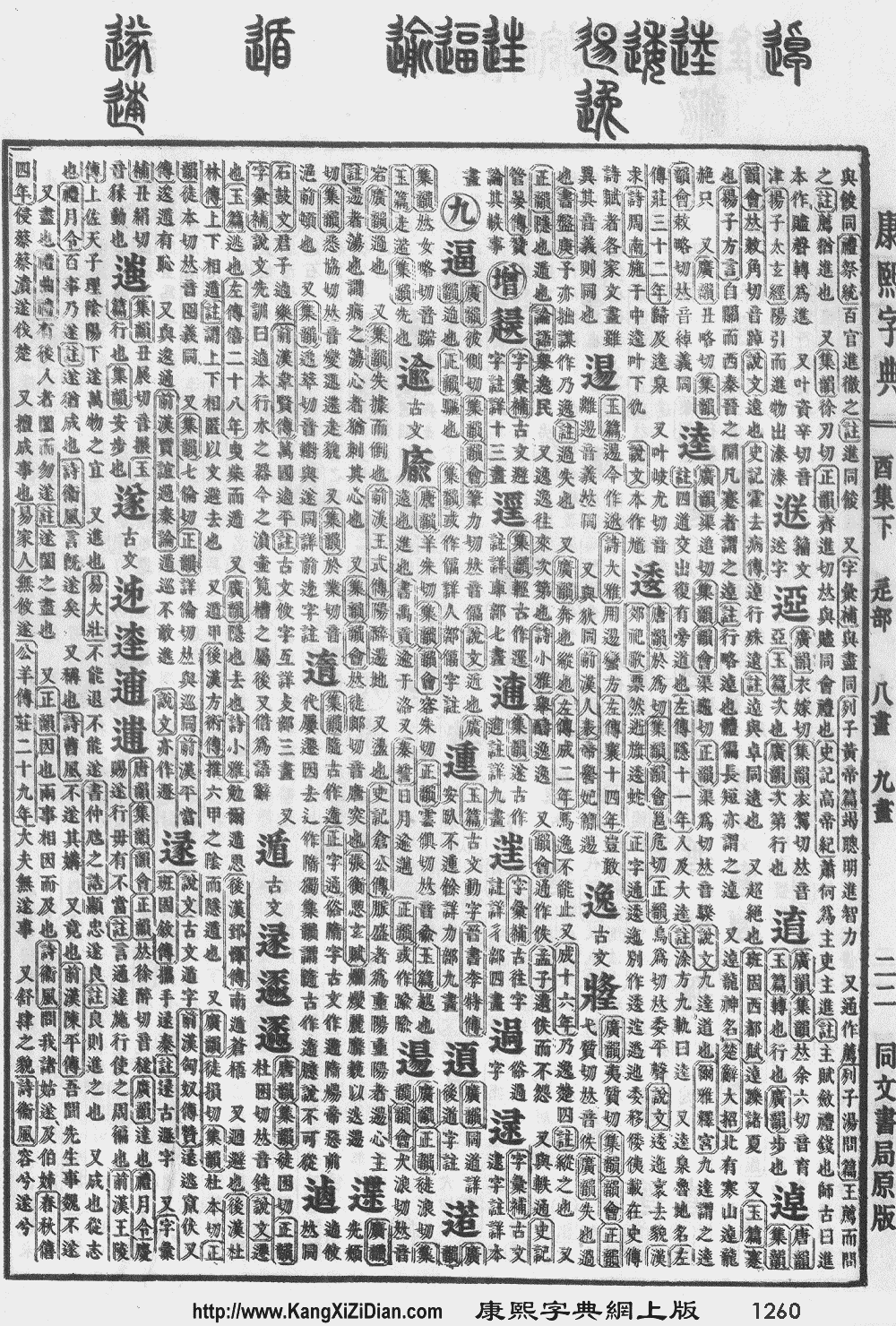
- KangXi: page 1260, character 8
- Dai Kanwa Jiten: character 38951
- Dae Jaweon: page 1750, character 4
- Hanyu Da Zidian: volume 6, page 3853, character 1
- Unihan data for U+9038
Chinese
| simp. and trad. |
逸 | |
|---|---|---|
Pronunciation
Definitions
逸
Compounds
Japanese
Kanji
(common “Jōyō” kanji, shinjitai kanji, kyūjitai form 逸)
- flee, escape
- conceal, hide (from the outside world)
- Alternative spelling of 佚 (itsu): lost, unknown; indulge; disappear
- great, superb, outstanding
Readings
Compounds
- 逸居 (ikkyo)
- 逸才 (issai)
- 逸材 (itsuzai)
- 逸散 (issan)
- 逸事 (itsuji)
- 逸史 (isshi)
- 逸詩 (isshi)
- 逸書 (issho)
- 逸出 (isshutsu)
- 逸走 (issō)
- 逸足 (issoku)
- 逸脱 (itsudatsu)
- 逸品 (ippin)
- 逸物 (itsubutsu)
- 逸文 (itsubun)
- 逸聞 (itsubun)
- 逸民 (itsumin)
- 逸遊 (itsuyū)
- 逸楽 (itsuraku)
- 逸話 (itsuwa)
- 安逸 (an'itsu)
- 隠逸 (in'itsu)
- 後逸 (kōitsu)
- 散逸 (san'itsu)
- 秀逸 (shūitsu)
- 都都逸 (dodoitsu)
- 放逸 (hōitsu)
- 奔逸 (hon'itsu)
- 独逸 (Doitsu)
Etymology
| Kanji in this term |
|---|
| 逸 |
| いち Grade: S |
| on’yomi |
/iti/ → /it͡ɕi/
Cognate with adverbs 甚 (ita, ito, “very, exceedingly”).[1][2]
The use of this kanji is an example of phonetic ateji (当て字),[2] possibly by extension of the "great, superb, outstanding" senses.
Prefix
逸 (hiragana いち, rōmaji ichi-)
Derived terms
References
Korean
Hanja
逸 • (il) (hangeul 일, revised il, McCune–Reischauer il, Yale il)
- This term needs a translation to English. Please help out and add a translation, then remove the text
{{rfdef}}.
Vietnamese
Han character
- Hán Việt: dật
- This term needs a translation to English. Please help out and add a translation, then remove the text
{{rfdef}}.