歎
| ||||||||
Translingual
Han character
歎 (radical 76 欠+11, 15 strokes, cangjie input 廿人弓人 (TONO), four-corner 47582, composition ⿰𦰩欠)
References
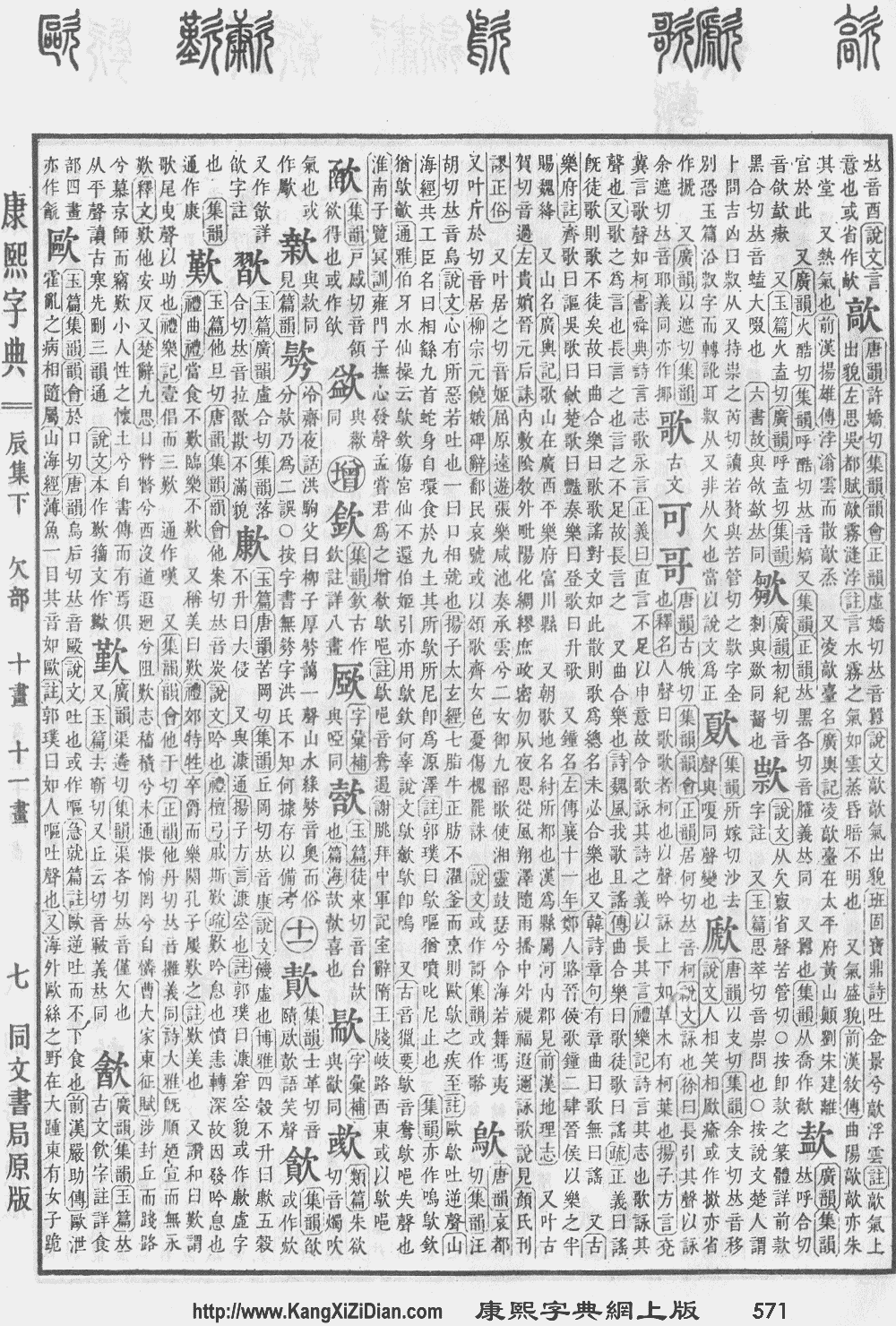
- KangXi: page 571, character 24
- Dai Kanwa Jiten: character 16182
- Dae Jaweon: page 959, character 18
- Hanyu Da Zidian: volume 3, page 2149, character 8
- Unihan data for U+6B4E
Chinese
| For pronunciation and definitions of 歎 – see 嘆 (“to sigh; interjection; etc.”). (This character, 歎, is a variant form of 嘆.) |
Japanese
Kanji
歎
(“Jinmeiyō” kanji used for names)
- This term needs a translation to English. Please help out and add a translation, then remove the text
{{rfdef}}.
Readings
Korean
Hanja
歎 • (tan) (hangeul 탄, revised tan, McCune–Reischauer t'an, Yale than)
- This term needs a translation to English. Please help out and add a translation, then remove the text
{{rfdef}}.
Vietnamese
Han character
歎 (thán, thăn, than)
- This term needs a translation to English. Please help out and add a translation, then remove the text
{{rfdef}}.
This article is issued from
Wiktionary.
The text is licensed under Creative Commons - Attribution - Sharealike.
Additional terms may apply for the media files.