寒
| ||||||||
Translingual
Han character
寒 (radical 40 宀+9, 12 strokes, cangjie input 十廿金卜 (JTCY), four-corner 30303, composition ⿱𡨄⺀)
References
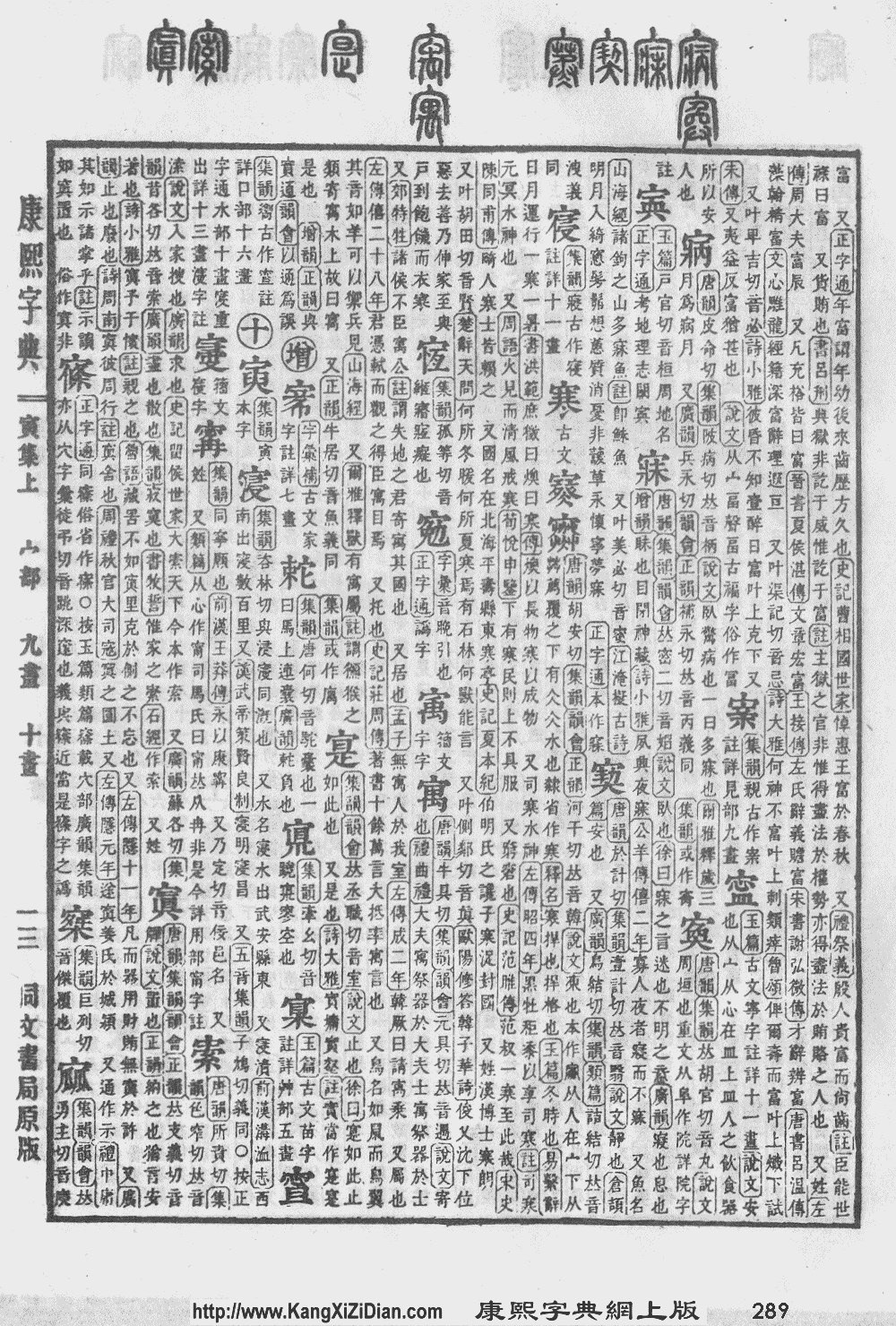
- KangXi: page 289, character 9
- Dai Kanwa Jiten: character 7239
- Dae Jaweon: page 572, character 10
- Hanyu Da Zidian: volume 2, page 941, character 6
- Unihan data for U+5BD2
Chinese
| simp. and trad. |
寒 | |
|---|---|---|
Glyph origin
| Historical forms of the character 寒 | ||
|---|---|---|
| Western Zhou | Shuowen Jiezi (compiled in Han) | Liushutong (compiled in Ming) |
| Bronze inscriptions | Small seal script | Transcribed ancient scripts |
 |
 |
 |
| Characters in the same phonetic series (寒) (Zhengzhang, 2003) | |
|---|---|
| Old Chinese | |
| 寒 | *ɡaːn |
| 蹇 | *kranʔ, *kanʔ |
| 謇 | *kranʔ |
| 搴 | *kranʔ, *kʰran |
| 藆 | *kranʔ |
| 騫 | *kʰran |
| 褰 | *kʰran |
| 攐 | *kʰran |
| 鑳 | *ɡranʔ |
| 寋 | *ɡanʔ |
| 鶱 | *qʰan |
Ideogrammic compound (會意) : 宀 (“house”) + 人 (“person”) + 茻 (“grass”) – a person in a house, sleeping in the grass to protect from the cold. In some bronze inscriptions, 二 is added at the bottom of the character; this may simply be decorative or may represent a mat. In the seal script, 二 is changed to 仌 (“ice”) to emphasize its meaning of coldness.
Pronunciation
Definitions
寒
- cold; wintry; chilly
- poor; poverty-stricken
- humble; petty and low
- desolate; deserted
- dreary; miserable
- withered; limp
- (humble) my
- to feel cold
- to fear; to dread
- winter
- cold weather; cold day or night
- (traditional Chinese medicine) cold; chill
- The fourteenth day of the month in Chinese telegraph messages
Synonyms
| Dialectal synonyms of 冷 (“cold”) [map] | ||
|---|---|---|
| Variety | Location | Words |
| Formal (Written Standard Chinese) | 冷 | |
| Mandarin | Beijing | 冷 |
| Taiwan | 冷 | |
| Jinan | 冷 | |
| Xi'an | 冷 | |
| Wuhan | 冷、冷凊 | |
| Chengdu | 冷、凊 | |
| Yangzhou | 冷 | |
| Hefei | 冷 | |
| Cantonese | Guangzhou | 凍、冷 |
| Hong Kong | 凍、冷 | |
| Taishan | 冷 | |
| Yangjiang | 凍、冷 | |
| Gan | Nanchang | 冷 |
| Hakka | Meixian | 冷 |
| Miaoli (N. Sixian) | 冷、寒 | |
| Liudui (S. Sixian) | 冷、寒人 | |
| Hsinchu (Hailu) | 冷 | |
| Dongshi (Dabu) | 冷、寒 | |
| Zhuolan (Raoping) | 冷、寒 | |
| Yunlin (Zhao'an) | 冷、寒 | |
| Jin | Taiyuan | 冷 |
| Min Bei | Jian'ou | 凊、鎮 |
| Min Dong | Fuzhou | 凊、凍 |
| Min Nan | Xiamen | 冷、凊、寒 |
| Quanzhou | 冷、凊、寒 | |
| Zhangzhou | 冷、凊、寒 | |
| Taipei | 冷、凊、寒 | |
| Chaozhou | 凝、寒 | |
| Shantou | 凝、寒 | |
| Wu | Suzhou | 冷 |
| Wenzhou | 冷、凍 | |
| Xiang | Changsha | 冷、凊 |
| Shuangfeng | 冷、凊 | |
Compounds
Derived terms from 寒
|
|
|
Japanese
Kanji
寒
- cold
Readings
- Goon: がん (gan)
- Kan’on: かん (kan, Jōyō)
- Kun: さむい (samui, 寒い, Jōyō); いやしい (iyashī, 寒しい); さびしい (sabishī, 寒しい); まずしい (mazushī, 寒しい)
- Nanori: さ (sa); さん (san)
Korean
Hanja
寒 • (han)
Compounds
Vietnamese
Han character
寒 (hàn)
- This term needs a translation to English. Please help out and add a translation, then remove the text
{{rfdef}}.
This article is issued from
Wiktionary.
The text is licensed under Creative Commons - Attribution - Sharealike.
Additional terms may apply for the media files.