嘆
| ||||||||
| ||||||||
| ||||||||
Translingual
| Japanese | 嘆 |
|---|---|
| Simplified | 叹 |
| Traditional | 嘆 |
Alternative forms
Note that in traditional Chinese, the component 

Han character
嘆 (radical 30 口+11 in Chinese, 口+10 in Japanese, in Chinese 14 strokes, in Japanese 13 strokes, cangjie input 口廿中人 (RTLO), four-corner 64034, composition ⿰口𦰩(GHTKV) or ⿰口⿱艹⿻口夫(J))
References
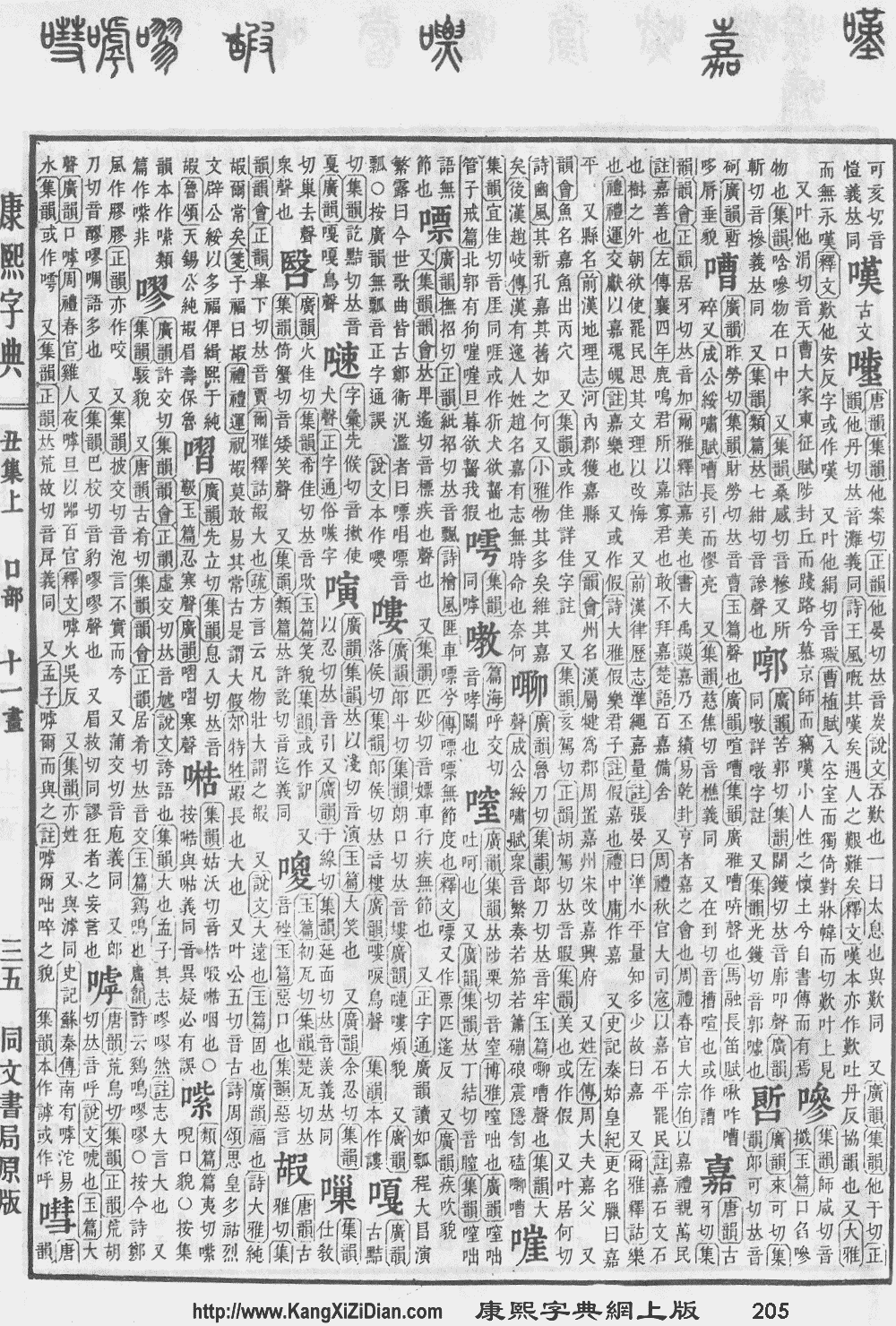
- KangXi: page 205, character 1
- Dai Kanwa Jiten: character 4138
- Dae Jaweon: page 427, character 21
- Hanyu Da Zidian: volume 1, page 673, character 8
- Unihan data for U+5606
Usage notes
In classical Chinese, this character is used interchangeably with 歎 to express a sigh or lament.
Chinese
| trad. | 嘆/歎 | |
|---|---|---|
| simp. | 叹* | |
Glyph origin
| Characters in the same phonetic series (暵) (Zhengzhang, 2003) | |
|---|---|
| Old Chinese | |
| 儺 | *naːl |
| 臡 | *naːl, *neːl, *njeːl |
| 嘆 | *n̥ʰaːn, *n̥ʰaːns |
| 灘 | *n̥ʰaːn, *naːns, *hnaːnʔ, *hnaːns |
| 擹 | *n̥ʰaːn |
| 攤 | *n̥ʰaːn, *naːnʔ, *naːns |
| 癱 | *n̥ʰaːn |
| 歎 | *n̥ʰaːns |
| 難 | *n̥ʰaːn, *naːns |
| 暵 | *hnaːnʔ, *hnaːns |
| 熯 | *hnaːnʔ, *hnaːns, *njanʔ |
| 漢 | *hnaːns |
| 戁 | *rnaːnʔ, *njanʔ |
Pronunciation
Definitions
嘆
Compounds
Japanese
Kanji
嘆
(common “Jōyō” kanji, shinjitai kanji, kyūjitai form 嘆)
Readings
Etymology
| Kanji in this term |
|---|
| 嘆 |
| たん Grade: S |
| on’yomi |
From Middle Chinese 嘆 (MC tʰɑn, tʰɑnH).
Noun
Korean
Hanja
嘆 • (tan) (hangeul 탄, revised tan, McCune–Reischauer t'an)
- This term needs a translation to English. Please help out and add a translation, then remove the text
{{rfdef}}.
Vietnamese
Han character
嘆 (thán, han, thăn, than, hen, thơn)
- This term needs a translation to English. Please help out and add a translation, then remove the text
{{rfdef}}.
This article is issued from
Wiktionary.
The text is licensed under Creative Commons - Attribution - Sharealike.
Additional terms may apply for the media files.