廿
See also: 廾
| ||||||||
Translingual
Han character
廿 (radical 55, 廾+1, 4 strokes, cangjie input 廿 (T), four-corner 44770)
References
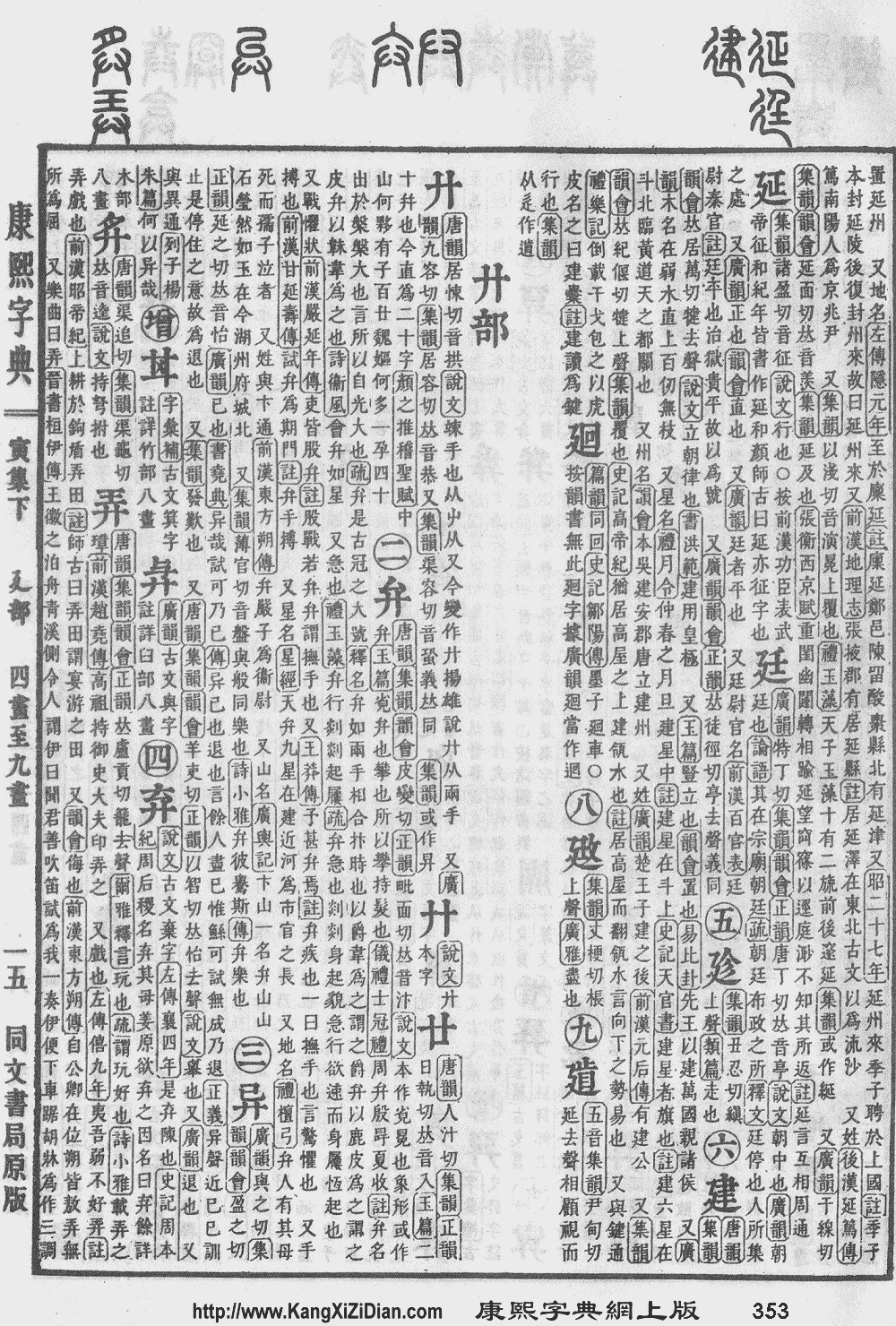
- KangXi: page 353, character 10
- Dai Kanwa Jiten: character 9586
- Dae Jaweon: page 668, character 9
- Hanyu Da Zidian: volume 1, page 59, character 2
- Unihan data for U+5EFF
Chinese
| simp. and trad. |
廿 | |
|---|---|---|
| alt. forms | 卄 廾 念 | |
Etymology
The pronunciation in most dialects is a contraction of 二十 (èrshí). The irregular pronunciation (e.g. /nVm/) dates from the Song dynasty, to avoid homophony with a vulgar word.
Pronunciation
Definitions
廿
Usage notes
- In Mandarin, it is sometimes pronounced èrshí (二十)
See also
References
- “Entry #799”, in 臺灣閩南語常用詞辭典 [Dictionary of Frequently-Used Taiwan Minnan] (in Chinese and Min Nan), Ministry of Education, R.O.C., 2011.
Japanese
Kanji
廿
(“Jinmeiyō” kanji used for names)
Readings
- Goon: にゅう (nyū)←にふ (nifu, historical)
- Kan’on: じゅう (jū)←じふ (zifu, historical)
- Kun: にじゅう (nijū)←にじふ (nizifu, historical); はたち (hatachi, 廿ち)
Derived terms
- 廿日 (hatsuka): 20th day of the month
References
|
- Source: EDICT and KANJIDIC files licensed by the Electronic Dictionaries Research Group.
Noun
廿 (hiragana はたち, rōmaji hatachi)
Korean
Hanja
廿 • (ip) (hangeul 입, revised ip, McCune–Reischauer ip)
- This term needs a translation to English. Please help out and add a translation, then remove the text
{{rfdef}}.
Vietnamese
Han character
- This term needs a translation to English. Please help out and add a translation, then remove the text
{{rfdef}}.
This article is issued from
Wiktionary.
The text is licensed under Creative Commons - Attribution - Sharealike.
Additional terms may apply for the media files.