進
See also: 进 and 𝌙
| ||||||||
Translingual
Han character
進 (radical 162, 辵+8, 12 strokes in Chinese, 11 strokes in Japanese, cangjie input 卜人土 (YOG), four-corner 30301, composition ⿺辶隹)
References
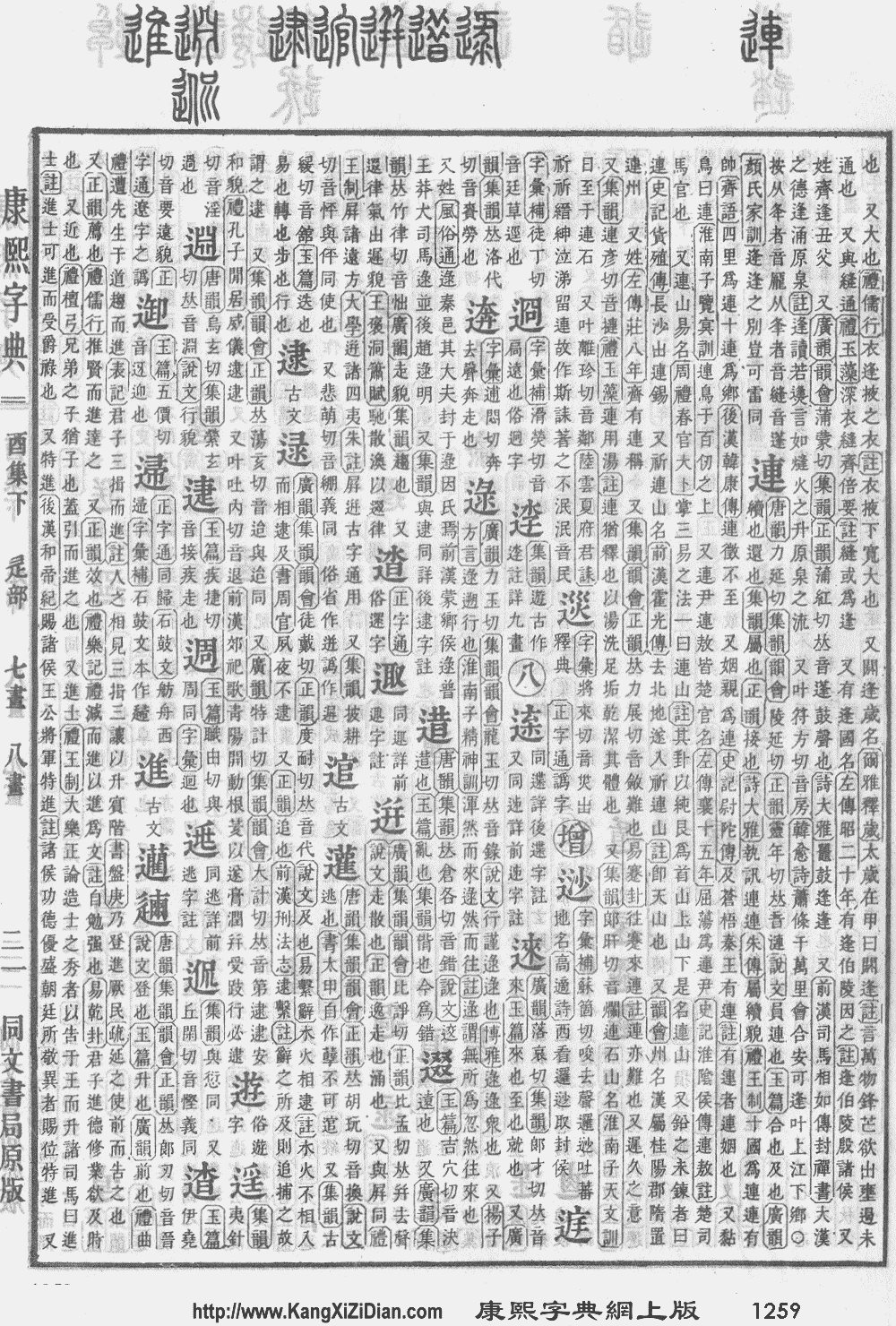
- KangXi: page 1259, character 30
- Dai Kanwa Jiten: character 38943
- Dae Jaweon: page 1749, character 11
- Hanyu Da Zidian: volume 6, page 3851, character 5
- Unihan data for U+9032
Chinese
| trad. | 進 | |
|---|---|---|
| simp. | 进 | |
Glyph origin
| Historical forms of the character 進 |
|---|
| Western Zhou |
| Bronze inscriptions |
 |
| Characters in the same phonetic series (進) (Zhengzhang, 2003) | |
|---|---|
| Old Chinese | |
| 璡 | *ʔslin, *ʔslins |
| 進 | *ʔslins |
Ideogrammic compound (會意) : 辵 (“walk”) + 隹 (“short-tail bird”).
Pronunciation
Definitions
進
- to advance; to move forward
- to enter; to go into; to come into
- (used after a verb) into; in
- to receive; to admit; to recruit
- to give, to offer (advice)
- (used with 球 (qiú)) to score a goal
- to eat; to drink
- measure word for rows of houses within an old-style residential compound
- 20th tetragram of the Taixuanjing; "advance"
Compounds
Derived terms from 進
|
|
|
Japanese
Kanji
進
Readings
Compounds
Proper noun
進 (hiragana すすむ, rōmaji Susumu)
- A male given name
Korean
Hanja
進 • (jin) (hangeul 진, revised jin, McCune–Reischauer chin, Yale cin)
- This term needs a translation to English. Please help out and add a translation, then remove the text
{{rfdef}}.
Vietnamese
Han character
- This term needs a translation to English. Please help out and add a translation, then remove the text
{{rfdef}}.
This article is issued from
Wiktionary.
The text is licensed under Creative Commons - Attribution - Sharealike.
Additional terms may apply for the media files.