刃
| ||||||||
| ||||||||
Translingual
| Japanese | 刃 |
|---|---|
| Simplified | 刃 |
| Traditional | 刃 |
Alternative forms
Note the compositional differences between traditional, simplified, and Japanese shinjitai in the placement of the additional stroke.
Han character
刃 (radical 18 刀+1, 3 strokes, cangjie input 尸竹戈 (SHI), four-corner 17420, composition ⿹刀丿(GKV) or ⿹刀丶(HT) or ⿻刀丶(J))
Derived characters
References
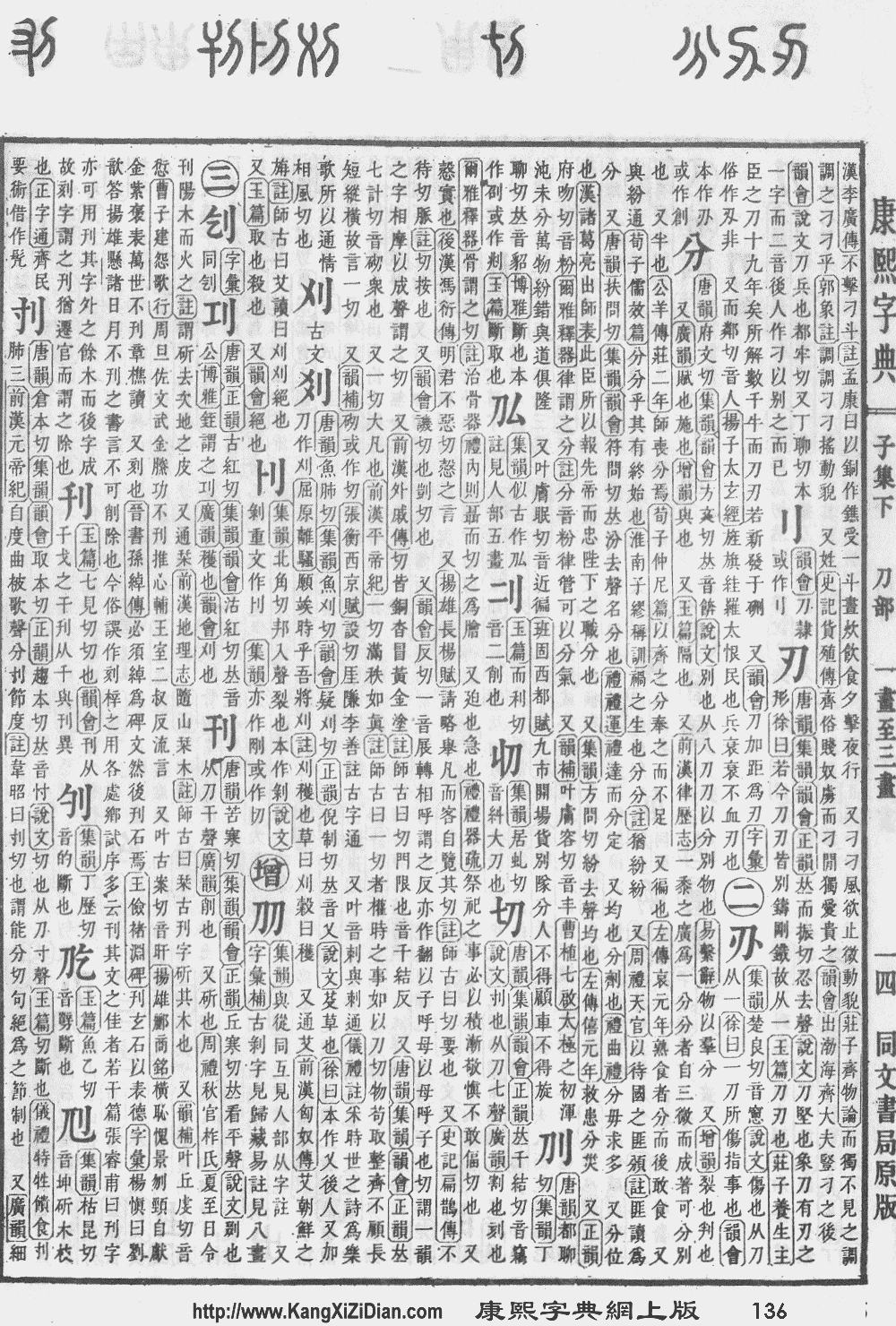
- KangXi: page 136, character 2
- Dai Kanwa Jiten: character 1850
- Dae Jaweon: page 304, character 7
- Hanyu Da Zidian: volume 1, page 320, character 3
- Unihan data for U+5203
- Unihan data for U+2F81E
Chinese
| simp. and trad. |
刃 | |
|---|---|---|
Glyph origin
| Historical forms of the character 刃 | |||
|---|---|---|---|
| Shang | Warring States | Shuowen Jiezi (compiled in Han) | Liushutong (compiled in Ming) |
| Oracle bone script | Chu Slip and silk script | Small seal script | Transcribed ancient scripts |
 |
 |
 |
 |
| Characters in the same phonetic series (刃) (Zhengzhang, 2003) | |
|---|---|
| Old Chinese | |
| 涊 | *nɯːnʔ, *njɯnʔ |
| 紉 | *nɯn |
| 忍 | *njɯnʔ |
| 荵 | *njɯnʔ |
| 刃 | *njɯns |
| 認 | *njɯns, *njɯŋs |
| 仞 | *njɯns |
| 軔 | *njɯns |
| 韌 | *njɯns |
| 肕 | *njɯns |
| 牣 | *njɯns |
| 杒 | *njɯns |
| 訒 | *njɯns |
Pronunciation
Definitions
刃
Compounds
Japanese
Kanji
Readings
Compounds
- 刃傷 (ninjō)
- 刃傷沙汰 (ninjōzata)
- 刃向かう (hamukau)
- 刃渡り (hawatari)
- 片刃 (kataba), 片刃 (kataha)
- 直刃 (suguha)
- 白刃 (hakujin), 白刃 (shiraha)
- 諸刃 (moroha), 双刃 (moroha)
- 両刃 (ryōba), 両刃 (moroha)
- 自刃 (jijin)
- 刀刃 (tōjin)
- 毒刃 (dokujin)
- 白刃 (hakujin), 白刃 (shiraha)
- 氷刃 (hyōjin)
- 兵刃 (heijin)
- 防刃 (bōjin)
- 利刃 (rijin)
- 凶刃 (kyōjin), 兇刃 (kyōjin)
- 白刃一閃 (hakujin'issen)
Etymology 1
| Kanji in this term |
|---|
| 刃 |
| な Grade: S |
| kun’yomi |
From Old Japanese.[1][2] Possibly cognate with Korean 날 (nal, “blade”).
Obsolete in modern Japanese. Only found as an element in compounds.
Pronunciation
Noun
- (obsolete) a blade, an edge
- c. 759, Man'yōshū (book 4, poem 616)
- 劔大刀 名惜雲 吾者無 君尓不相而 年之経去礼者
- 剣太刀名の惜しけくも我れはなし君に逢はずて年の経ぬれば
- tsurugitachi na no oshikeku mo ware wa nashi kimi ni ahazute toshi no henureba
- I do not even miss precious you, given the years that have passed without meeting with you.
- [Note: tsurugi tachi (“sword”) is a pillow word establishing a poetic association with the following na, literally meaning blade or edge and alluding to sharpness and importance. This na could also elliptically mean name (名 na) or even you (汝 na), depending on context, based on the homophonic readings.]
- 剣太刀名の惜しけくも我れはなし君に逢はずて年の経ぬれば
- 劔大刀 名惜雲 吾者無 君尓不相而 年之経去礼者
- c. 759, Man'yōshū (book 4, poem 616)
Derived terms
- 刀 (katana)
Etymology 2
| Kanji in this term |
|---|
| 刃 |
| は Grade: S |
| kun’yomi |
From Old Japanese, cognate with 歯 (ha, “tooth”).[1][2] Possibly also related to 葉 (ha, “leaf”). Compare English blade.
Pronunciation
Noun
Derived terms
Etymology 3
| Kanji in this term |
|---|
| 刃 |
| やいば Grade: S |
| kun’yomi |
Originally a compound of 焼き (yaki, “burned, fired”) + 刃 (ha, “edge, blade”).[1][2] The ha changes to ba as an instance of rendaku (連濁).
/jaki/ + /ha/ → /jakiba/ → /jaiba/
Pronunciation
Noun
刃 (hiragana やいば, rōmaji yaiba)
- a forged blade, such as a sword
- the wavy pattern formed in the metal on the surface of a forged blade
- a sword or similar edged weapon
- something sharp like a sword
- someone or something powerful
Idioms
- 刃は切れるが重宝 (yaiba wa kireru ga chōhō): “for a blade, cutting [sharpness] is precious” → the highest value of a tool is its ability to do what it is designed for
Etymology 4
| Kanji in this term |
|---|
| 刃 |
| じん Grade: S |
| on’yomi |
From Middle Chinese 刃 (nyinH, “edge of a blade”).
Pronunciation
Noun
Idioms
- 刃を迎えて解く (jin o mukaete toku): “to fall before the blade” → a metaphor for extreme strength or power
References
- Satake, Akihiro; Hideo Yamada; Rikio Kudō; Masao Ōtani; Yoshiyuki Yamazaki (c. 759) Shin Nihon Koten Bungaku Taikei 1: Man’yōshū 1 (in Japanese), Tōkyō: Iwanami Shoten, published 1999, →ISBN.
Korean
Hanja
刃 • (in) (hangeul 인, revised in, McCune–Reischauer in)
- This term needs a translation to English. Please help out and add a translation, then remove the text
{{rfdef}}.
Vietnamese
Han character
- This term needs a translation to English. Please help out and add a translation, then remove the text
{{rfdef}}.