冒
| ||||||||
Translingual
Han character
冒 (radical 13 冂+7, 9 strokes, cangjie input 日月山 (ABU), four-corner 60600, composition ⿱日目 (J) or ⿱冃目 (GTKV))
Derived characters
References
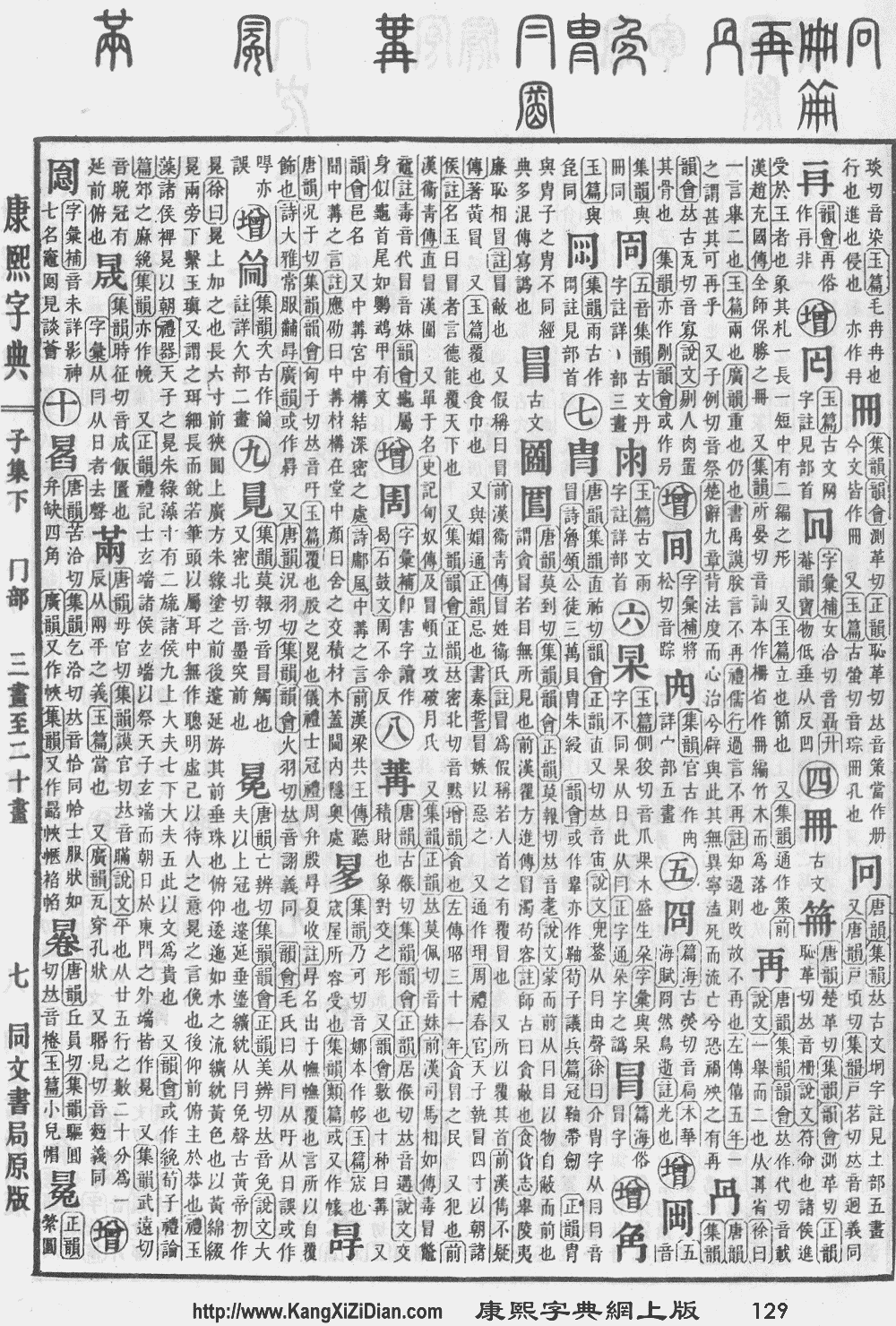
- KangXi: page 129, character 21
- Dai Kanwa Jiten: character 1538
- Hanyu Da Zidian: volume 2, page 1499, character 12
- Unihan data for U+5192
Chinese
| simp. and trad. |
冒 | |
|---|---|---|
| alt. forms | 冃 冐 | |
Glyph origin
| Historical forms of the character 冒 | |||
|---|---|---|---|
| Western Zhou | Warring States | Shuowen Jiezi (compiled in Han) | Liushutong (compiled in Ming) |
| Bronze inscriptions | Chu Slip and silk script | Small seal script | Transcribed ancient scripts |
 |
 |
 |
 |
| Characters in the same phonetic series (冃) (Zhengzhang, 2003) | |
|---|---|
| Old Chinese | |
| 媢 | *mɯɡs, *muːʔ, *muːɡs, *muːɡ |
| 冃 | *muːɡs |
| 冒 | *muːɡs, *mɯːɡ |
| 帽 | *muːɡs |
| 瑁 | *muːɡs, *mɯːɡs, *muːɡ |
| 賵 | *m̥ʰuŋs |
| 艒 | *mɯːɡ, *muːɡ, *muːɡ |
| 萺 | *muːɡ, *muɡ |
| 勗 | *hmoɡ |
| 勖 | *hmoɡ |
Etymology 1
Original meaning was “to cover”.
Sino-Tibetan. Schuessler (2007) connects it with Proto-Sino-Tibetan *muːŋ ~ r/s-muːk (“sky, clouds, fog, dark, covered”), whence Burmese မိုး (mui:, “sky; rain; to hold something over the head; roof”), Tibetan མུ (mu), དམུ (dmu), རྨུ (rmu), སྨུ (smu, “(archaic) sky”).
Derivative: 帽 (OC *muːɡs, “hat”).
Pronunciation
Definitions
冒
- † to cover
- † cloth used to dress a corpse; sack for corpses
- † to wear a hat
- † Original form of 帽 (mào, “hat”).
- † to pretend to be
- to risk; to brave; to face
- † bold; thoughtless; boldly
- † to encroach on; to violate
- † to receive; to suffer from
- to emit; to give off; to send out
- (Mandarin) to appear; to emerge
- (dialectal Mandarin, of water) to boil
- (dialectal Mandarin, Wu) to vomit or to have diarrhoea
- (dialectal Mandarin) to cover rice or noodles with vegetables and meat; to put broth over noodles or rice
- † Substitute character for 懋 (mào, “to encourage”).
- † Substitute character for 芼 (“name of a vegetable”).
- † Original form of 瑁 (mào, “ceremonial jade”).
Etymology 2
“Covetous”. Compare 每 (OC *mɯːʔ, “to covet”).
Pronunciation
Definitions
冒
Etymology 3
Transcription character, preserving the original pronunciation at the time of borrowing.
Pronunciation
Definitions
冒
- Only used in 冒頓/冒顿 (“name of a Xiongnu chieftain”).
Compounds
Derived terms from 冒
Japanese
Kanji
冒
- risk
Readings
- Goon: もう (mō); もく (moku)
- Kan’on: ぼう (bō, Jōyō); ぼく (boku)
- On: まい (mai); ばい (bai); ぼく (boku)
- Kun: おかす (okasu, 冒す, Jōyō)←をかす (wokasu, historical); おおう (ōu, 冒う)←おほふ (ofofu, historical)
Korean
Hanja
冒 • (mo, mok) (hangeul 모, 목, revised mo, mok, McCune–Reischauer mo, mok)
- This term needs a translation to English. Please help out and add a translation, then remove the text
{{rfdef}}.
Vietnamese
Han character
- This term needs a translation to English. Please help out and add a translation, then remove the text
{{rfdef}}.
This article is issued from
Wiktionary.
The text is licensed under Creative Commons - Attribution - Sharealike.
Additional terms may apply for the media files.