狂
| ||||||||
Translingual
Han character
狂 (radical 94, 犬+4, 7 strokes, cangjie input 大竹一土 (KHMG), four-corner 41214, composition ⿰犭王)
Derived characters
References
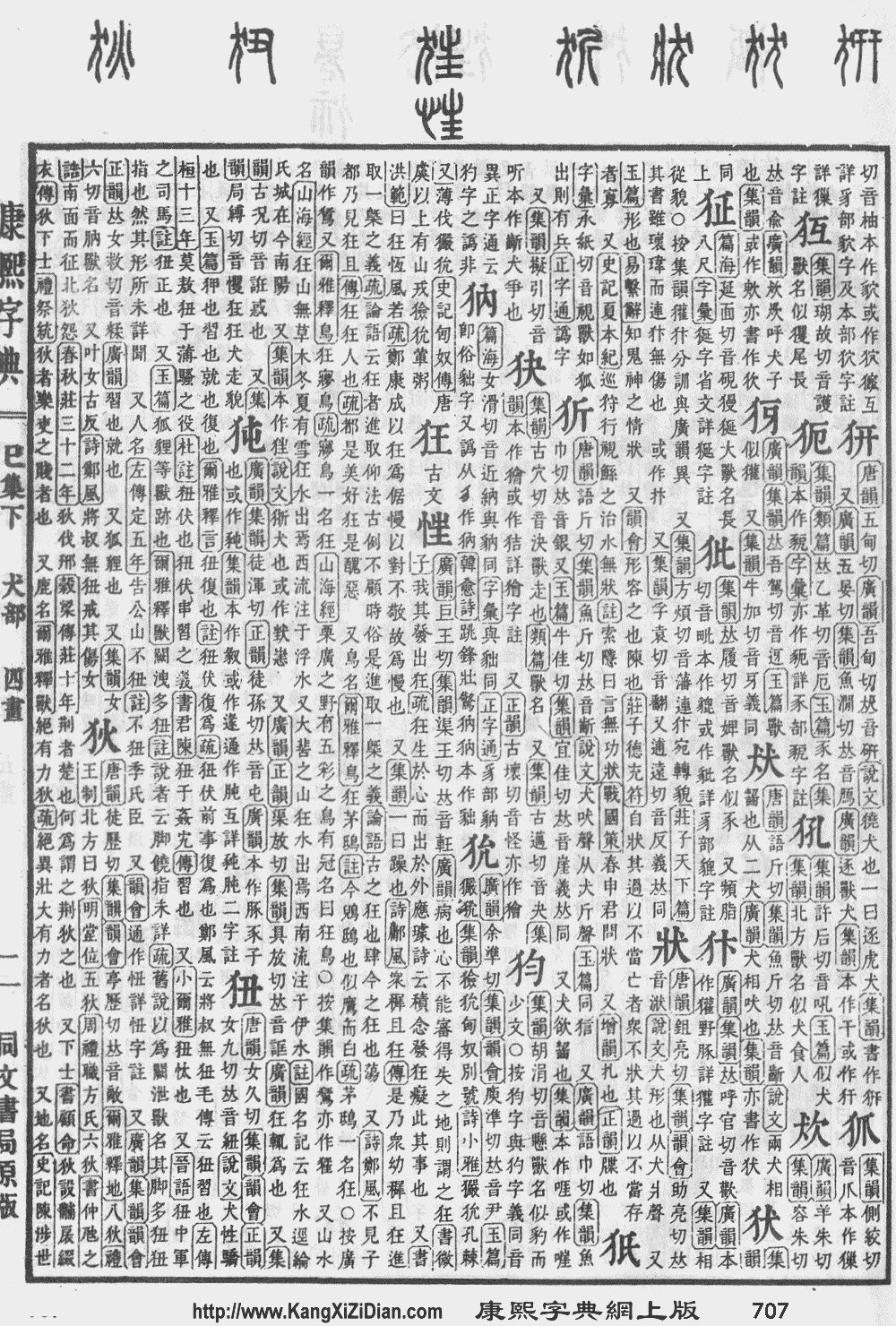
- KangXi: page 707, character 20
- Dai Kanwa Jiten: character 20287
- Dae Jaweon: page 1120, character 3
- Hanyu Da Zidian: volume 2, page 1334, character 4
- Unihan data for U+72C2
Chinese
| simp. and trad. |
狂 | |
|---|---|---|
Glyph origin
| Characters in the same phonetic series (王) (Zhengzhang, 2003) | |
|---|---|
| Old Chinese | |
| 皇 | *ɡʷaːŋ |
| 惶 | *ɡʷaːŋ |
| 遑 | *ɡʷaːŋ |
| 堭 | *ɡʷaːŋ |
| 煌 | *ɡʷaːŋ |
| 餭 | *ɡʷaːŋ |
| 騜 | *ɡʷaːŋ |
| 艎 | *ɡʷaːŋ |
| 隍 | *ɡʷaːŋ |
| 湟 | *ɡʷaːŋ |
| 徨 | *ɡʷaːŋ |
| 篁 | *ɡʷaːŋ |
| 蝗 | *ɡʷaːŋ, *ɡʷraːŋ, *ɡʷraːŋs |
| 凰 | *ɡʷaːŋ |
| 偟 | *ɡʷaːŋ |
| 媓 | *ɡʷaːŋ |
| 韹 | *ɡʷaːŋ, *ɡʷraːŋ |
| 葟 | *ɡʷaːŋ |
| 皝 | *ɡʷaːŋʔ |
| 汪 | *qʷaːŋ, *qʷaːŋs, *qʷaŋʔ |
| 尪 | *qʷaːŋ |
| 迋 | *kʷaŋʔ, *kʰʷaŋ, *ɡʷaŋ, *ɢʷaŋs |
| 逛 | *kʷaŋʔ |
| 誑 | *kʷaŋs, *ɡʷaŋ, *kʷaŋs |
| 匡 | *kʰʷaŋ |
| 筐 | *kʰʷaŋ |
| 框 | *kʰʷaŋ |
| 眶 | *kʰʷaŋ |
| 誆 | *kʰʷaŋ, *ɡʷaŋs |
| 邼 | *kʰʷaŋ |
| 恇 | *kʰʷaŋ |
| 劻 | *kʰʷaŋ |
| 洭 | *kʰʷaŋ |
| 軭 | *kʰʷaŋ, *ɡʷaŋ |
| 狂 | *ɡʷaŋ, *ɡʷaŋs |
| 軖 | *ɡʷaŋ |
| 鵟 | *ɡʷaŋ |
| 俇 | *ɡʷaŋʔ |
| 王 | *ɢʷaŋ, *ɢʷaŋs |
| 蚟 | *ɢʷaŋ |
| 彺 | *ɢʷaŋ |
| 旺 | *ɢʷaŋs |
| 諻 | *qʰʷraːŋ |
| 喤 | *qʰʷraːŋ, *ɡʷraːŋ |
| 瑝 | *ɡʷraːŋ |
| 锽 | |
| 揘 | *ɡʷaŋ |
Phono-semantic compound (形聲, OC *ɡʷaŋ, *ɡʷaŋs) : semantic 犭 (“dog”) + phonetic 㞷. The latter is the ancient form of 往 (OC *ɢʷaŋ, “to go”).
Pronunciation
Definitions
狂
- (of dog) to go crazy; to act aggressively
- mad; insane; crazy
- wildly arrogant; conceited; stiff-necked
- unruly; unrestrained
- violent; ferocious
- roaring; enormous
- (Min Nan) flustered; hurried
- (Min Dong) to become angry
- (Min Nan) to be hot for; to be crazy about
- (Min Nan, of animal) to be in heat
- † Original form of 誑/诳 (kuáng, “to cheat; to deceive”).
- † Alternative form of 往 (wǎng, “to go to”).
See also
Compounds
Derived terms from 狂
|
|
|
Japanese
Kanji
狂
- This term needs a translation to English. Please help out and add a translation, then remove the text
{{rfdef}}.
Readings
- Goon: ごう (gō)
- Kan’on: きょう (kyō, Jōyō)
- Kun: くるう (kuruu, 狂う, Jōyō); くるおしい (kuruoshī, 狂おしい, Jōyō); きちがい (kichigai)
Korean
Hanja
狂 • (gwang) (hangeul 광, revised gwang, McCune–Reischauer kwang, Yale kwang)
- This term needs a translation to English. Please help out and add a translation, then remove the text
{{rfdef}}.
Vietnamese
Han character
狂 (cuồng)
- This term needs a translation to English. Please help out and add a translation, then remove the text
{{rfdef}}.
This article is issued from
Wiktionary.
The text is licensed under Creative Commons - Attribution - Sharealike.
Additional terms may apply for the media files.