主
| ||||||||
Translingual
| Stroke order | |||
|---|---|---|---|
 | |||
| Japanese stroke order | |||
|---|---|---|---|
 | |||
| Stroke order | |||
|---|---|---|---|
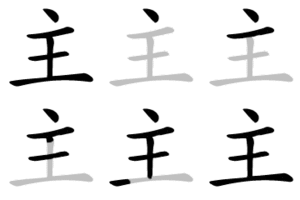 | |||
Han character
主 (radical 3, 丶+4, 5 strokes, cangjie input 卜土 (YG), four-corner 00104, composition ⿱丶王)
References
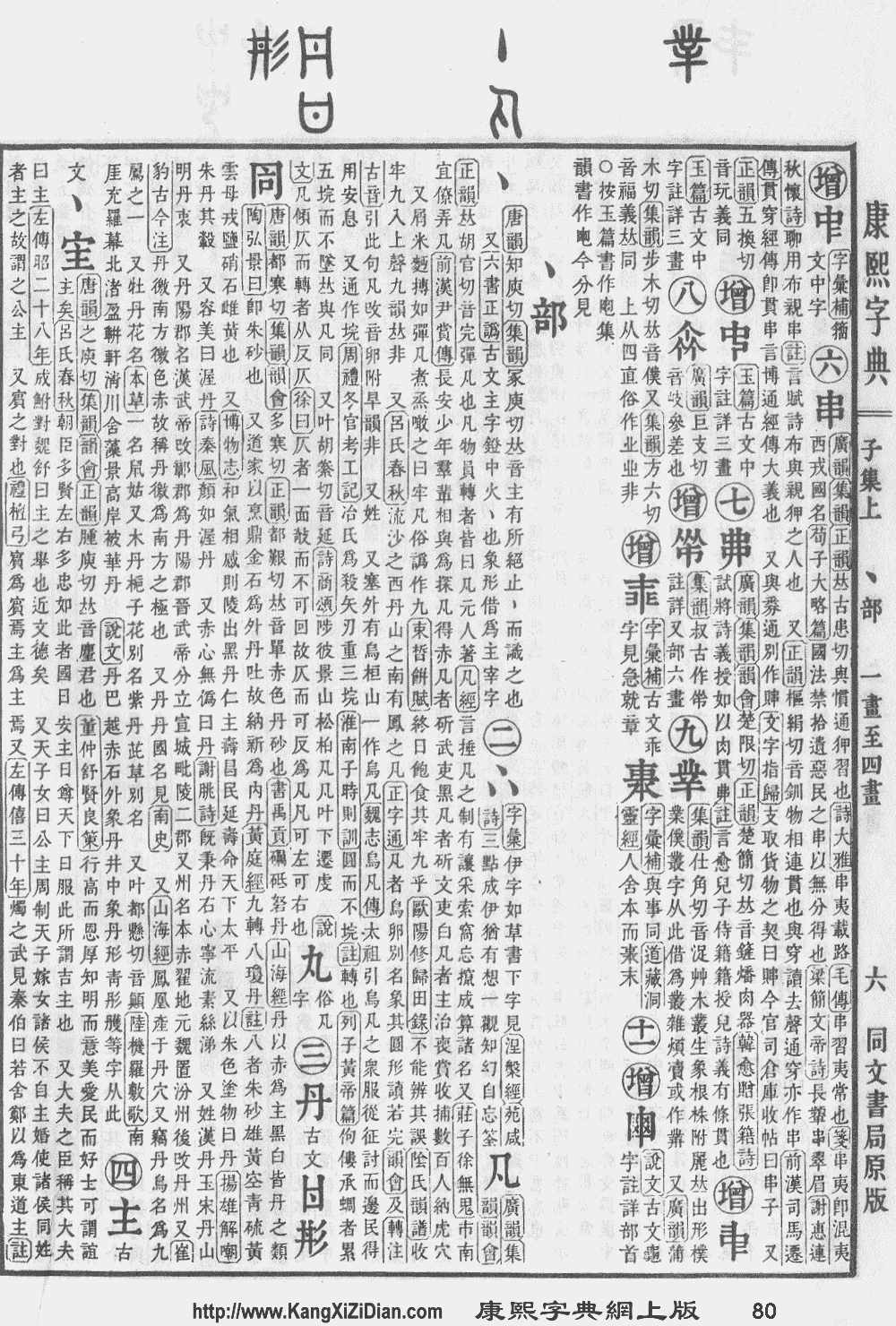
- KangXi: page 80, character 20
- Dai Kanwa Jiten: character 100
- Dae Jaweon: page 163, character 1
- Hanyu Da Zidian: volume 1, page 44, character 3
- Unihan data for U+4E3B
Chinese
| simp. and trad. |
主 | |
|---|---|---|
Glyph origin
| Historical forms of the character 主 | |||||||||
|---|---|---|---|---|---|---|---|---|---|
| Shang | Shuowen Jiezi (compiled in Han) | ||||||||
| Oracle bone script | Small seal script | ||||||||
 |
 | ||||||||
|
|
References: Mostly from Richard Sears' Chinese Etymology site (authorisation),
| |||||||||


| Characters in the same phonetic series (主) (Zhengzhang, 2003) | |
|---|---|
| Old Chinese | |
| 飳 | *tʰoːʔ |
| 妵 | *tʰoːʔ |
| 黈 | *tʰoːʔ |
| 蘣 | *tʰoːʔ |
| 罜 | *doːɡ, *tjos |
| 拄 | *toʔ |
| 柱 | *toʔ, *doʔ |
| 駐 | *tos |
| 註 | *tos, *tjos |
| 鉒 | *tos |
| 軴 | *tos |
| 住 | *tos, *dos |
| 跓 | *doʔ |
| 嵀 | *doʔ |
| 主 | *tjoʔ |
| 麈 | *tjoʔ |
| 宔 | *tjoʔ |
| 炷 | *tjoʔ, *tjos |
| 注 | *tjos |
| 疰 | *tjos |
| 蛀 | *tjos |
| 霔 | *tjos |
Pictogram (象形) : A picture of a lamp or a torch with a flame at the top.
Original form of 炷. Current meaning acquired by sound loan.
Pronunciation 1
Definitions
主
Compounds
Derived terms from 主
|
|
|
Descendants
Others:
Pronunciation 2
Definitions
主
Japanese
Kanji
主
Readings
Compounds
Pronunciation
Adjectival noun
主 (-na inflection, hiragana おも, rōmaji omo)
Inflection
Inflection of 主
| Stem forms | |||
|---|---|---|---|
| Imperfective (未然形) | 主だろ | おもだろ | omo daro |
| Continuative (連用形) | 主で | おもで | omo de |
| Terminal (終止形) | 主だ | おもだ | omo da |
| Attributive (連体形) | 主な | おもな | omo na |
| Hypothetical (仮定形) | 主なら | おもなら | omo nara |
| Imperative (命令形) | 主であれ | おもであれ | omo de are |
| Key constructions | |||
| Informal negative | 主ではない 主じゃない |
おもではない おもじゃない |
omo de wa nai omo ja nai |
| Informal past | 主だった | おもだった | omo datta |
| Informal negative past | 主ではなかった 主じゃなかった |
おもではなかった おもじゃなかった |
omo de wa nakatta omo ja nakatta |
| Formal | 主です | おもです | omo desu |
| Formal negative | 主ではありません 主じゃありません |
おもではありません おもじゃありません |
omo de wa arimasen omo ja arimasen |
| Formal past | 主でした | おもでした | omo deshita |
| Formal negative past | 主ではありませんでした 主じゃありませんでした |
おもではありませんでした おもじゃありませんでした |
omo de wa arimasen deshita omo ja arimasen deshita |
| Conjunctive | 主で | おもで | omo de |
| Conditional | 主なら(ば) | おもなら(ば) | omo nara (ba) |
| Provisional | 主だったら | おもだったら | omo dattara |
| Volitional | 主だろう | おもだろう | omo darō |
| Adverbial | 主に | おもに | omo ni |
| Degree | 主さ | おもさ | omosa |
Noun
Synonyms
- 主人 (shujin)
Proper noun
- the Lord
- 主の兄弟ヤコブ
- Shu no kyōdai Yakobu
- James, brother of the Lord
- 主の兄弟ヤコブ
Noun
References
Korean
Hanja
主 (eumhun 임금 주 (imgeum ju))
主 (eumhun 주인 주 (ju-in ju))
compounds
References
Vietnamese
Han character
- Hán tự form of chủ, “owner”
- Nôm form of chúa, “retired father of a king”
- Nôm form of Chúa, “God; Christ; Lord”
Usage notes
- Despite being a non-Sino-Vietnamese reading, chúa is still used as Sino-Vietnamese in a few compounds such as công chúa, quận chúa, lãnh chúa, Thiên Chúa.
Compounds
References
This article is issued from
Wiktionary.
The text is licensed under Creative Commons - Attribution - Sharealike.
Additional terms may apply for the media files.