啞
| ||||||||
Translingual
| Traditional | 啞 |
|---|---|
| Shinjitai (extended) |
唖 |
| Simplified | 哑 |
Han character
啞 (radical 30, 口+8, 11 strokes, cangjie input 口一中一 (RMLM), four-corner 61017, composition ⿰口亞)
References
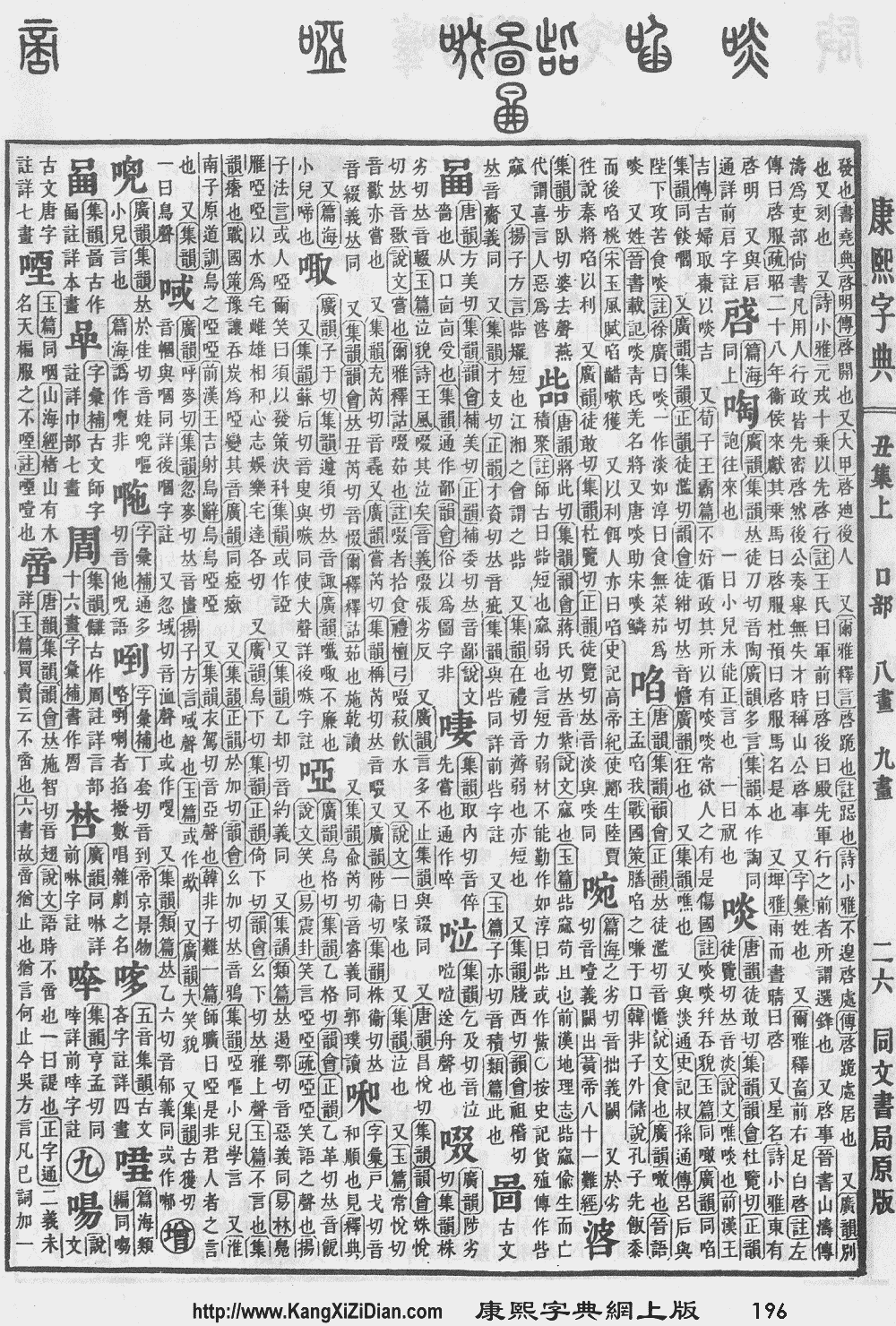
- KangXi: page 196, character 15
- Dai Kanwa Jiten: character 3835
- Dae Jaweon: page 417, character 24
- Hanyu Da Zidian: volume 1, page 636, character 7
- Unihan data for U+555E
Chinese
| trad. | 啞 | |
|---|---|---|
| simp. | 哑 | |
| alt. forms | 瘂/痖 “mute; hoarse” | |
Glyph origin
| Characters in the same phonetic series (亞) (Zhengzhang, 2003) | |
|---|---|
| Old Chinese | |
| 椏 | *qaːʔ, *qraː |
| 錏 | *qraː |
| 鵶 | *qraː |
| 啞 | *qraːʔ, *qraːɡs, *qraːɡ, *qraːɡ |
| 瘂 | *qraːʔ |
| 亞 | *qraːɡs |
| 婭 | *qraːɡs |
| 俹 | *qraːɡs |
| 稏 | *qraːɡs |
| 惡 | *qaː, *qaːɡs, *qaːɡ |
| 噁 | *qaːɡs |
| 堊 | *qaːɡ |
| 蝁 | *qaːɡ |
Phono-semantic compound (形聲, OC *qraːʔ, *qraːɡs, *qraːɡ, *qraːɡ) : semantic 口 (“mouth”) + phonetic 亞 (OC *qraːɡs).
Etymology
From Proto-Sino-Tibetan *m-ʔa (“mute”).
Pronunciation 1
Definitions
啞
Coordinate terms
Compounds
Pronunciation 2
Definitions
啞
- † (onomatopoeia) laughter; sound of laughing
Compounds
Pronunciation 3
Definitions
啞
- Alternative form of 呀 (yā).
- (onomatopoeia) The sound of cawing.
- (onomatopoeia) The sound of a child learning to speak.
Compounds
Japanese
Kanji
啞
(uncommon “Hyōgai” kanji, kyūjitai kanji, shinjitai form 唖)
- mute, dumb
- become hoarse
Readings
References
|
- Source: EDICT and KANJIDIC files licensed by the Electronic Dictionaries Research Group.
Korean
Hanja
啞 • (a) (hangeul 아, revised a, McCune–Reischauer a)
- This term needs a translation to English. Please help out and add a translation, then remove the text
{{rfdef}}.
Vietnamese
Han character
- This term needs a translation to English. Please help out and add a translation, then remove the text
{{rfdef}}.
This article is issued from
Wiktionary.
The text is licensed under Creative Commons - Attribution - Sharealike.
Additional terms may apply for the media files.