衣
| ||||||||
Translingual
| Stroke order | |||
|---|---|---|---|
 | |||
| Stroke order | |||
|---|---|---|---|
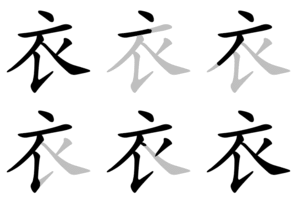 | |||
Alternative forms
- 衤 (when used as a left Radical)
Han character
衣 (radical 145, 衣+0, 6 strokes, cangjie input 卜竹女 (YHV), four-corner 00732, composition ⿱亠𧘇)
- Kangxi radical #145, ⾐.
Descendants
Derived characters
Related characters
References
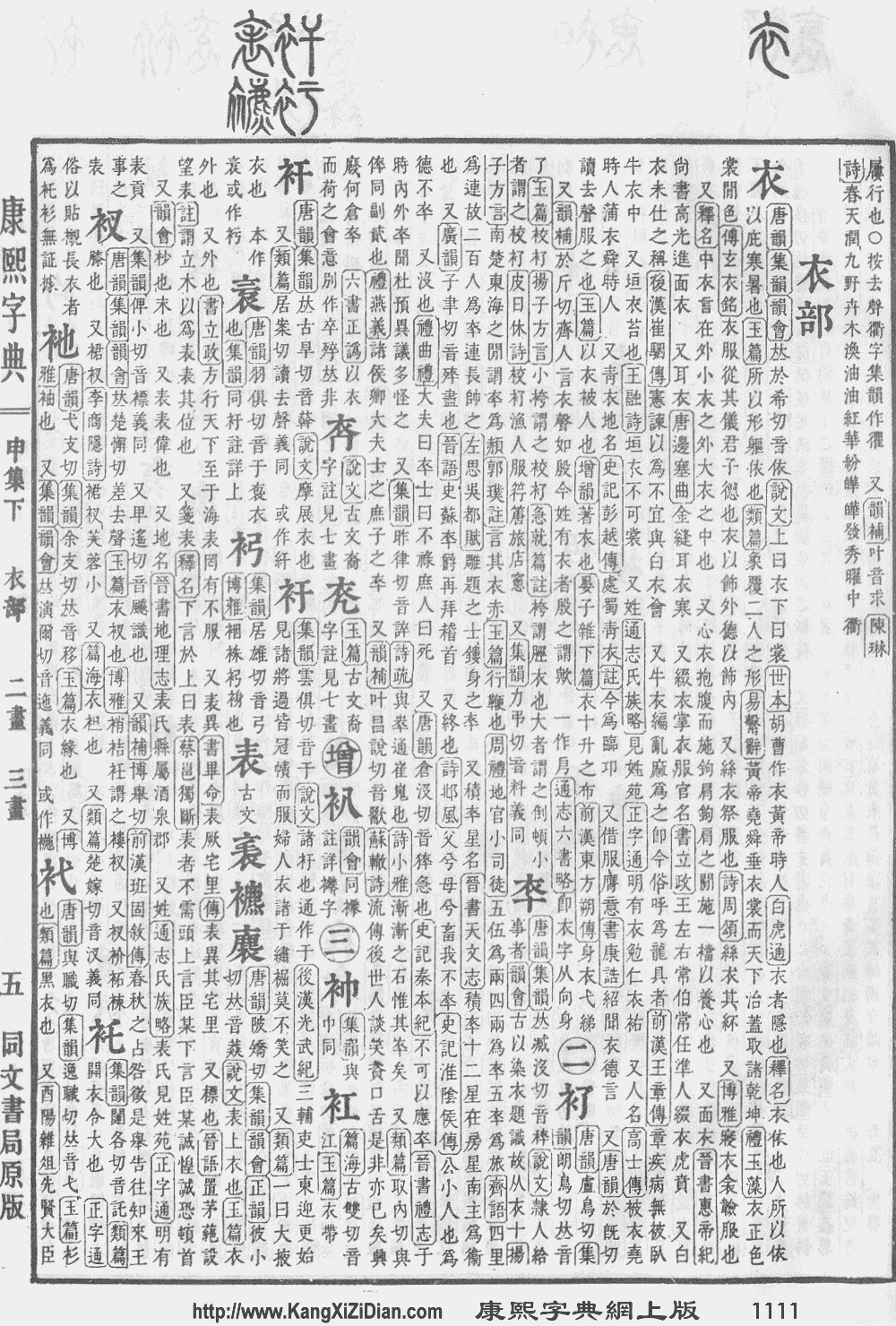
- KangXi: page 1111, character 1
- Dai Kanwa Jiten: character 34091
- Dae Jaweon: page 1575, character 9
- Hanyu Da Zidian: volume 5, page 3074, character 1
- Unihan data for U+8863
Chinese
| simp. and trad. |
衣 | |
|---|---|---|
Glyph origin
| Historical forms of the character 衣 | |||
|---|---|---|---|
| Shang | Western Zhou | Shuowen Jiezi (compiled in Han) | Liushutong (compiled in Ming) |
| Oracle bone script | Bronze inscriptions | Small seal script | Transcribed ancient scripts |
 |
 |
 |
 |
| Characters in the same phonetic series (衣) (Zhengzhang, 2003) | |
|---|---|
| Old Chinese | |
| 哀 | *qɯːl |
| 依 | *qɯl |
| 衣 | *qɯl, *qɯls |
| 扆 | *qɯlʔ |
| 庡 | *qɯlʔ |
| 偯 | *qɯlʔ |
Pictogram (象形) .
Pronunciation 1
Definitions
衣
- (upper) garment; clothes; clothing (Classifier: 件)
- coating; covering; skin
- 槍衣 / 枪衣 ― qiāngyī ― gun cover
- membrane; film
- (literary or Min) afterbirth; placenta
- A surname.
Synonyms
Compounds
|
|
|
Pronunciation 2
Definitions
衣
Compounds
Japanese
Kanji
Readings
Compounds
Etymology 1
| Kanji in this term |
|---|
| 衣 |
| ころも Grade: 4 |
| kun’yomi |
From Old Japanese. Appears in the Kojiki completed in 712 CE.
Ultimate derivation unclear. May be a compound of ころ (koro, uncertain meaning, possibly “wrapping”, cognate with 転 (koro, “roller; rolling”)) + 裳 (mo, “lower robe”).
Pronunciation
Noun
衣 (hiragana ころも, rōmaji koromo)
- (archaic) clothes, clothing
- a robe (as worn by a monk, nun, or priest)
- a coating on an item of food, such as batter or icing
- the outer shell or carapace of an insect or other arthropod
- the hide or feathers of a small animal
Synonyms
Derived terms
- 衣替え (koromogae): the changing of one's clothes
- 衣虱 (koromojirami): the body louse ((Pediculus humanus), (Pediculus humanus humanus), (Pediculus humanus corporis))
- 衣手 (koromode): a sleeve
- 衣筥 (koromobako): a kind of clothing box or chest that has short legs
- 衣偏 (koromohen): the clothing radical (a graphical portion of a kanji character)
- 衣屋 (koromoya): a store selling clerical robes; a person working in such a store
Etymology 2
| Kanji in this term |
|---|
| 衣 |
| きぬ Grade: 4 |
| kun’yomi |
Likely cognate with 絹 (kinu, “silk”).[3] Alternatively, may also be a compound of 着 (ki, “wearing”, the 連用形 (ren'yōkei, “stem or continuative form”) of the verb 着る kiru, “to wear”) + 布 (nu, “cloth”, shortened from normal reading nuno).[3]
Pronunciation
Noun
- clothes, clothing (particularly clothing worn on the top half of the body)
- an overrobe
- the skin, hide, or shell of an animal; the bark, rind, or skin of a plant
Derived terms
- 衣落 (kinuotoshi): a particular moment in a noh play where a character approaches the bridge and removes an outer robe wrapped around their hips
Etymology 3
| Kanji in this term |
|---|
| 衣 |
| ぎ Grade: 4 |
| kun’yomi |
The rendaku form of 着 (ki), the 連用形 (ren'yōkei, “stem or continuative form”) of the verb 着る (kiru, “to wear”).[3][4]
Pronunciation
Alternative forms
Suffix
Usage notes
Only found as the latter element in compounds. More commonly spelled 着.
Derived terms
Etymology 4
| Kanji in this term |
|---|
| 衣 |
| い Grade: 4 |
| on’yomi |
From Middle Chinese 衣 (MC ʔɨi, “clothes, clothing”).
The kan'on reading, so likely a more recent borrowing.
Pronunciation
Noun
Usage notes
Most often encountered in compounds.
Derived terms
Etymology 5
| Kanji in this term |
|---|
| 衣 |
| え Grade: 4 |
| on’yomi |
From Middle Chinese 衣 (MC ʔɨi, “clothes, clothing”).
The goon reading, so likely the older borrowing.
Pronunciation
Noun
Usage notes
Not used in isolation. Only encountered in compounds.
Derived terms
Etymology 6
| Kanji in this term |
|---|
| 衣 |
| そ Grade: 4 |
| kun’yomi |
From Old Japanese. Ultimate derivation unknown.
Pronunciation
Noun
Usage notes
Only found in compounds.
Derived terms
References
- 1 2 3 2006, 大辞林 (Daijirin), Third Edition (in Japanese), Tōkyō: Sanseidō, →ISBN
- 1 2 3 1998, NHK日本語発音アクセント辞典 (NHK Japanese Pronunciation Accent Dictionary) (in Japanese), Tōkyō: NHK, →ISBN
- 1 2 3 1988, 国語大辞典(新装版) (Kokugo Dai Jiten, Revised Edition) (in Japanese), Tōkyō: Shogakukan
- ↑ 1995, 大辞泉 (Daijisen) (in Japanese), Tōkyō: Shogakukan, →ISBN
Korean
Hanja
衣 • (ui)
- clothes, clothing
Okinawan
Etymology
Cognate with mainland Japanese 衣 (kinu).[1][2] Attested in the 沖縄語典 (Okinawa Goten, “Okinawan Dictionary”) as ちん.[3]
Noun
References
- ↑ Katrien Hendrickx, The Origins of Banana-fibre Cloth in the Ryukyus, Japan, Leuven University Press: 2007, p 110
- ↑ http://www.haisai.co.jp/kantanuchinaaguchi.htm
- ↑ 1896: 沖縄語典 (Okinawa Goten, “Okinawan Dictionary”). In Japanese. http://kindai.ndl.go.jp/info:ndljp/pid/992016/31
Vietnamese
Han character
- This term needs a translation to English. Please help out and add a translation, then remove the text
{{rfdef}}.