肋
| ||||||||
Translingual
Han character
肋 (radical 130 肉+2, 6 strokes, cangjie input 月大尸 (BKS), four-corner 74227, composition ⿰⺼力)
References
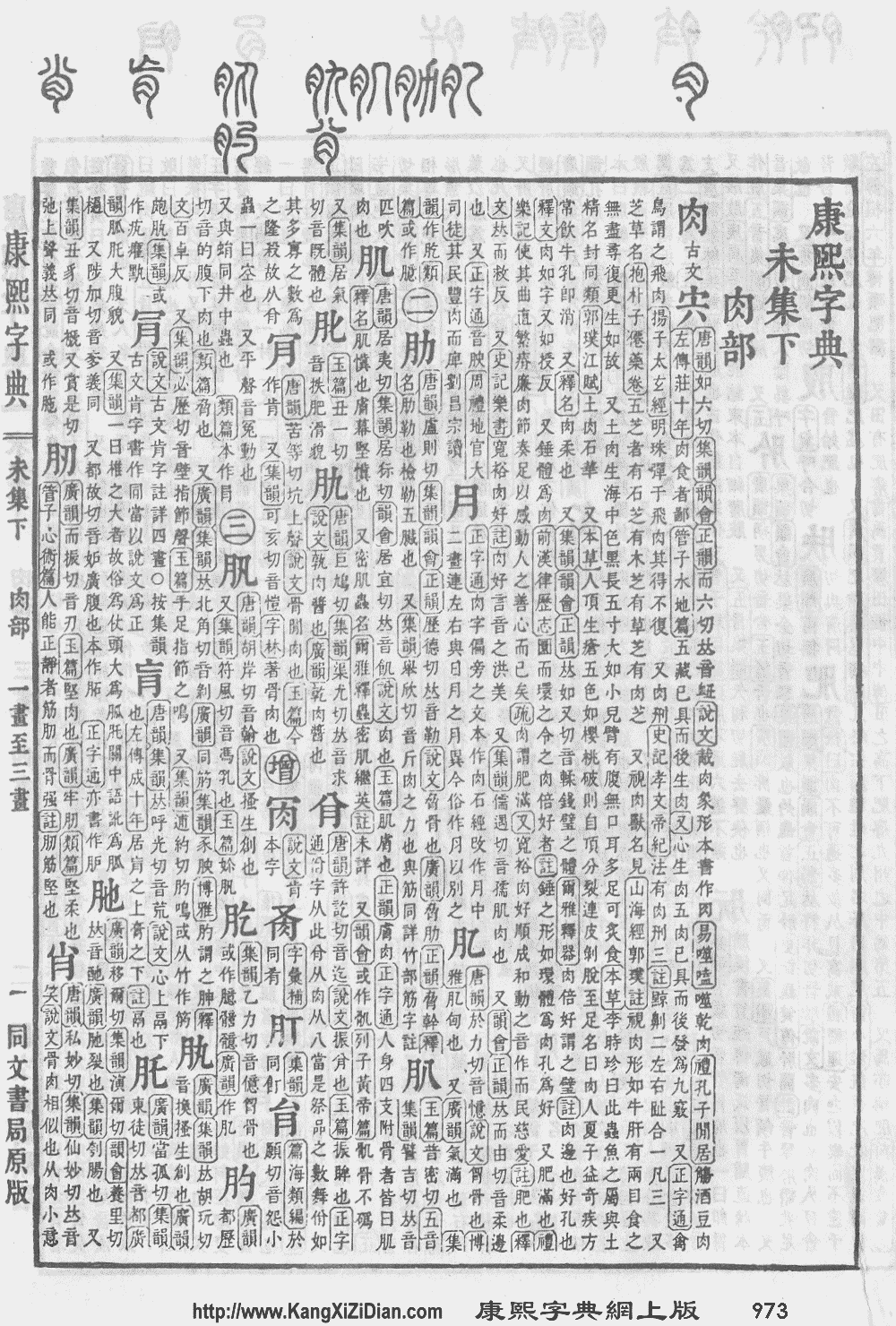
- KangXi: page 973, character 5
- Dai Kanwa Jiten: character 29239
- Dae Jaweon: page 1424, character 6
- Hanyu Da Zidian: volume 3, page 2043, character 10
- Unihan data for U+808B
Chinese
| simp. and trad. |
肋 | |
|---|---|---|
Glyph origin
| Historical forms of the character 肋 |
|---|
| Shuowen Jiezi (compiled in Han) |
| Small seal script |
 |
| Characters in the same phonetic series (力) (Zhengzhang, 2003) | |
|---|---|
| Old Chinese | |
| 勒 | *rɯːɡ |
| 肋 | *rɯːɡ |
| 扐 | *rɯːɡ |
| 仂 | *rɯːɡ, *rɯɡ |
| 艻 | *rɯːɡ |
| 朸 | *rɯːɡ, *rɯɡ |
| 玏 | *rɯːɡ |
| 泐 | *rɯːɡ, *rɯɡ |
| 阞 | *rɯːɡ |
| 竻 | *rɯːɡ |
| 力 | *rɯɡ |
| 屴 | *rɯɡ |
| 鳨 | *rɯɡ |
Etymology 1
Pronunciation
Definitions
肋
Compounds
Etymology 2
Pronunciation
Definitions
肋
- Only used in 肋脦.
Etymology 3
| For pronunciation and definitions of 肋 – see 筋 (“tendon; sinew; muscle; etc.”). (This character, 肋, is a variant form of 筋.) |
Japanese
Kanji
肋
(“Jinmeiyō” kanji used for names)
Readings
Compounds
Compounds
- 肋間 (rokkan): intercostal
- 肋間神経 (rokkan shinkei): intercostal nerves
- 肋間神経痛 (rokkan shinkeitsū): intercostal neuralgia
- 肋筋 (abarakin): in reinforced concrete, the box-shaped rebar connecting the main vertical support rebar: the ribs of the structure
- 肋骨 (rokkotsu): あばらぼね, abarabone}}: rib, costa
- 肋材 (rokuzai): the ribs of a ship, extending upwards from the keel to the gunwale and supporting the hull
- 肋軟骨 (rokunankotsu): the costal cartilage connecting the ribs and the sternum
- 肋肉 (baraniku): rib meat, generally beef or pork
- 肋板 (rokuban): a turtle's plastron; a thwart: a steel plate or similar support running from port to starboard between the ribs of a ship to strengthen the hull
- 肋膜 (rokumaku): the pleura
- 肋膜炎 (rokumakuen): pleurisy, pleuritis
- 肋木 (rokuboku) wall bars, a kind of exercise equipment
Etymology 1
| Kanji in this term |
|---|
| 肋 |
| あばら Jinmeiyō |
| kun’yomi |
By extension from 荒, 荒ら (abara), "loosely spaced with sizable gaps", itself possibly related to the root ばら (bara), "scattered".
Pronunciation
Noun
Etymology 2
| Kanji in this term |
|---|
| 肋 |
| ばら Jinmeiyō |
| kun’yomi |
Shortened from あばら (abara).
Pronunciation
Noun
肋 (hiragana ばら, katakana バラ, rōmaji bara)
Usage notes
This word is more often spelled in hiragana as ばら or in katakana as バラ.
References
Korean
Hanja
肋 • (reuk>neuk) (hangeul 륵>늑, revised reuk>neuk, McCune–Reischauer rŭk>nŭk, Yale luk>nuk)
- This term needs a translation to English. Please help out and add a translation, then remove the text
{{rfdef}}.
Vietnamese
Han character
肋 (lặc)
- This term needs a translation to English. Please help out and add a translation, then remove the text
{{rfdef}}.
This article is issued from
Wiktionary.
The text is licensed under Creative Commons - Attribution - Sharealike.
Additional terms may apply for the media files.