拓
| ||||||||
Translingual
Han character
拓 (radical 64, 手+5, 8 strokes, cangjie input 手一口 (QMR), four-corner 51060, composition 扌石)
References
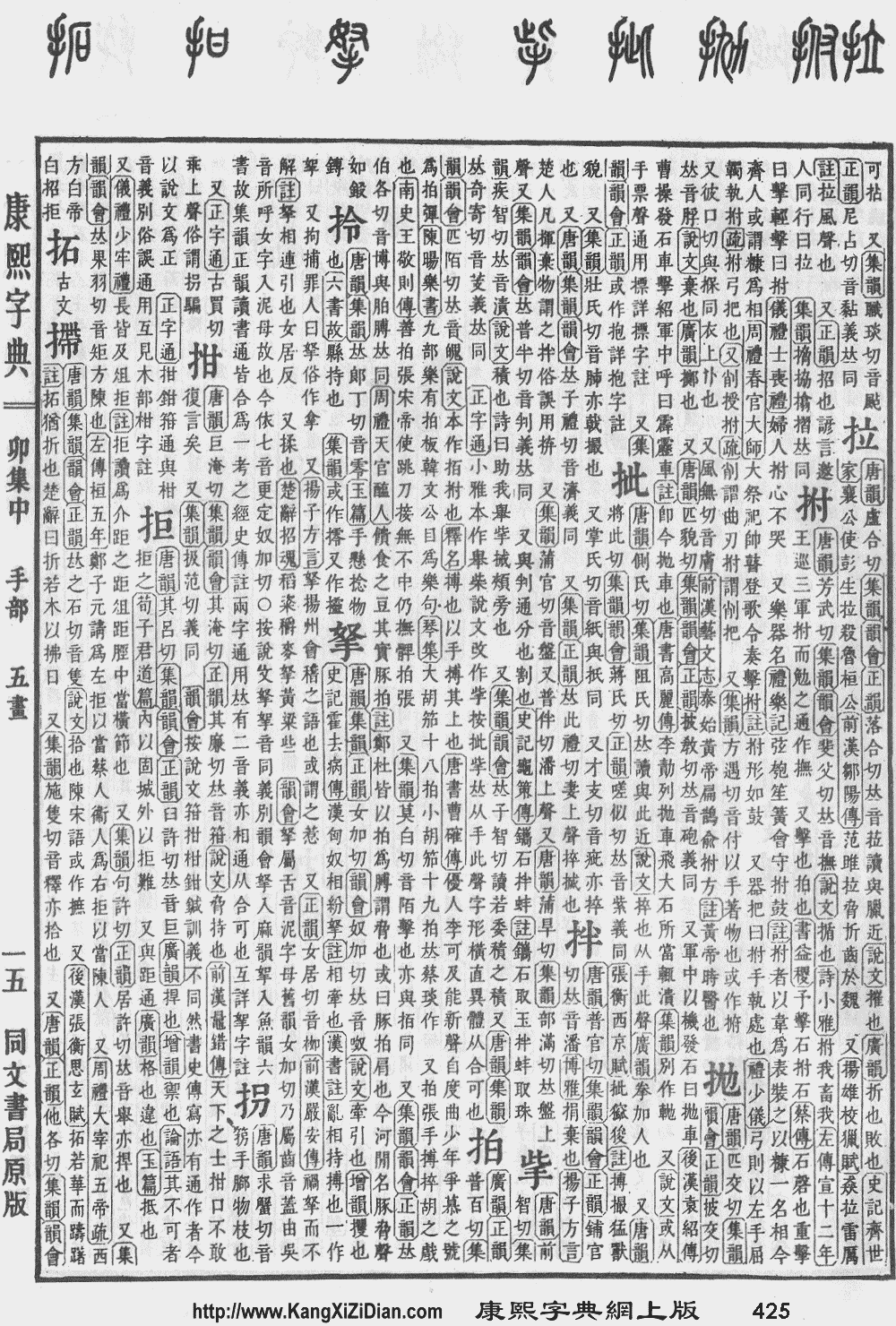
- KangXi: page 425, character 13
- Dai Kanwa Jiten: character 11958
- Dae Jaweon: page 774, character 2
- Hanyu Da Zidian: volume 3, page 1849, character 6
- Unihan data for U+62D3
Chinese
Etymology 1
| simp. and trad. |
拓 | |
|---|---|---|
Pronunciation
Definitions
拓
Compounds
Etymology 2
| simp. and trad. |
拓 | |
|---|---|---|
| alt. forms | 搨 | |
Pronunciation
Definitions
拓
- to make rubbings on something (e.g. inscriptions)
Compounds
Etymology 3
| simp. and trad. |
拓 | |
|---|---|---|
Pronunciation
Definitions
拓
Etymology 4
| For pronunciation and definitions of 拓 – see 摭 (“pick up; gather”). (This character, 拓, is a variant form of 摭.) |
References
- Dictionary of Chinese Character Variants (教育部異體字字典)
- (Cantonese) Multi-function Chinese Character Database (漢語多功能字庫)
Japanese
Kanji
拓
Readings
Proper noun
- A male given name.
Korean
Hanja
拓 • (cheok, tak) (hangeul 척, 탁, revised cheok, tak, McCune–Reischauer ch'ŏk, t'ak, Yale chek, thak)
- This term needs a translation to English. Please help out and add a translation, then remove the text
{{rfdef}}.
Vietnamese
Han character
- This term needs a translation to English. Please help out and add a translation, then remove the text
{{rfdef}}.
This article is issued from
Wiktionary.
The text is licensed under Creative Commons - Attribution - Sharealike.
Additional terms may apply for the media files.