石斑魚
Chinese
| fish | |||
|---|---|---|---|
| trad. (石斑魚) | 石斑 | 魚 | |
| simp. (石斑鱼) | 石斑 | 鱼 | |
Pronunciation
Noun
石斑魚
Japanese
Etymology 1
| Kanji in this term | ||
|---|---|---|
| 石 | 斑 | 魚 |
| Grade: 1 | Grade: S | Grade: 2 |
| Irregular | ||
Possibly originally a compound of 鵜 (u, “cormorant”) + 食い (kui, “eating, gobbling”, the 連用形 (ren'yōkei, “continuative or stem form”) of verb 食う (kuu, “to eat, to gobble”)).
Pronunciation
Alternative forms
Noun
石斑魚 (hiragana うぐい, katakana ウグイ, rōmaji ugui, historical hiragana うぐひ)
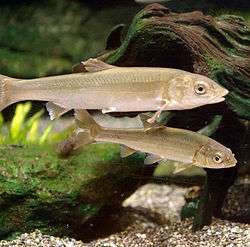
- the Japanese dace, also known as the big-scaled redfin: Tribolodon hakonensis, an edible fish in family Cyprinidae
Usage notes
This three-kanji spelling is an example of jukujikun.
As with many terms that name organisms, this term is often spelled in katakana, especially in biological contexts, as ウグイ.
Synonyms
- 丸太 (maruta)
Etymology 2
.jpg)
| Kanji in this term | ||
|---|---|---|
| 石 | 斑 | 魚 |
| Grade: 1 | Grade: S | Grade: 2 |
| Irregular | ||
Compound of 石 (ishi, “rock, stone”) + 伏し (fushi, “crouching down, lying down; hiding”, the 連用形 (ren'yōkei, “the continuative or stem form”) of verb 伏す (fusu, “to crouch down, to lie down; to hide”)),[2] from the way the fish seem to crouch down and hide among the stones of the river bed.[1] The fushi changes to bushi as an instance of rendaku (連濁).
Pronunciation
Alternative forms
- 石伏, 石伏し
Noun
石斑魚 (hiragana いしぶし, rōmaji ishibushi)
- alternative for 葦登 (yoshinobori): a kind of freshwater goby, any fish of genus Rhinogobius
Usage notes
As with many terms that name organisms, this term is often spelled in katakana, especially in biological contexts, as ヨシノボリ.