君
| ||||||||
Translingual
Han character
君 (radical 30, 口+4, 7 strokes, cangjie input 尸大口 (SKR), four-corner 17607, composition ⿸尹口)
Derived characters
References
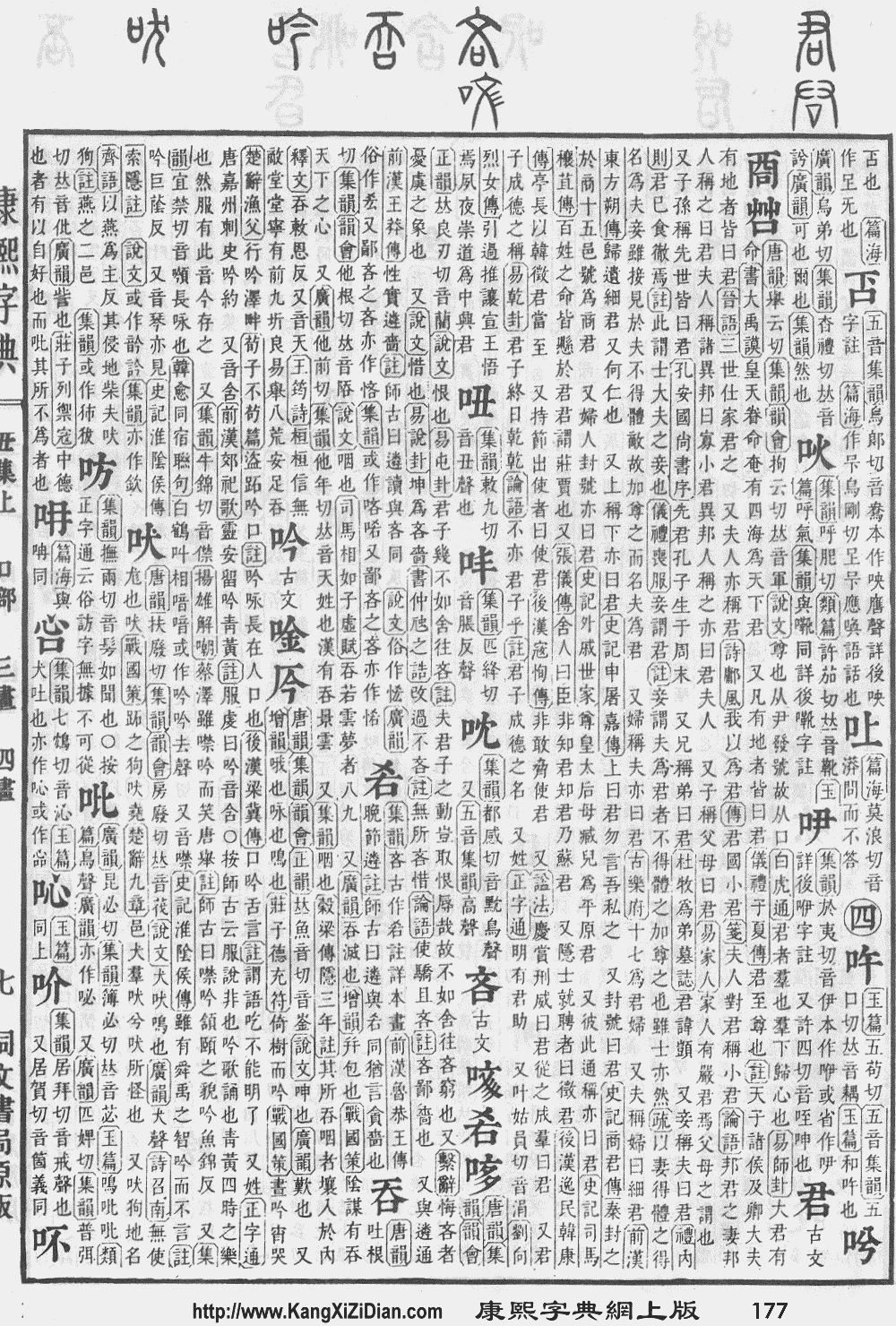
- KangXi: page 177, character 7
- Dai Kanwa Jiten: character 3323
- Dae Jaweon: page 394, character 15
- Hanyu Da Zidian: volume 1, page 595, character 6
- Unihan data for U+541B
Chinese
| simp. and trad. |
君 | |
|---|---|---|
Glyph origin
| Historical forms of the character 君 | ||||
|---|---|---|---|---|
| Shang | Western Zhou | Spring and Autumn | Shuowen Jiezi (compiled in Han) | Liushutong (compiled in Ming) |
| Oracle bone script | Bronze inscriptions | Bronze inscriptions | Small seal script | Transcribed ancient scripts |
 |
 |
 |
 |
 |
| Characters in the same phonetic series (君) (Zhengzhang, 2003) | |
|---|---|
| Old Chinese | |
| 涒 | *l̥ʰuːn |
| 麏 | *krun |
| 莙 | *krun, *ɡrunʔ, *klun |
| 輑 | *kʰrun |
| 蜠 | *kʰrun, *ɡrunʔ |
| 峮 | *kʰrun |
| 窘 | *ɡrunʔ |
| 僒 | *ɡrunʔ |
| 君 | *klun |
| 桾 | *klun |
| 宭 | *klun, *ɡlun |
| 鮶 | *klun |
| 捃 | *kluns |
| 群 | *ɡlun |
| 羣 | *ɡlun |
| 裙 | *ɡlun |
| 裠 | *ɡlun |
| 帬 | *ɡlun |
| 焄 | *qʰlun |
| 郡 | *ɡluns |
Phono-semantic compound (形聲, OC *klun) and ideogrammic compound (會意) : phonetic 尹 (OC *ɢʷlinʔ, “(hand holding a rod) to administer”) + semantic 口 (“mouth”). In the oracle bones and early Zhou bronze inscriptions, 君 was often interchanged with 尹. Shuowen suggests that 口 represents commands, but it may simply be decorative.
Etymology
- “lord; prince”
- Unknown. Here are several possibilities:
- Related to Old Mon kmin, kmun (“to exercise royal power; to be king; to reign”) (Schuessler, 2007);
- Related to 尹 (OC *ɢʷlinʔ, “director; governor”) and 元 (OC *ŋon, “head”) and cognate with Tibetan མགོན (mgon, “protector; master; lord”) (Mei Tsu-lin, 1985);
- The *k- prefixed derivative of 尹 (OC *ɢʷlinʔ, “to straighten; to administer”) (Baxter and Sagart, 1998); however, this is phonologically problematic (Schuessler, 2007).
- ACG sense
- Orthographic borrowing from Japanese 君 (-kun).
Pronunciation
Definitions
君
- sovereign; monarch; ruler; chief; prince; lord
- (historical) A honorific title: lord
- (literary, honorific) you; your (referring to a male)
- A polite form of address used among couples.
- to dominate; to reign
- (ACG, Internet slang) -kun
- (ACG, Internet slang) Affectionate name suffix.
- 字幕君 ― zìmùjūn ― (please add an English translation of this example)
- A surname.
Related terms
Compounds
|
|
|
Japanese
Kanji
Readings
Compounds
Etymology 1
| Kanji in this term |
|---|
| 君 |
| きみ Grade: 3 |
| kun’yomi |
/ki1mi1/: *[kimi] > [kimi].
Pronunciation
Noun
Pronoun
君 (hiragana きみ, katakana キミ, rōmaji kimi)
- (informal, men's speech) second-person personal pronoun, you
- 905 Kokin Wakashū (poem #21)
- きみがため春の野にいでてわかなつむわが衣手に雪は降りつつ
- 2000 September 18, Inokuma, Shinobu, “PART1 雨のち… [PART1 After the Rain…]”, in SALAD DAYS BRAND NEW STANDARD OF LOVE STORIES [SALAD DAYS: BRAND NEW STANDARD OF LOVE STORIES], volume 11 (fiction, in Japanese), Tokyo: Shogakukan, →ISBN, page 110:
- 俺は別にいいけど…キミ、学校で「知らない人について行っちゃダメ」とか、教わんなかった?
- Ore wa betsu ni ii kedo… Kimi, gakkō de “shiranai hito ni tsuite itcha dame” to ka, osowan nakatta?
- Fine by me… But haven’t you been taught at school that “you shouldn’t go anywhere with strangers”?
- 俺は別にいいけど…キミ、学校で「知らない人について行っちゃダメ」とか、教わんなかった?
- 905 Kokin Wakashū (poem #21)
Usage notes
Etymology 2
Suffix
- suffix for boys' names
- indicates respect
- indicates familiarity
Usage notes
-kun is often used as a suffix when calling someone. The listener is lower or the same level in social position and is often, but not always, male.
Etymology 3
Voiced form of kimi due to compounding in suffixation.
Suffix
君 (hiragana ぎみ, rōmaji -gimi)
- indicates respect
- 父君
- chichi-gimi
- your father
- 父君
Usage notes
There is no direct translation in English – as with other Japanese honorifics, it might roughly correspond to dear, as in “your dear father”.
Respectful suffixes also serve to indicate whose relative is in question: rather than “my father” and “your father”, one would say 父 (“father”) and 父君 (“dear father”).
Used of nobles. Attaches to close family relationship nouns such as 母 (mother), 姉 (sister), 姫 (daughter of a noble family, princess).
Etymology 4
/kindi/ → /kinzi/. From older きむぢ (kimudi).
Pronoun
君 (hiragana きんじ, rōmaji kinji, historical hiragana きんぢ)
- second person personal pronoun, you
- 970-999, Utsubo Monogatari (Fukiage, ge)
- きんぢ、この手を傳へ施す物ならば、この世になからん世なりとも、訪ひ守らん。
- 970-999, Utsubo Monogatari (Kurabiraki, jō)
- 「[...] ある時は「きんぢがつたなく吾を人気なくハ生み出したる」とさへぞの給フや」
- 970-999, Utsubo Monogatari (Kuniyuzuri, jō)
- 喜びて、見給ヒて、聲を放ちて「我が親の今々とし給ひしまで「我はきんぢを思ふにぞ黄泉もえ往くまじき。[...]」」
- 970-999, Utsubo Monogatari (Fukiage, ge)
See also
References
- Kojima, Noriyuki; Arai Eizō (1989) Shin Nihon Koten Bungaku Taikei 5: Kokin Wakashū (in Japanese), Iwanami Shoten, →ISBN
- Kōno, Tama (c. 970–999) Nihon Koten Bungaku Taikei 10: Utsubo Monogatari 1 (in Japanese), Tōkyō: Iwanami Shoten, published 1959, →ISBN.
- Kōno, Tama (1961) Nihon Koten Bungaku Taikei 11: Utsubo Monogatari 2 (in Japanese), Tōkyō: Iwanami Shoten, →ISBN
- Kōno, Tama (1962) Nihon Koten Bungaku Taikei 12: Utsubo Monogatari 3 (in Japanese), Tōkyō: Iwanami Shoten, →ISBN
Korean
Hanja
- This term needs a translation to English. Please help out and add a translation, then remove the text
{{rfdef}}.
Vietnamese
Han character
- This term needs a translation to English. Please help out and add a translation, then remove the text
{{rfdef}}.