背
See also: 揹
| ||||||||
Translingual
| Stroke order | |||
|---|---|---|---|
 | |||
Han character
背 (radical 130, 肉+5, 9 strokes, cangjie input 中心月 (LPB), four-corner 11227, composition ⿱北月)
References
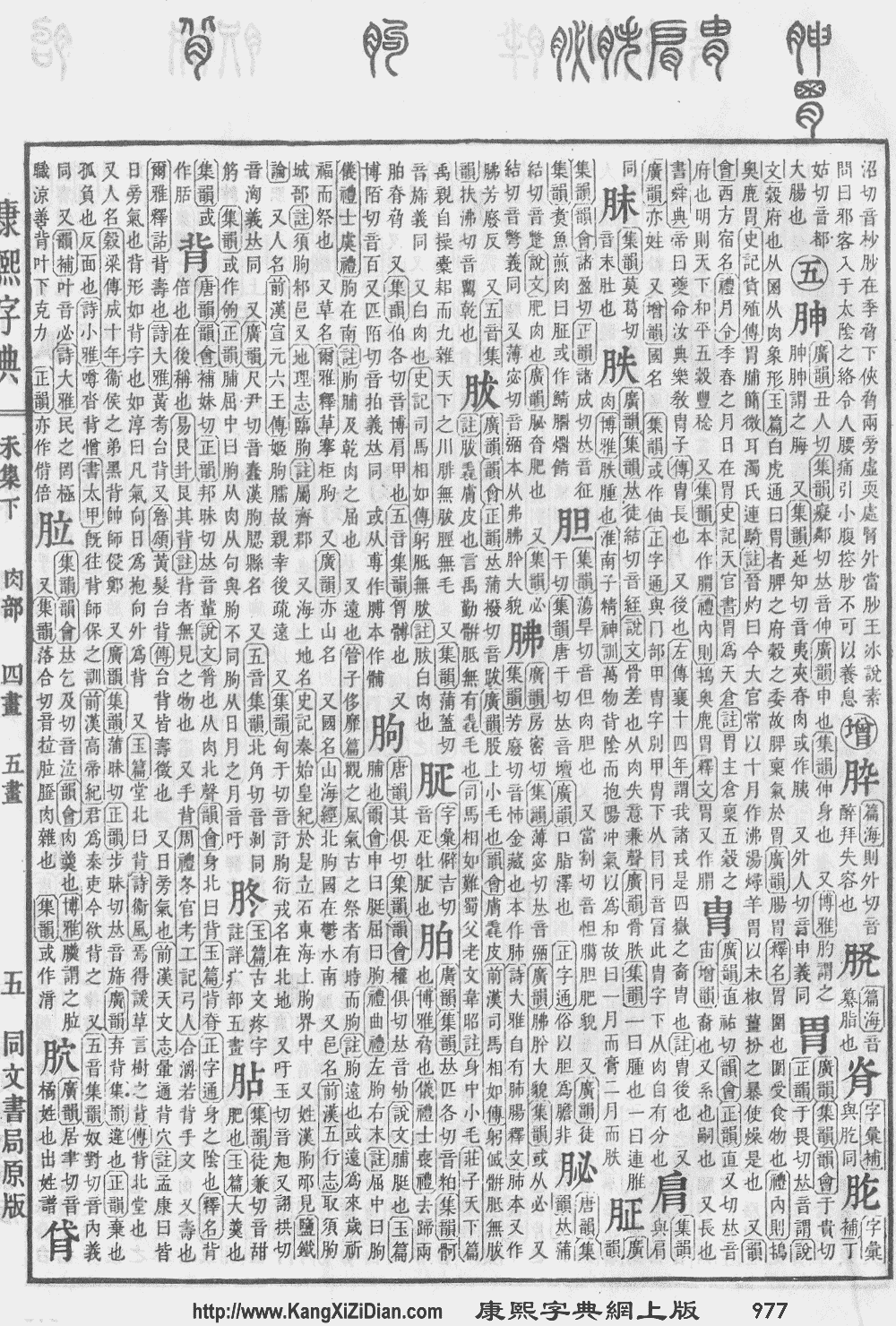
- KangXi: page 977, character 21
- Dai Kanwa Jiten: character 29363
- Dae Jaweon: page 1429, character 11
- Hanyu Da Zidian: volume 3, page 2058, character 4
- Unihan data for U+80CC
Chinese
Glyph origin
| Historical forms of the character 背 |
|---|
| Shuowen Jiezi (compiled in Han) |
| Small seal script |
 |
| Characters in the same phonetic series (北) (Zhengzhang, 2003) | |
|---|---|
| Old Chinese | |
| 背 | *pɯːɡs, *bɯːɡs |
| 鄁 | *bɯːɡs |
| 偝 | *bɯːɡs |
| 邶 | *bɯːɡs |
| 苝 | *bɯːɡs |
| 北 | *pɯːɡ |
Phono-semantic compound (形聲, OC *pɯːɡs, *bɯːɡs) : phonetic 北 (OC *pɯːɡ) + semantic 月 (“meat”). Semantic 肉 was added to be distinguished from the derived meaning of 北 (“north”).
Etymology
Two pronunciations were distinguished in Middle Chinese: puʌiH (“back”), buʌiH (“to turn one's back to; to betray”).
This etymology is incomplete. You can help Wiktionary by elaborating on the origins of this term.
Pronunciation 1
| simp. and trad. |
背 | |
|---|---|---|
Definitions
背
Compounds
Derived terms from 背
|
|
|
Pronunciation 2
| trad. | 背/揹* | |
|---|---|---|
| simp. | 背 | |
Definitions
背
Synonyms
| Dialectal synonyms of 背負 (“to carry on the back”) [map] | ||
|---|---|---|
| Variety | Location | Words |
| Classical Chinese | 負 | |
| Formal (Written Standard Chinese) | 背負 | |
| Mandarin | Beijing | 背 |
| Taiwan | 背 | |
| Jinan | 背 | |
| Xi'an | 背 | |
| Wuhan | 背、馱 | |
| Chengdu | 背 | |
| Yangzhou | 背、馱 | |
| Hefei | 背、馱 | |
| Cantonese | Guangzhou | 孭 |
| Hong Kong | 孭 | |
| Yangjiang | 孭 | |
| Gan | Nanchang | 馱、背 |
| Hakka | Meixian | 背、揹 |
| Jin | Taiyuan | 背 |
| Min Bei | Jian'ou | 騎、邁 |
| Min Dong | Fuzhou | 邁 |
| Min Nan | Xiamen | 背、揹、偝 |
| Zhangzhou | 揹、偝 | |
| Taipei | 揹、偝 | |
| Chaozhou | 背 | |
| Wu | Suzhou | 背 |
| Wenzhou | 背、擐 | |
| Xiang | Changsha | 背 |
| Shuangfeng | 背 | |
Compounds
Japanese
Kanji
背
- This term needs a translation to English. Please help out and add a translation, then remove the text
{{rfdef}}.
Readings
Noun
- one's back (part of the human body)
- one's height
- 田中さんは背が高い。
- Tanaka-san wa se ga takai.
- Tanaka is tall.
- 田中さんは背が高い。
- the rear of something, the area behind
Synonyms
- (part of the body): 背中 (senaka)
Korean
Hanja
背 • (bae, pae) (hangeul 배, 패, revised bae, pae, McCune–Reischauer pae, p'ae, Yale pay, phay)
- This term needs a translation to English. Please help out and add a translation, then remove the text
{{rfdef}}.
Vietnamese
Han character
- This term needs a translation to English. Please help out and add a translation, then remove the text
{{rfdef}}.
This article is issued from
Wiktionary.
The text is licensed under Creative Commons - Attribution - Sharealike.
Additional terms may apply for the media files.