色
| ||||||||
Translingual
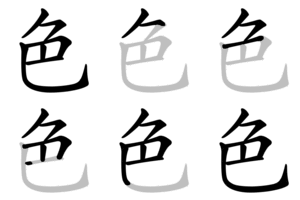
| Stroke order | |||
|---|---|---|---|
 | |||
| Stroke order | |||
|---|---|---|---|
 | |||
Han character
色 (radical 139, 色+0, 6 strokes, cangjie input 弓日山 (NAU), four-corner 27717, composition ⿱⺈巴)
Derived glyphs
- Index:Chinese radical/色
- 絶
References
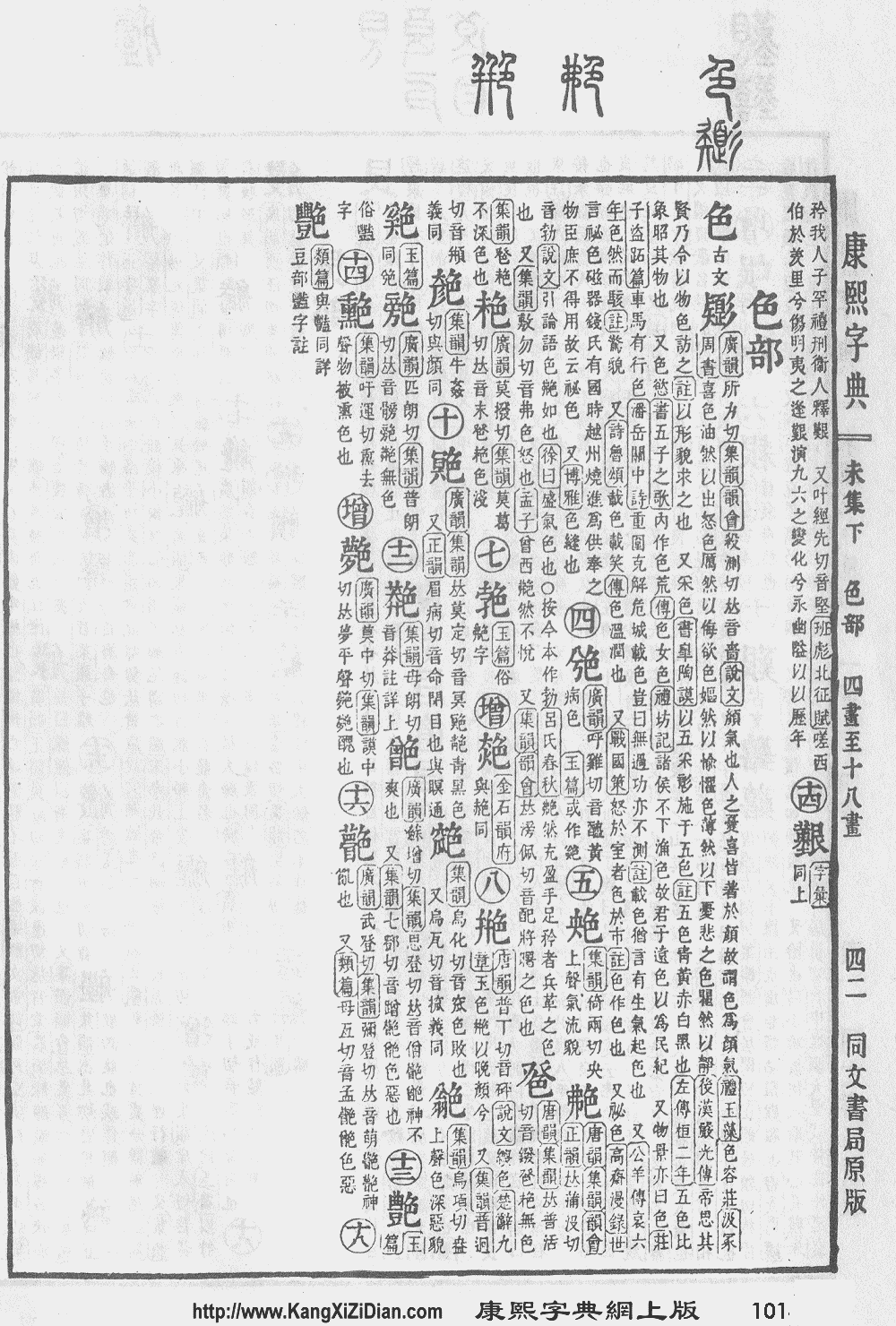
- KangXi: page 1014, character 2
- Dai Kanwa Jiten: character 30602
- Dae Jaweon: page 1473, character 4
- Hanyu Da Zidian: volume 5, page 3071, character 1
- Unihan data for U+8272
Chinese
| simp. and trad. |
色 | |
|---|---|---|
| alt. forms | 𢒸 | |
Glyph origin
| Historical forms of the character 色 | |||||
|---|---|---|---|---|---|
| Spring and Autumn | Warring States | Shuowen Jiezi (compiled in Han) | Liushutong (compiled in Ming) | ||
| Bronze inscriptions | Chu Slip and silk script | Qin slip script | Ancient script | Small seal script | Transcribed ancient scripts |
 |
 |
 |
 |
 |
 |
| Characters in the same phonetic series (色) (Zhengzhang, 2003) | |
|---|---|
| Old Chinese | |
| 色 | *srɯɡ |
| 赩 | *qʰrɯɡ |
Ideogrammic compound (會意) : 爪 (“claw; hand”) + 卩 (“kneeling person”) – complexion.
Shuowen interprets this character as an ideogrammic compound (會意) : 人 (“person; human”) + 卩 (“etiquette”) – complexion.
Pronunciation
Definitions
色
- color/colour; tint; hue; shade
- look; expression
- kind; sort
- feminine charm; beauty
- sexual; lewd
- (colloquial) perverted; being a pervert
- theatrical role
- metallic content
- die (a cube with numbers or symbols on each side and used in games of chance)
Synonyms
Compounds
|
|
|
See also
| Colors in Chinese · 顏色/颜色 (yánsè) (layout · text) | |||||
|---|---|---|---|---|---|
| 白色 (báisè) | 灰色 (huīsè) | 黑色 (hēisè) | 棕色 (zōngsè), 褐色 (hèsè) | ||
| 粉紅色/粉红色 (fěnhóngsè) | 紅色/红色 (hóngsè), 赤色 (chìsè) ; 豔紅色/艳红色 (yànhóngsè) | 橙色 (chéngsè) | 黃色/黄色 (huángsè) ; 奶油色 (nǎiyóusè) | ||
| 青檸色/青柠色 (qīngníngsè) | 綠色/绿色 (lǜsè) | 青色 (qīngsè) ; 深青色 | |||
| 天藍色/天蓝色 (tiānlánsè) | 藍色/蓝色 (lánsè) | 紫羅蘭色/紫罗兰色 (zǐluólán sè) ; 靛色 (diànsè) | 洋紅色/洋红色 (yánghóngsè) ; 紫色 (zǐsè) | ||
Japanese
| Stroke order | |||
|---|---|---|---|
| |||
Kanji
Readings
Compounds
Etymology 1
| Kanji in this term |
|---|
| 色 |
| いろ Grade: 2 |
| kun’yomi |
⟨iro2⟩ → /iro/
From Old Japanese.
Originally referred to kin, indicating siblings sharing the same mother.[1] Later came to indicate feelings of familial love.[1] Apparently this then evolved to refer to romantic love, and by extension sex, or by alternate extension, female beauty. Then by further extension, this came to refer to beauty in general, and then colorfulness, and finally color.
Pronunciation
Noun
- color (US), colour (UK)
- 目の色が違う猫
- me no iro ga chigau neko
- a cat that has eyes of different color
- 目の色が違う猫
- the metaphorical color or mood
- one's facial coloring or expression
- the shape of one's face or appearance; more specifically, beautiful looks or a beautiful figure
- lively elegance, enjoyable or interesting charm
- apparent thoughtfulness, warmheartedness
- the feeling or mood of a thing
- the tenor or timber of a voice or sound
- in Noh, a section that is chanted at a medium pace; alternately, a decorative poetic section
- in 浄瑠璃 (jōruri, “puppet show narrative”), a lively section that is neither strictly dialog nor narration, but has many elements of dialog
- when playing the koto, pushing on a string with the fingers of the left hand to change the pitch of a note, or for vibrato
- something related to romantic or sexual love, particularly between genders
- the emotions or circumstances of attraction between genders
- extramarital relations, an affair
- an extramarital lover
- a prostitute
- a red-light district
- the type or kind of something
- (informal, slang) various specific kinds of color:
Derived terms
- 色艶 (irotsuya, “color and luster; a person's facial coloring; warmth of feeling in speech or attitude; interest or fun in speech or writing”)
- 色合い (iroai), 色合 (iroai, “a shade, hue, tone; coloring”)
- 色褪せる (iroaseru, “lose color, fade; fade, lose freshness, become old and musty”)
- 色紙 (irogami, “colored paper”)
- 色眼鏡 (iro megane, “colored glasses”)
- 色物 (iromono, “a colored item, particularly cloth or clothing; a lively and colorful variety act”)
- 色好い (iroyoi, “having a beautiful figure; favorable (as in a reply or attitude)”)
- 色分け (irowake), 色分 (irowake, “to color-code, to separate by color”)
- 赤色 (aka iro, “red”)
- 青色 (ao iro, “blue”)
- 黄色 (ki iro, “yellow”)
- 茶色 (cha iro, “brown”)
- 狐色 (kitsune iro, “reddish-brown”)
- 橙色 (daidai iro, “orange (colour)”)
- オレンジ色 (orenji iro, “orange (colour)”)
- 柿色 (kaki iro, “reddish-orange”)
- 紫色 (murasaki iro, “purple”)
- 薄紫色 (usu-murasaki iro, “light purple, lavender”)
- 桃色 (momo iro, “peach pink”)
- 桜色 (sakura iro, “light pink”)
- 水色 (mizu iro, “light blue”)
- 群青色 (gunjō iro, “ultramarine”)
- 赤紫色 (aka-murasaki iro, “magenta”)
- 青緑色 (ao-midori iro, “cyan”)
- 灰色 (hai iro, “gray (possibly darker than nezumi iro)”)
- 鼠色 (nezumi iro, “gray (possibly darker than hai iro)”)
- 鴇色 (toki iro, “pink”)
- 縹色 (hanada iro, “light indigo blue”)
- 栗色 (kuri iro, “maroon”)
- 緋色 (hi iro, “scarlet”)
- 茜色 (akane iro, “madder (colour)”)
- 苺色 (ichigo iro, “strawberry (colour)”)
- 鬱金色 (ukon iro, “turmeric (dye)”)
- ココア色 (kokoa iro, “cocoa (colour)”)
- 葡萄色 (budō iro, “grape (colour)”)
- 檸檬色 (remon iro, “lemon (colour)”)
- 金糸雀色 (kanaria iro, “canary (colour)”)
- 芥子色 (karashi iro, “mustard (colour)”)
- 琥珀色 (kohaku iro, “amber”)
- 薔薇色 (bara iro, “rose (colour)”)
- 十人十色 (jū nin to iro, “to each his own”)
Related terms
Adjective
色 (-na inflection, hiragana いろ, rōmaji iro)
- (archaic) of exceptional beauty of form or appearance
- Utsubo Monogatari, late 10th c.:
- いろなる娘どもゐなみて
- ironaru musume domo winamite
- beautiful girls all in a row
- いろなる娘どもゐなみて
- Utsubo Monogatari, late 10th c.:
- (archaic) knowledgeable about lovemaking, sensual; lascivious, lecherous
- Ochikubo Monogatari, late 10th c.:
- 越前守色なる人にて
- echizenmori ironaru hito ni te
- Echizenmori was a man who liked the girls / had quite the libido
- 越前守色なる人にて
- Ochikubo Monogatari, late 10th c.:
- (archaic) elegant, tasteful, refined
- The Tale of Genji, early 11th c.:
- 目馴れずもある住まひの様かな色なる御心にはをかしくおぼしなさる
- menarezu mo aru sumahi no sama ka na ironaru okokoro ni wa okashiku oboshinasaru
- "I haven't seen it before, but it looks like a house," he thought bemusedly in his refined mind...
- 目馴れずもある住まひの様かな色なる御心にはをかしくおぼしなさる
- The Tale of Genji, early 11th c.:
Affix
- kin, blood relative, more specifically family members sharing the same mother
Usage notes
Only found in compounds.
Derived terms
Etymology 2
| Kanji in this term |
|---|
| 色 |
| いろえ Grade: 2 |
| kun’yomi |
/irope/ → /irofe/ → /iroe/
Nominalization of the 連用形 (ren'yōkei, “continuative or stem form”) of verb 色う (irou, “to color something”).
Not used in modern Japanese.
Pronunciation
Noun
色 (hiragana いろえ, rōmaji iroe, historical hiragana いろへ)
Etymology 3
| Kanji in this term |
|---|
| 色 |
| しき Grade: 2 |
| on’yomi |
From Middle Chinese 色 (srik). Used in Buddhist contexts as a translation of Sanskrit रूप (rūpa, “outward appearance, color, form, shape”).
The goon reading, so likely the initial borrowing.[1]
Pronunciation
Noun
- (Buddhism) material form, specifically the organized body as one of the five constituent elements or skandhas
- Heart Sutra (Wikipedia article)
- ...舍利子。色不異空。空不異色。色即是空。空即是色。受想行識亦復如是。...
- Sharishi, shiki fu i kū, kū fu i shiki, shiki soku ze kū, kū soku ze shiki, ju sō gyō shiki, yaku bu nyoze...
- Oh Shariputra! Form is not different from emptiness; emptiness is not different from form. Form is indeed emptiness; emptiness is indeed form. Feeling, perception, mental formations, and consciousness are also like this.[4]
- ...舍利子。色不異空。空不異色。色即是空。空即是色。受想行識亦復如是。...
- Heart Sutra (Wikipedia article)
- that which is visible of a thing, specifically form and color
- color (US), colour (UK)
Usage notes
Used extensively in compounds.
Derived terms
- 色界 (shikikai, “the material world”)
- 色彩 (shikisai, “coloring, coloration, hue, tint; color, mood, influence, leaning”)
- 色紙 (shikishi, “a square piece of cardboard used for painting or for writing poems”)
- 色調 (shikichō, “the coloring of a thing; a tone, shade, or hue”)
- 縹色 (hyōshiki, “light indigo blue”)
See also
Etymology 4
| Kanji in this term |
|---|
| 色 |
| しょく Grade: 2 |
| on’yomi |
From Middle Chinese 色 (srik, reconstructed by some linguists as /ʃiək/, ).
The kan'on reading, so likely a later borrowing.[1]
Pronunciation
Affix
色 (hiragana しょく, rōmaji shoku)
Usage notes
Used in compounds.
Derived terms
- 暗色 (anshoku, “a dark color”)
- 威嚇色 (ikakushoku, “a threatening color or pattern on an animal”)
- 異色 (ishoku, “of a different color; different from the norm”)
- 炎色 (enshoku), 焰色 (enshoku, “flame colour”)
- 怨色 (enshoku, “grudging look”)
- 演色 (enshoku, “colour rendering”)
- 艶色 (enshoku, “bewitching looks; beautiful colour”)
- 黄色 (ōshoku), 黄色 (kōshoku, “yellow”)
- 灰色 (kaishoku, “grey”)
- 褐色 (kasshoku, “dark brown”)
- 橄欖色 (kanranshoku, “olive (colour)”)
- 好色 (kōshoku, “lasciviousness, lechery; lascivious, lecherous”)
- 紅色 (kōshoku, “crimson”)
- 行色 (kōshoku, “the state of being about to depart; natural scenery”)
- 黒色 (kokushoku, “black”)
- 紫色 (shishoku, “purple”)
- 赭色 (shashoku, “reddish-brown, auburn”)
- 青色 (seishoku, “blue”)
- 赤色 (sekishoku, “red”)
- 水色 (suishoku, “light blue”)
- 遜色 (sonshoku, “inferiority”)
- 橙色 (tōshoku, “orange (colour)”)
- 白色 (hakushoku, “white”)
- 明色 (meishoku, “a bright color”)
- 緑色 (ryokushoku, “green”)
Counter
色 (hiragana しょく, rōmaji -shoku)
- used to count the number of colors
- 三色刷り
- sanshoku suri
- three-color printing
- 三色刷り
See also
| Colors in Japanese · 色 (iro) (layout · text) | |||||
|---|---|---|---|---|---|
| 白 (shiro) | 灰色 (haiiro), 鼠色 (nezumiiro) (dated) |
黒 (kuro) | 茶色 (chairo), 褐色 (kasshoku) | ||
| ピンク (pinku), 桃色 (momoiro) |
赤 (aka) ; 深紅 (shinku), クリムゾン (kurimuzon), 紅色 (beniiro), 紅色 (kurenaiiro) |
オレンジ (orenji), 橙色 (daidaiiro) |
黄色 (kiiro) ; クリーム色 (kurīmuiro) | ||
| 黄緑 (kimidori) | 緑 (midori), 青 (ao) (dated) |
シアン (shian) ; 鴨の羽色 (kamo no hane iro) | |||
| 水色 (mizuiro) | 青 (ao) | 菫色 (sumireiro) ; 藍色 (aiiro), インジゴ (injigo) |
マゼンタ (mazenta) ; 紫 (murasaki) | ||
References
- 1 2 3 4 1988, 国語大辞典(新装版) (Kokugo Dai Jiten, Revised Edition) (in Japanese), Tōkyō: Shogakukan
- 1 2 2006, 大辞林 (Daijirin), Third Edition (in Japanese), Tōkyō: Sanseidō, →ISBN
- ↑ 1998, NHK日本語発音アクセント辞典 (NHK Japanese Pronunciation Accent Dictionary) (in Japanese), Tōkyō: NHK, →ISBN
- ↑ Zen Heart Sutra Phonetic – Translation Of The Kanji Of The Heart Sutra, accessed October 24, 2017
Korean
Hanja
色 • (saek) (hangeul 색, McCune–Reischauer saek, Yale sayk)
Noun
色 • (saek) (hangeul 색)