所
| ||||||||
Translingual
| Stroke order | |||
|---|---|---|---|
 | |||
| Japanese stroke order | |||
|---|---|---|---|
 | |||
| Stroke order | |||
|---|---|---|---|
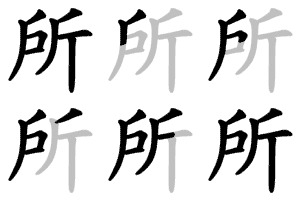 | |||
| Japanese | 所 |
|---|---|
| Simplified | 所 |
| Traditional | 所 |
Alternative forms
Note different composition due to different forms of 戶, namely 户 (in some Japanese fonts more resembles 戸).
Han character
所 (radical 63, 戶+4, 8 strokes, cangjie input 竹尸竹一中 (HSHML), four-corner 72221, composition ⿰戶斤 or ⿰戸斤)
References
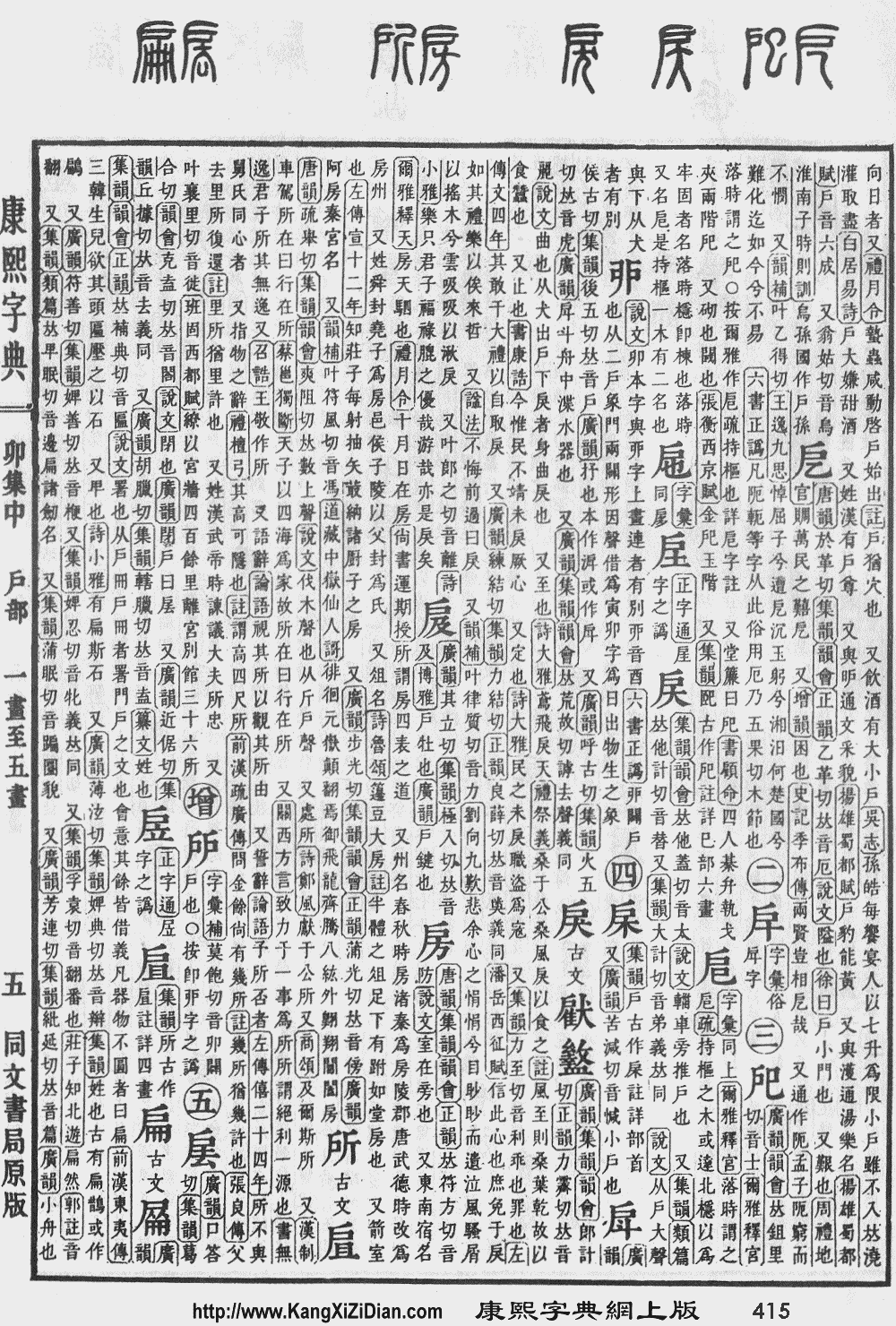
- KangXi: page 415, character 16
- Dai Kanwa Jiten: character 11715
- Dae Jaweon: page 760, character 2
- Hanyu Da Zidian: volume 3, page 2259, character 1
- Unihan data for U+6240
Chinese
| simp. and trad. |
所 | |
|---|---|---|
| alt. forms | 𫝂 | |
Glyph origin
| Characters in the same phonetic series (戸) (Zhengzhang, 2003) | |
|---|---|
| Old Chinese | |
| 妒 | *tqaːs |
| 雇 | *kʷaːs, *ɡʷaːʔ |
| 顧 | *kʷaːs |
| 戽 | *qʰʷaːʔ, *qʰʷaːs, *ɡʷaːʔ |
| 戶 | *ɡʷaːʔ |
| 扈 | *ɡʷaːʔ |
| 帍 | *ɡʷaːʔ |
| 昈 | *ɡʷaːʔ |
| 滬 | *ɡʷaːʔ |
| 簄 | *ɡʷaːʔ |
| 齭 | *skʰraʔ, *sqʰraʔ |
| 所 | *sqʰraʔ |
Phono-semantic compound (形聲, OC *sqʰraʔ) : phonetic 戶 (OC *ɡʷaːʔ) + semantic 斤 (“axe”) – the sound of logging.
Pronunciation
Definitions
所
- place; location
- institute
- Classifier for buildings, schools, hospitals, etc. ⇒ all nouns using this classifier
- Prefix attached to verbs to form noun phrases, meaning a person or thing that is the object of that verb (ie, to whom or to which an action is done).
- Used in the construction 為……所…… to form the passive voice.
Compounds
Derived terms from 所
|
|
|
Japanese
Kanji
所
Readings
Compounds
Counter
Pronunciation
Noun
所 (hiragana ところ, rōmaji tokoro, alternative reading とこ, rōmaji toko)
- a place, a scene, a site; an address
- 遠い所に行ってみたい。
- Tōi tokoro ni itte mitai.
- I want to go to a faraway place.
- あの窓のところにいる人は誰?
- Ano mado no tokoro ni iru hito wa dare?
- Who is the person by that window?
- 嫌なところを直す
- iya na tokoro o naosu
- to change the unpleasant part/aspect (of one's personality)
- 遠い所に行ってみたい。
- a state of being
- (after a plain verb) about to
- 映画を見に行くところだった。
- Eiga o mi ni iku tokoro datta.
- I was about to go to a movie.
- 映画を見に行くところだった。
- (after a verb in the past tense) just
- 駅に着いたところです。
- Eki ni tsuita tokoro desu.
- I just arrived at the station.
- 駅に着いたところです。
- (after a verb in the progressive ている) indicates the current state, or how you have progressed so far in a chain of actions
- (after a plain verb) about to
Usage notes
- The toko reading is informal.
Derived terms
- 所で (tokorode): by the way, incidentally
- 所々 (tokorodokoro), 所所 (tokorodokoro), 処々 (tokorodokoro), 処処 (tokorodokoro): here and there
- 所へ (tokoro e): thereupon
- 所もある (tokoro mo aru): some, sometimes
Suffix
所 (hiragana ところ, rōmaji -tokoro)
所 (hiragana どころ, rōmaji -dokoro)
Usage notes
- しょ: This reading is used in on'yomi compounds.
- ところ, どころ: These readings are used in kun'yomi compounds. The tokoro reading often changes to dokoro in compounds due to rendaku.
- Examples:
- 国所 (くにところ, kunitokoro): country of birth, birthplace
- 所々 (ところどころ, tokorodokoro): places, here and there
- Examples:
References
- ↑ 1974, 新明解国語辞典 (Shin Meikai Kokugo Jiten), Second Edition (in Japanese), Tōkyō: Sanseidō
Korean
Hanja
所 • (so)
- This term needs a translation to English. Please help out and add a translation, then remove the text
{{rfdef}}.
Okinawan
Kanji
所 (hiragana とぅくる, romaji tukuru)
Noun
所 (hiragana とぅくる, romaji tukuru)
Suffix
Compounds
Vietnamese
Han character
- This term needs a translation to English. Please help out and add a translation, then remove the text
{{rfdef}}.
This article is issued from
Wiktionary.
The text is licensed under Creative Commons - Attribution - Sharealike.
Additional terms may apply for the media files.