黒
| ||||||||
Translingual
| Japanese | 黒 |
|---|---|
| Simplified | 黑 |
| Traditional | 黑 |
Glyph origin
Variant of 黑. Simplified from 黑, replacing two dots with one stroke. The modern Japanese usage is of reform (shinjitai) nature. Compare 毋, the shinjitai of 母.
Han character
黒 (radical 203, 黑+0, 11 strokes, cangjie input 田土火 (WGF) or X田土火 (XWGF), composition ⿱里灬)
References
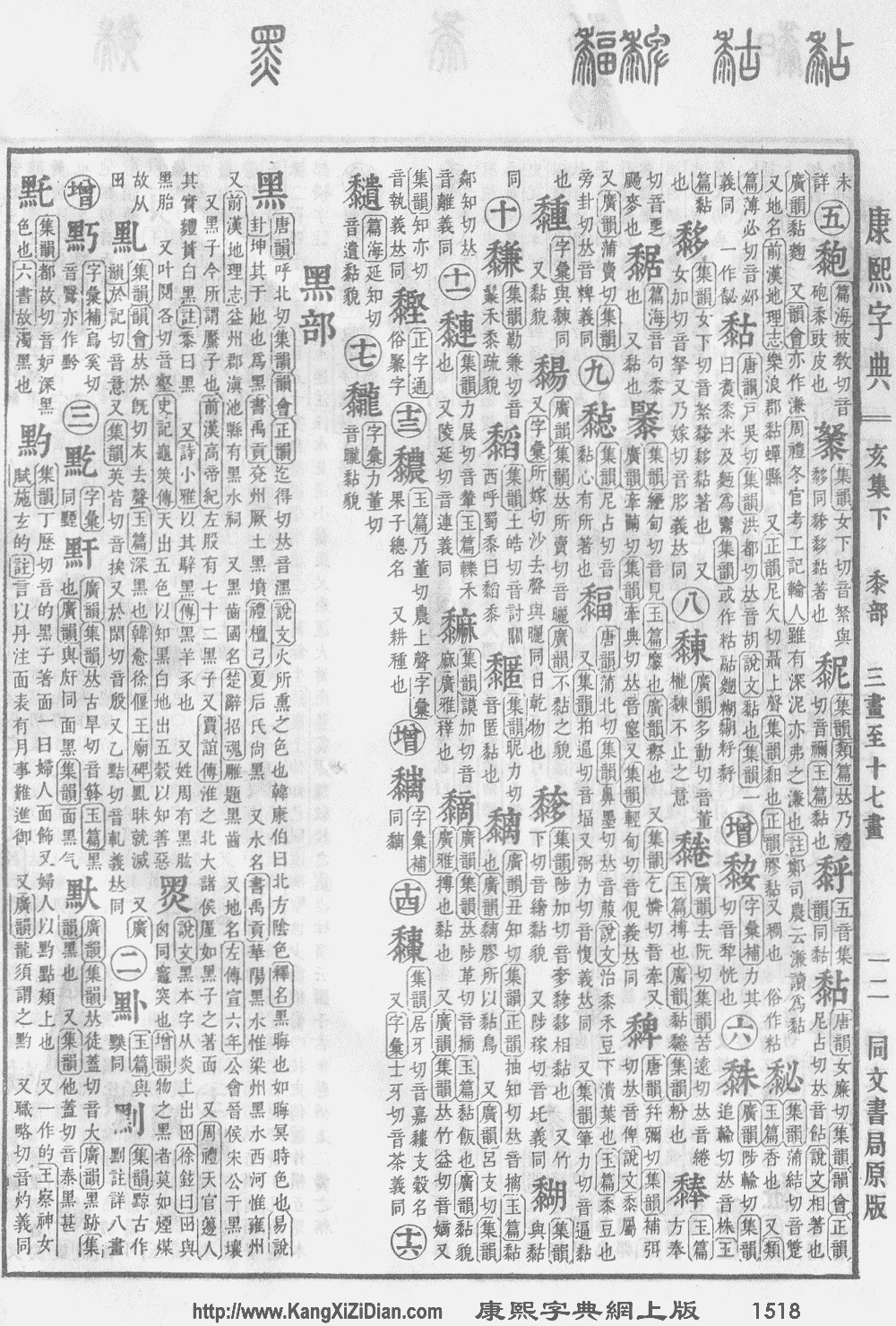
- KangXi: not present, would follow page 1518, character 36
- Dai Kanwa Jiten: character 48040
- Dae Jaweon: page 2052, character 2
- Hanyu Da Zidian: not present, would follow volume 7, page 4743, character 1
- Unihan data for U+9ED2
Chinese
| For pronunciation and definitions of 黒 – see 黑 (“black; dark; darkness; etc.”). (This character, 黒, is a variant form of 黑.) |
Japanese
| 黒 | |
| 黑 |
Kanji
(grade 2 “Kyōiku” kanji, shinjitai kanji, kyūjitai form 黑)
Readings
Compounds
Etymology

| Kanji in this term |
|---|
| 黒 |
| くろ Grade: 2 |
| kun’yomi |
⟨kuro1⟩ → /kuro/
From Old Japanese, first attested in the Kojiki (712 CE).
Via root morpheme *kur, cognates include:
- 涅 (kuri, “black mud from the bed of a body of water”)[1]
- 暗 (kura, “darkness; deception”), 蔵, 倉, 庫 (kura, “[dark] storehouse”), and 暗い (kurai, “dark”)
- classical verb 暮る (kuru), modern 暮れる (kureru, “to become dark; to near the end [of a day, of a year, of a life”), and 暗れる, 眩れる (kureru, “to become depressed, to become dreary of mood”)
Compare Proto-Turkic *kara (“black”), Mongolian хар (har, “black”). Possibly also cognate with Korean 구름 (gureum, “cloud”); compare also Japanese 雲 (kumo, “cloud”) and Korean 검 (*geom, “black”), root morpheme of 검다 (geomda, “to be black”, verb), 검은 (geomeun, “black”, adjective).
Pronunciation
Noun
黒 (shinjitai kanji, kyūjitai kanji 黑, hiragana くろ, rōmaji kuro)
- black (color)
- Antonym: 白 (shiro)
- (go) a black stone; the person who plays black stones
- Synonym: 先手 (sente)
- a 女房詞 (nyōbō kotoba, “woman's word”) for 鍋 (nabe, “pot, pan”) or 釜 (kama, “pot, kettle”)
- (accounting) Short for 黒字 (kuroji): black as an accounting term, indicating a profit
- (euphemistic) Short for 黒幕 (kuromaku): a black curtain (someone influencing or controlling matters from behind the scenes)
- guilt; the guilty one, the guilty party
- (slang) anarchy as a belief system or philosophy
- Synonym: 無政府主義 (musei-fu shugi)
- (slang) an anarchist
- Synonym: 無政府主義者 (musei-fu shugi-sha)
Derived terms
- 黒黒, 黒々 (kuroguro)
- 黒い (kuroi, “black”, adjective)
- 黒み (kuromi, “blackness, black tinge”)
- 黒め (kurome)
- 黒和え, 黒韲え (kuro-ae)
- 玄人 (kurōto)
- 黒柏 (kuro kashiwa), 黒柏鶏 (kuro kashiwa-kei)
- 黒金, 鉄 (kurogane, “iron”)
- 黒髪 (kurokami)
- 黒川, 黒河 (kurokawa)
- 黒子, 黒衣 (kurogo)
- 黒字 (kuroji)
- 黒田 (kurota)
- 黒田 (Kuroda)
- 黒垂 (kurotare)
- 黒鶫 (kurotsugumi)
- 黒貂 (kuroten)
- 黒塗, 黒塗り (kuro-nuri)
- 黒猫 (kuroneko, “black cat”)
- 黒檜 (kurobi), 黒檜 (kurobe)
- 黒っぽい (kuroppoi, “blackish, dark”)
- 黒豚 (kurobuta, “Berkshire pig”)
- 黒幕 (kuromaku)
- 黒丸, 黒円 (kuromaru)
- 黒布, 黒海布, 黒菜 (kurome)
- 黒目, 黒眼 (kurome)
- 黒焼, 黒焼き (kuroyaki)
- 黒枠, 黒框 (kurowaku)
- 黒ん坊 (kuronbō): a deeply tanned person; (derogatory) a black person; a stagehand wearing black or dark clothing; a monk wearing black clothing; rotten black seeds, particularly grain that has rotted on the stalk
- 白黒 (shirakura, “this and that, so-and-so, such-and-such: unspecified items brought up for criticism”)
- 白黒 (shirokuro, “black and white; monochrome; panic or startled state; confusion; sex show”)
- 中黒 (nakaguro)
- 黒子 (hahakuso), 黒子 (hokuro, “mole”)
- 髭黒 (higekuro)
Related terms
- 盲 (mekura, “blindness”)
- 涅 (kuri, “black mud from the bed of a body of water”)
- 呉 (kure): (obsolete) China (from sense of "where the sun sets")
- 暗 (kura, “darkness; deception, fraud”)
- 暗がり (kuragari): darkness
- 蔵, 倉, 庫 (kura, “(dark) storehouse”)
- 暗い (kurai, “dark”)
- 暮れる (kureru, “to become dark; to near the end (of a day, of a year, of a life)”)
- 暗れる, 眩れる (kureru, “to become depressed, to become dreary of mood”)
- 晦ます (kuramasu, “to conceal oneself, to abscond; to deceive, to fool”)
- 冥き途 (kurakimichi, “underworld, realm of the dead”)
- 暮れ六つ (kuremutsu): Edo-period term for a time of day, roughly 6 pm
- 暮れ方 (kuregata, “evening, sunset, nightfall”)
- 暮れ泥む (kurenazumu, “to grow dark slowly”)
See also
| Colors in Japanese · 色 (iro) (layout · text) | |||||
|---|---|---|---|---|---|
| 白 (shiro) | 灰色 (haiiro), 鼠色 (nezumiiro) (dated) |
黒 (kuro) | 茶色 (chairo), 褐色 (kasshoku) | ||
| ピンク (pinku), 桃色 (momoiro) |
赤 (aka) ; 深紅 (shinku), クリムゾン (kurimuzon), 紅色 (beniiro), 紅色 (kurenaiiro) |
オレンジ (orenji), 橙色 (daidaiiro) |
黄色 (kiiro) ; クリーム色 (kurīmuiro) | ||
| 黄緑 (kimidori) | 緑 (midori), 青 (ao) (dated) |
シアン (shian) ; 鴨の羽色 (kamo no hane iro) | |||
| 水色 (mizuiro) | 青 (ao) | 菫色 (sumireiro) ; 藍色 (aiiro), インジゴ (injigo) |
マゼンタ (mazenta) ; 紫 (murasaki) | ||